
What Happens to Fiber Your Small Intestine Can’t Digest?
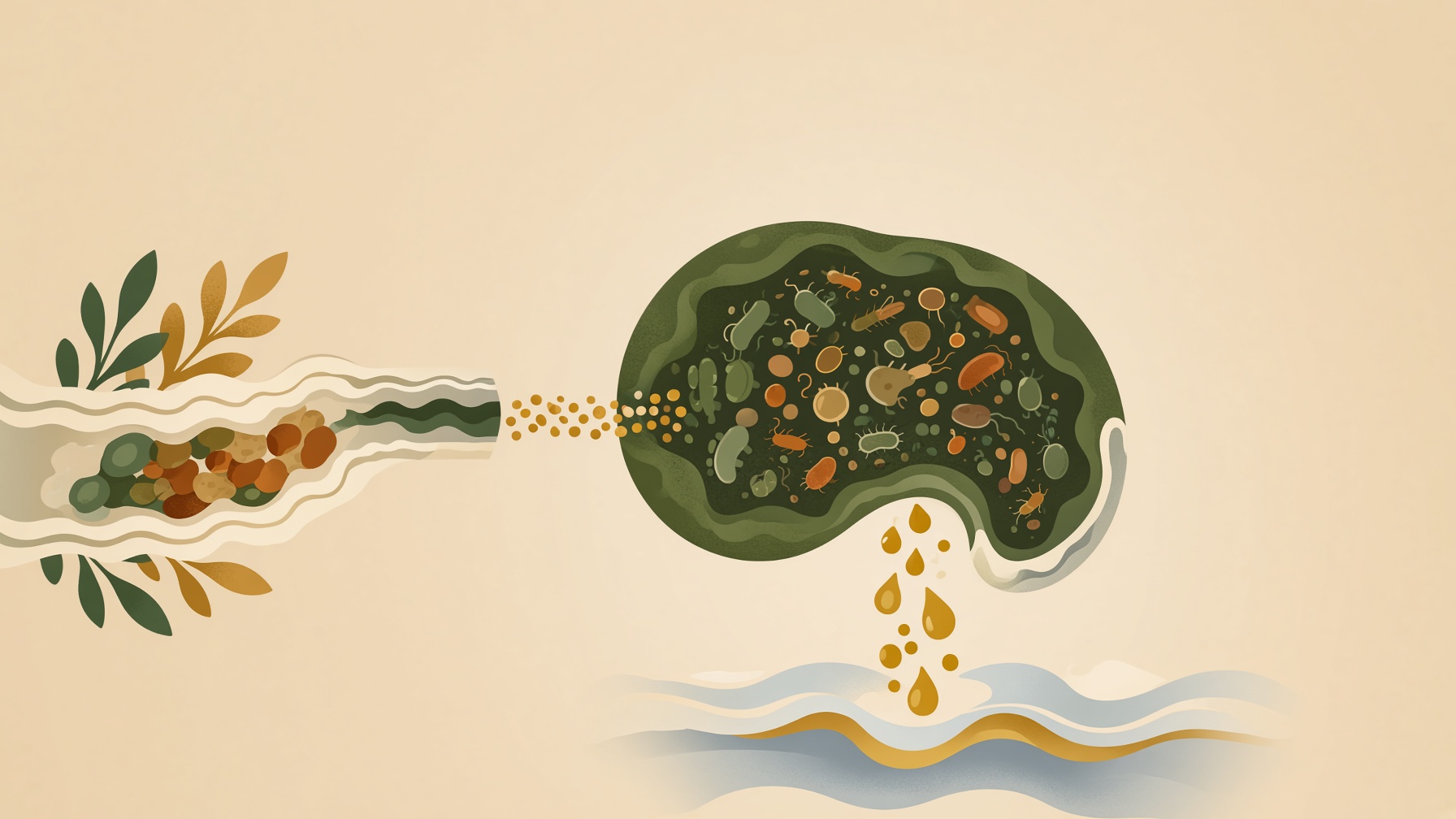
Colon microbes ferment some dietary fiber into short-chain fatty acids that the body can absorb, recovering energy human enzymes cannot release.
Wikis
Acetate is the negatively charged conjugate base of acetic acid, a two-carbon short-chain fatty acid. In human physiology, it is one of the principal short-chain fatty acids associated with the gut, together with propionate and butyrate. Acetate is produced in the colon when members of the gut microbiota ferment carbohydrates that escape digestion in the small intestine, including some dietary fibers and resistant starch .1,2
Several groups of intestinal microorganisms can produce acetate through different metabolic pathways. Acetate can also participate in microbial cross-feeding, in which one microorganism uses metabolites produced by another. For example, acetate can serve as a substrate in pathways used by some gut bacteria to produce butyrate. Its production therefore depends on both the substrates reaching the colon and the metabolic activities of the microbial community .2
After production in the colon, acetate can be absorbed through the intestinal wall and enter the circulation. Compared with propionate and butyrate produced in the colon, a larger proportion of acetate reaches the systemic circulation. Within human cells, acetate can be converted to acetyl-CoA, allowing its carbon to participate in energy metabolism and biosynthetic pathways. Acetate can also act as a signaling molecule through receptors that respond to short-chain fatty acids .2,3
Acetate is a specific member of the short-chain fatty acid group, not a synonym for SCFAs generally. Acetate and acetic acid are different protonation states of the same underlying compound, with acetate being the negatively charged form .1
From this collection
Colon microbes ferment some dietary fiber into short-chain fatty acids that the body can absorb, recovering energy human enzymes cannot release.