
How Metabolism Breaks Things Down, Builds Them Up, and Uses Energy
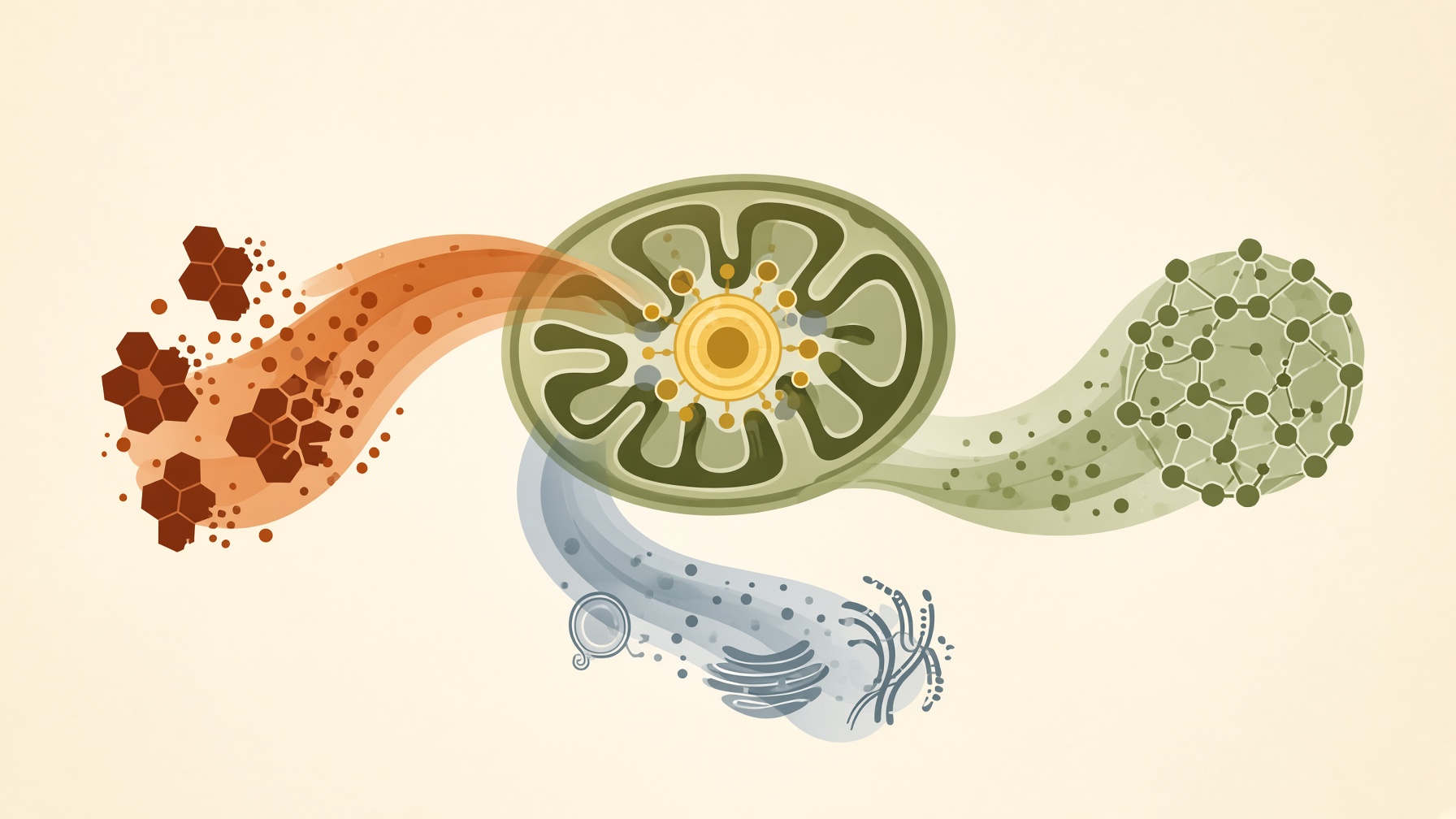
Metabolism links the breakdown and building of molecules through energy transfers, with ATP powering much of the work that cells perform.
Wikis
Anabolism is the part of metabolism that builds larger or more complex molecules from smaller precursors. Anabolic pathways synthesize cellular components such as proteins, nucleic acids, glycogen, and lipids. Because constructing these molecules is often energetically unfavorable, anabolic reactions are commonly coupled to processes that supply usable free energy .1,2
ATP hydrolysis provides free energy for many anabolic reactions. Biosynthesis also frequently requires reducing power, particularly in the form of NADPH, which can donate electrons during reduction reactions. For example, fatty acid synthesis requires both ATP and NADPH as smaller carbon units are assembled and reduced to form longer fatty acid chains .1,2
Anabolic pathways use small molecules and metabolic intermediates as building blocks. Amino acids are assembled into proteins, nucleotides into nucleic acids, and glucose units into glycogen. Other pathways construct molecules through multiple enzyme-catalyzed steps rather than simply reversing their breakdown pathways. Fatty acid synthesis, for example, is chemically and enzymatically distinct from fatty acid beta-oxidation .1
Anabolism is the counterpart of catabolism. Catabolic pathways break molecules down and can capture some of the released free energy in forms such as ATP and reduced electron carriers, whereas anabolic pathways use energy and building blocks to synthesize cellular material. The two are interconnected parts of metabolism, with catabolic pathways supplying both energy and many of the precursors required for biosynthesis .1,2
From this collection
Metabolism links the breakdown and building of molecules through energy transfers, with ATP powering much of the work that cells perform.