
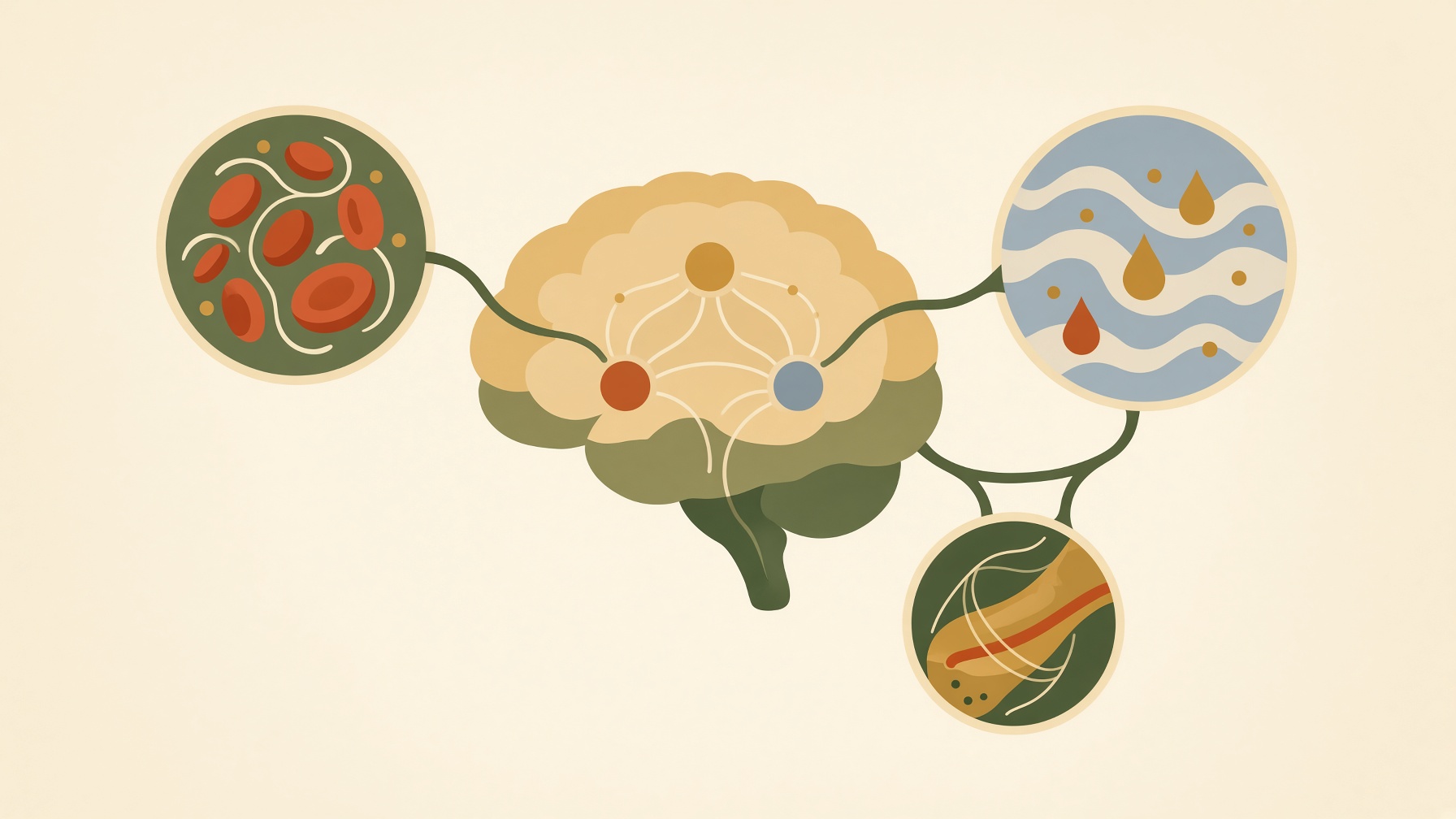
What Actually Makes You Feel Thirsty?
Thirst responds to changes in body-fluid balance, but signals from drinking can reduce the urge before water fully corrects the imbalance.
Wikis
Angiotensin II is an eight-amino-acid peptide hormone and a major biologically active effector of the classical renin-angiotensin system. This hormonal system helps regulate blood pressure, sodium balance, and extracellular fluid volume. Angiotensin II acts in the circulation and can also be generated within tissues such as the kidney, heart, blood vessels, and brain .1,2
In the classical pathway, the enzyme renin cleaves the liver-produced protein angiotensinogen to form angiotensin I, a ten-amino-acid peptide. Angiotensin-converting enzyme, or ACE, then removes two amino acids from angiotensin I to produce angiotensin II. Other enzymatic pathways can also generate angiotensin II within some tissues .1,2
Angiotensin II has several coordinated physiological actions. It constricts blood vessels, increasing vascular resistance, and promotes sodium retention through effects on the kidneys. It also stimulates the adrenal cortex to release aldosterone, which further promotes renal sodium retention. In addition, angiotensin II influences sympathetic nervous activity and vasopressin release. Together, these actions help support arterial pressure and extracellular fluid volume when the renin-angiotensin system is activated .1,2
Most of the classical cardiovascular and renal actions of angiotensin II are mediated through the angiotensin II type 1 (AT1) receptor. Angiotensin II can also bind the type 2 (AT2) receptor, whose effects can differ from or oppose some AT1-mediated responses. Angiotensin II is distinct from angiotensin I, which serves mainly as its precursor in the classical pathway and has much less direct biological activity .1,2
From this collection
Thirst responds to changes in body-fluid balance, but signals from drinking can reduce the urge before water fully corrects the imbalance.