
What “Good” and “Bad” Cholesterol Mean
LDL and HDL carry the same cholesterol in different particles, whose behavior matters more for health than the familiar good and bad labels.
Wikis
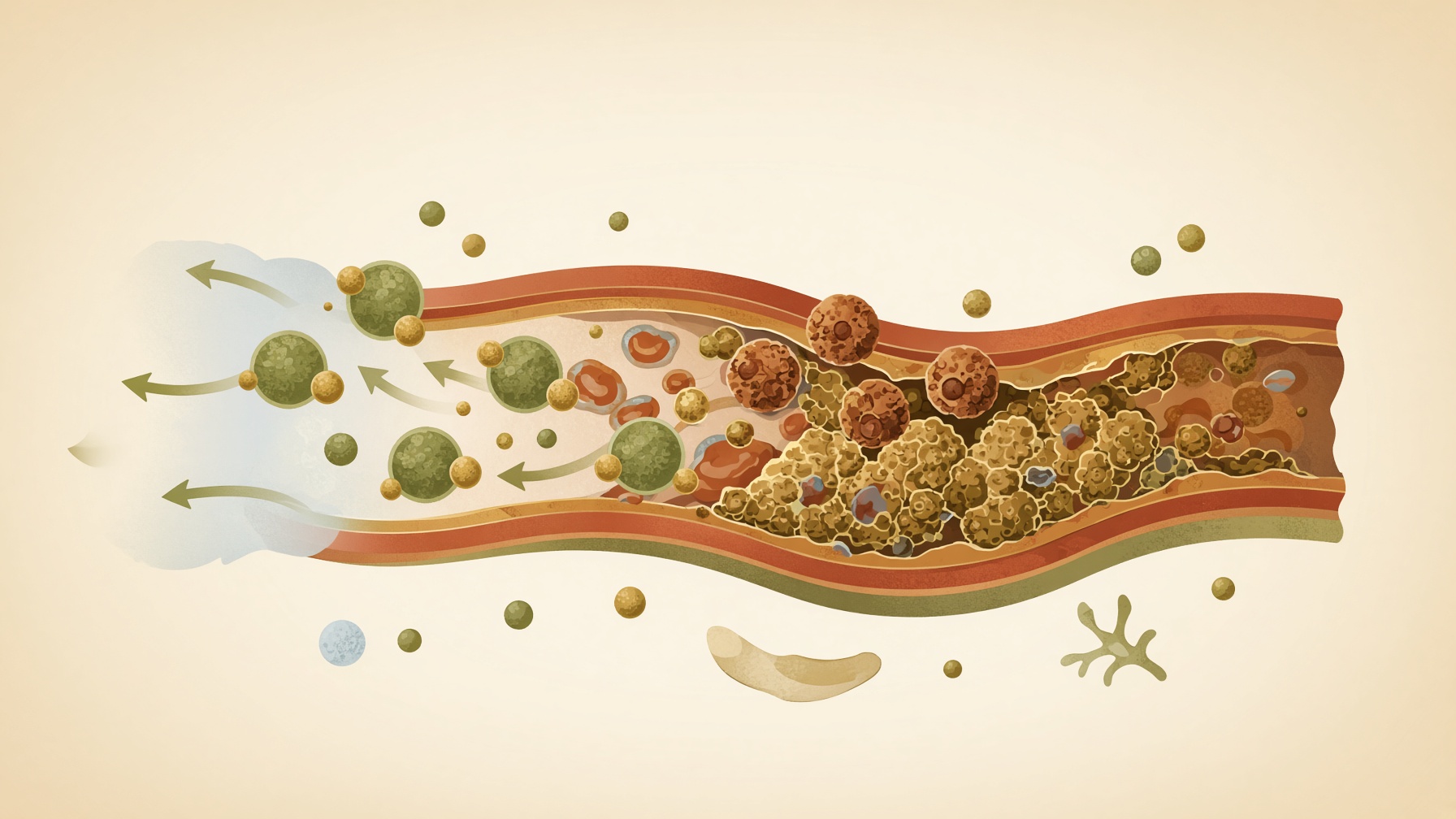
Atherosclerosis is a chronic disease of medium and large arteries characterized by the development of plaques within the innermost layer of the arterial wall, called the intima. These plaques contain lipids, inflammatory cells, smooth muscle cells, connective tissue, and, in more advanced lesions, areas of cell debris and extracellular cholesterol. Atherosclerosis develops gradually and can alter both the structure and function of affected arteries .1,2
A key process in atherosclerosis is the entry and retention of apolipoprotein B-containing lipoproteins, including LDL, within the arterial intima. Retained lipoproteins can undergo modification and promote inflammatory responses. Monocytes enter the arterial wall and develop into macrophages, which can accumulate lipid and become foam cells. Continued lipid accumulation, inflammation, and smooth muscle cell activity contribute to the development of more complex plaques .1,2
Advanced plaques commonly contain a lipid-rich or necrotic core covered by a fibrous cap containing connective tissue and smooth muscle cells. Plaque growth can narrow the arterial lumen and restrict blood flow, although substantial plaque can develop before severe narrowing occurs because the artery may initially remodel outward .2
Atherosclerosis is distinct from the thrombosis that can complicate it. If a plaque ruptures or its surface is disrupted, thrombogenic material can become exposed to circulating blood and trigger formation of a blood clot. Such thrombosis can suddenly reduce or block blood flow and is an important mechanism underlying acute atherosclerotic events such as myocardial infarction and ischemic stroke .1,2
From this collection
LDL and HDL carry the same cholesterol in different particles, whose behavior matters more for health than the familiar good and bad labels.