
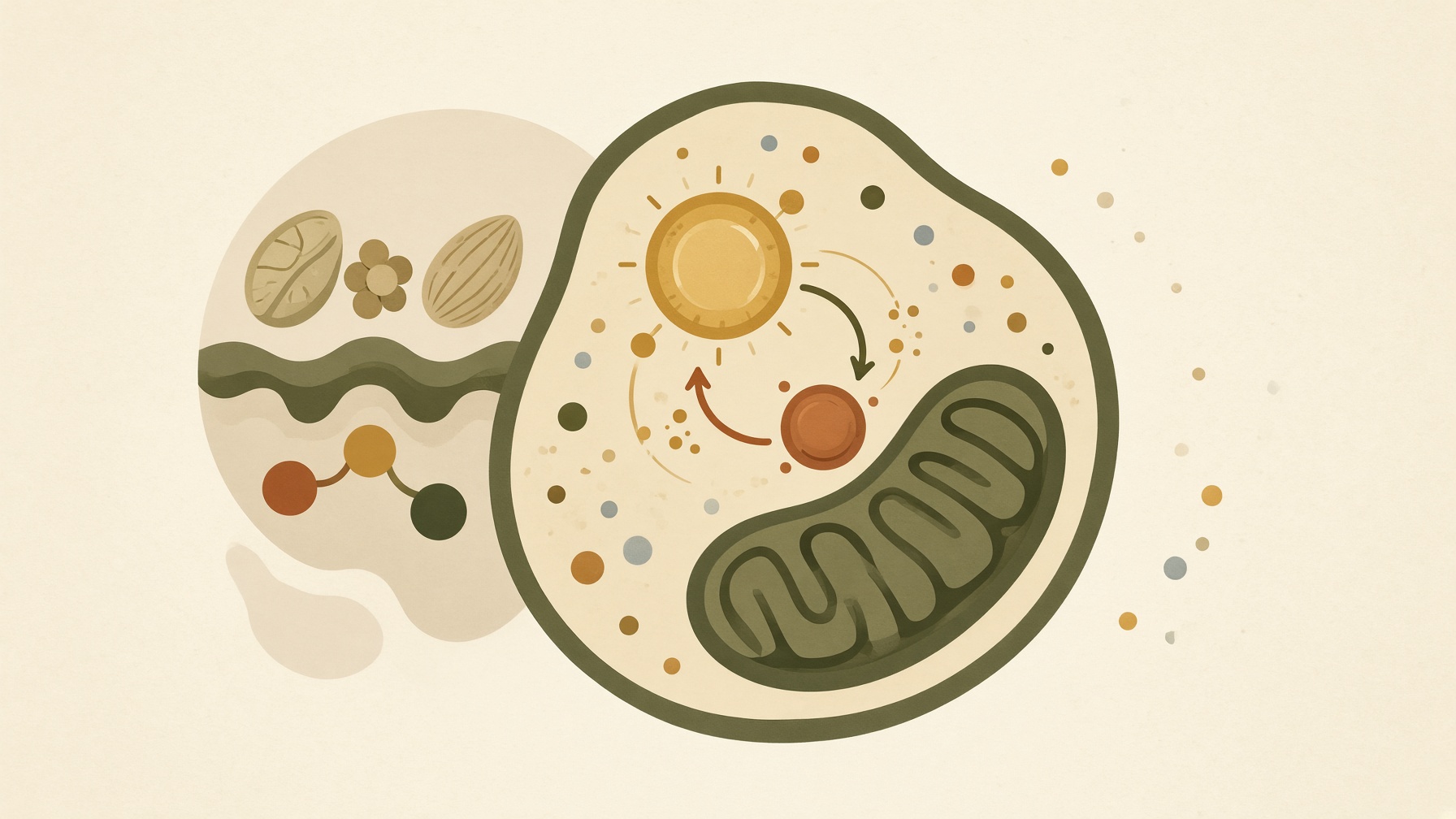
How Cells Keep Their Energy Supply Going
Cells repeatedly regenerate ATP as cellular work consumes the small available supply, making continuous turnover more important than stockpiling.
Wikis
ATP hydrolysis is the chemical reaction in which adenosine triphosphate (ATP) reacts with water and is converted into products with lower free energy. Most commonly, ATP is hydrolyzed to adenosine diphosphate (ADP) and inorganic phosphate. ATP can also be hydrolyzed to adenosine monophosphate (AMP) and pyrophosphate in some biochemical reactions .1,2
Hydrolysis of ATP to ADP and inorganic phosphate is thermodynamically favorable under typical cellular conditions. Its standard biochemical free-energy change is about −30.5 kJ/mol, but the actual free-energy change inside cells is usually more negative because it depends on the concentrations of ATP, ADP, inorganic phosphate, and other conditions. This decrease in free energy allows ATP hydrolysis to be coupled to reactions that would otherwise be energetically unfavorable .1,2
Cells use ATP in many coupled processes. In some reactions, ATP transfers a phosphoryl group directly to another molecule, creating a phosphorylated intermediate whose subsequent reactions may become more favorable. ATP hydrolysis can also be coupled to conformational changes in proteins involved in processes such as muscle contraction and active transport across membranes .2
ATP hydrolysis is sometimes described as releasing energy by “breaking a high-energy phosphate bond,” but this wording can be misleading. Breaking a chemical bond itself requires energy. The overall hydrolysis reaction is favorable because the products have lower free energy than the reactants under the relevant conditions. ATP hydrolysis therefore supplies usable free energy through the overall reaction and its coupling to cellular processes, not simply through rupture of one bond .1,2
From this collection
Cells repeatedly regenerate ATP as cellular work consumes the small available supply, making continuous turnover more important than stockpiling.
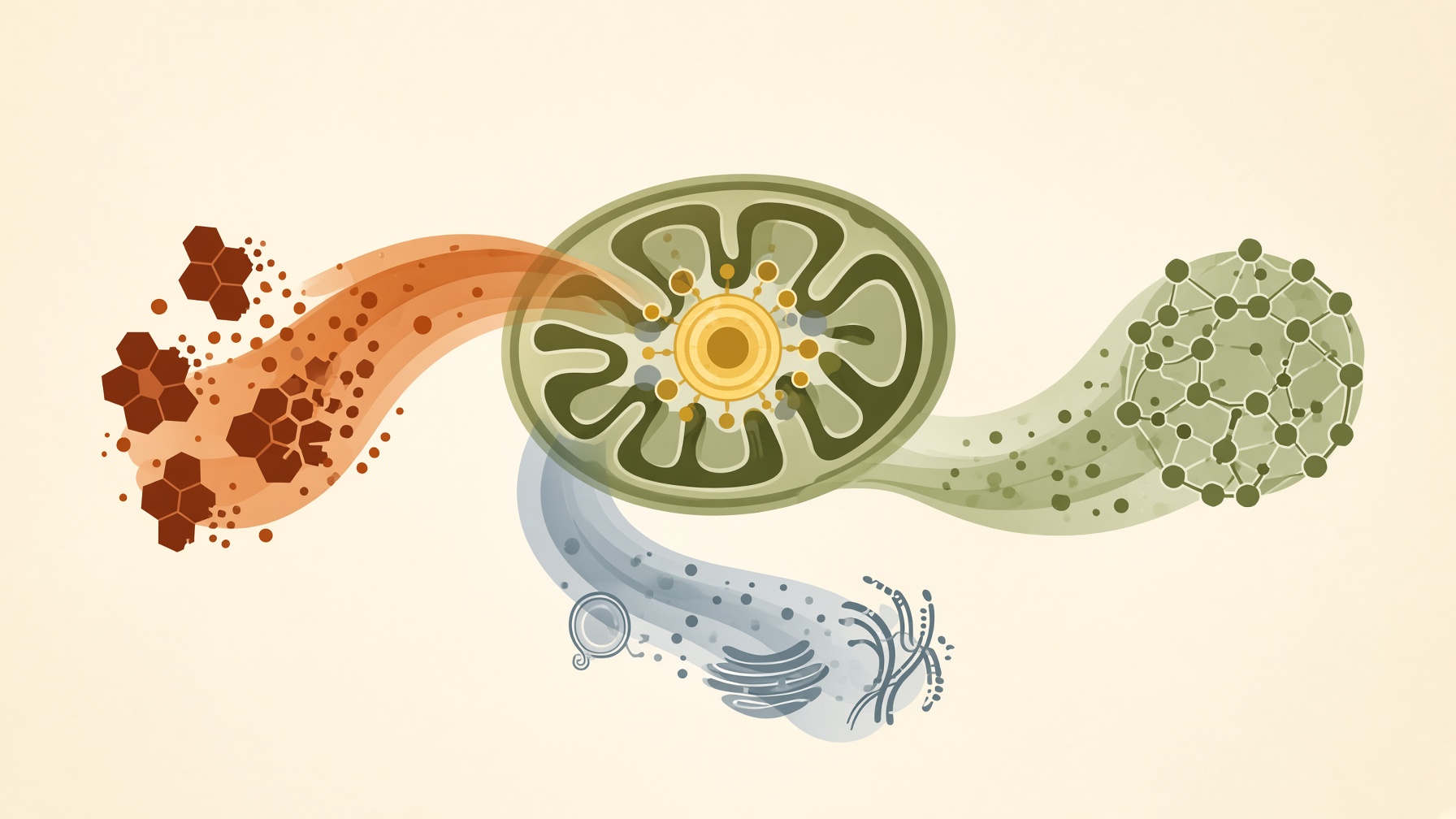
Metabolism links the breakdown and building of molecules through energy transfers, with ATP powering much of the work that cells perform.