
How Metabolism Breaks Things Down, Builds Them Up, and Uses Energy
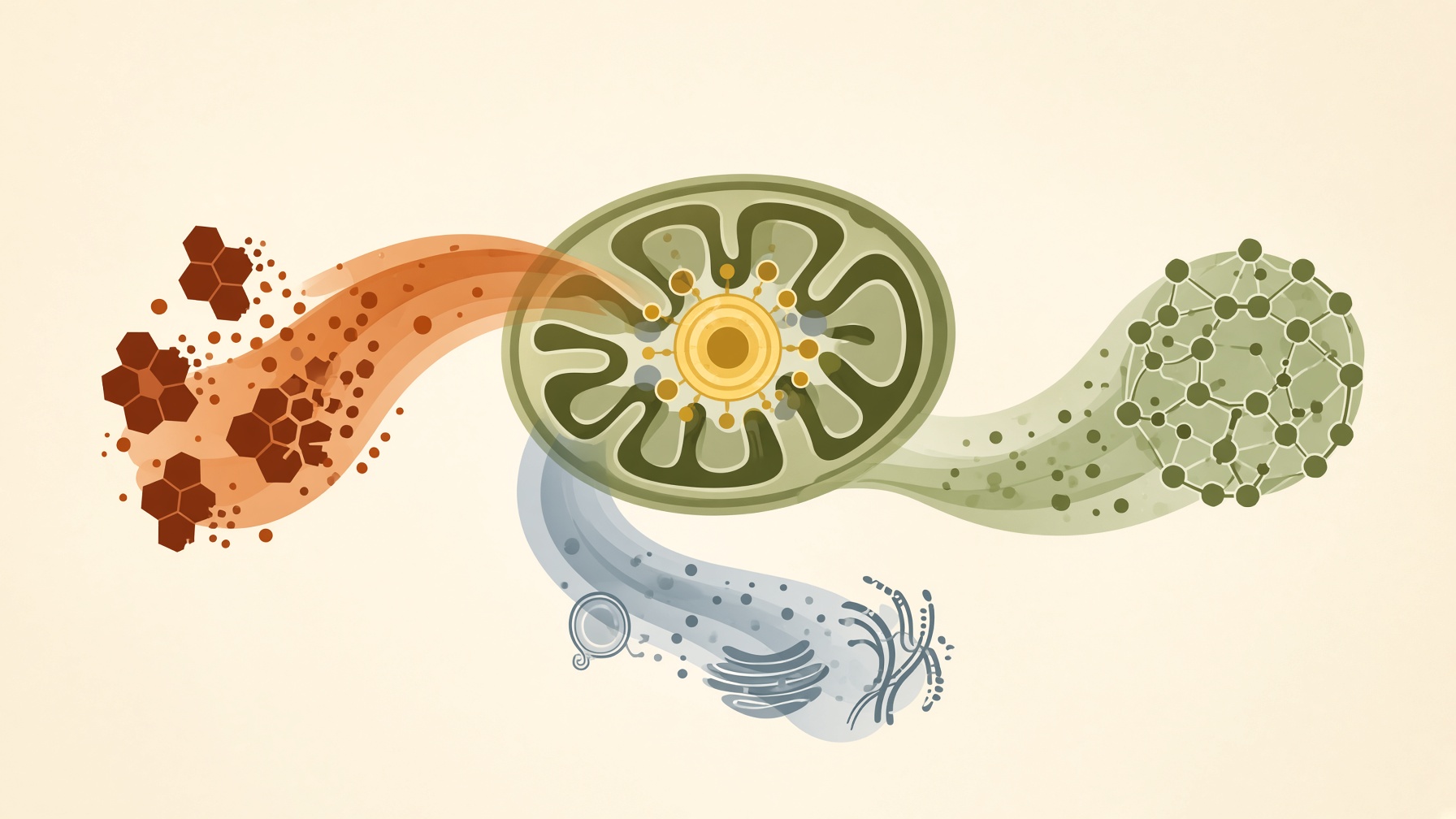
Metabolism links the breakdown and building of molecules through energy transfers, with ATP powering much of the work that cells perform.
Wikis
ATP, or adenosine triphosphate, is a nucleotide that serves as a central carrier of usable chemical energy in cells. It consists of adenosine, which contains the nitrogenous base adenine and the sugar ribose, attached to a chain of three phosphate groups. Cells continually produce and consume ATP rather than storing large amounts of it for long periods .1,2
ATP helps couple energy-releasing reactions to processes that require an input of free energy. It can be hydrolyzed to adenosine diphosphate (ADP) and inorganic phosphate, a reaction associated with a substantial decrease in free energy under cellular conditions. Cells use this favorable reaction to drive processes including active transport, muscle contraction, biosynthesis, and changes in protein activity .1,2
ATP is regenerated from ADP using energy obtained from metabolism. It can be formed directly in reactions known as substrate-level phosphorylation, including reactions in glycolysis. In aerobic human cells, much ATP production occurs through oxidative phosphorylation in mitochondria, where energy from nutrient oxidation ultimately generates an electrochemical proton gradient that powers ATP synthase .1
ATP is often called the cell's “energy currency,” but ATP is not itself energy. It is a chemical molecule whose reactions can transfer free energy between cellular processes. Similarly, saying that energy is simply “stored in” and released by breaking a particular phosphate bond is an oversimplification. ATP hydrolysis is energetically favorable because of the overall free-energy difference between the reactants and products, not because breaking a chemical bond by itself releases energy .1,2
From this collection
Metabolism links the breakdown and building of molecules through energy transfers, with ATP powering much of the work that cells perform.