
How Your Body Digests and Absorbs Dietary Fat
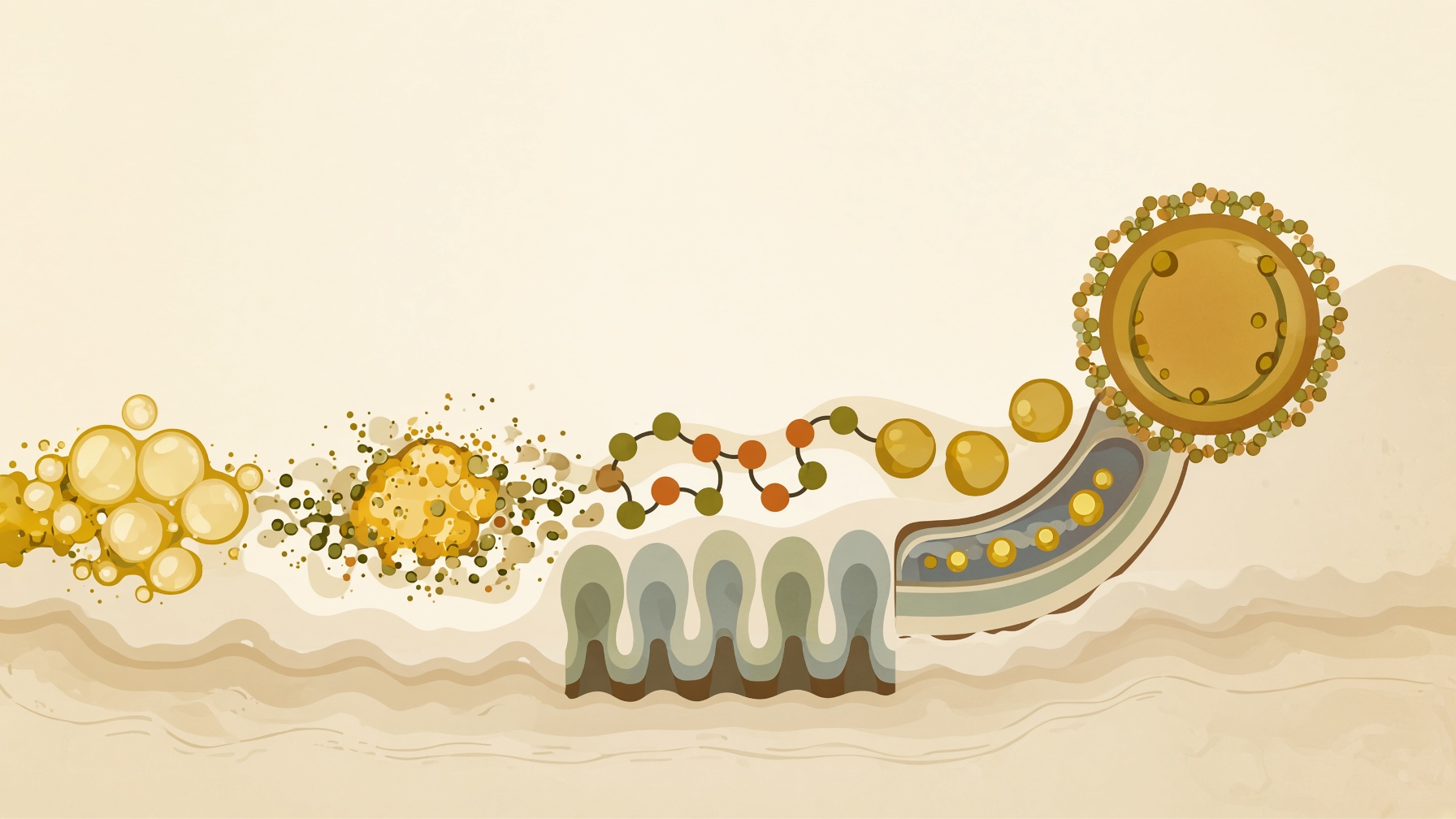
Dietary fat digestion combines physical dispersal by bile salts with enzyme breakdown, producing lipid components that intestinal cells can absorb.
Wikis
Chylomicrons are large, triglyceride-rich lipoprotein particles produced by absorptive cells of the small intestine, called enterocytes. Their main function is to transport lipids absorbed from food, particularly triglycerides, through the lymph and bloodstream. They also carry cholesterol and other fat-soluble compounds. Like other lipoproteins, chylomicrons contain a hydrophobic lipid core surrounded by phospholipids, unesterified cholesterol, and proteins called apolipoproteins .1,2
After dietary fats are digested and absorbed, enterocytes reassemble fatty acids and monoacylglycerols into triglycerides and package them into developing chylomicrons. Apolipoprotein B-48 is an essential structural component of chylomicrons. Newly formed particles are secreted into intestinal lymphatic vessels and reach the bloodstream through the lymphatic circulation rather than traveling directly to the liver through the portal vein .1,2
In the circulation, the enzyme lipoprotein lipase hydrolyzes much of the triglyceride carried by chylomicrons, releasing fatty acids that can be taken up by tissues such as skeletal muscle and adipose tissue. As triglyceride is removed, the particles become smaller and form chylomicron remnants. These remnants retain cholesterol and other lipids and are subsequently cleared mainly by the liver .1
Chylomicrons are distinct from very-low-density lipoproteins (VLDL). Both are triglyceride-rich lipoproteins, but chylomicrons are produced by the intestine and primarily transport dietary lipids, whereas VLDL is produced by the liver and primarily transports triglycerides produced or processed there. Chylomicrons contain apolipoprotein B-48, while VLDL contains apolipoprotein B-100 .1
From this collection
Dietary fat digestion combines physical dispersal by bile salts with enzyme breakdown, producing lipid components that intestinal cells can absorb.