
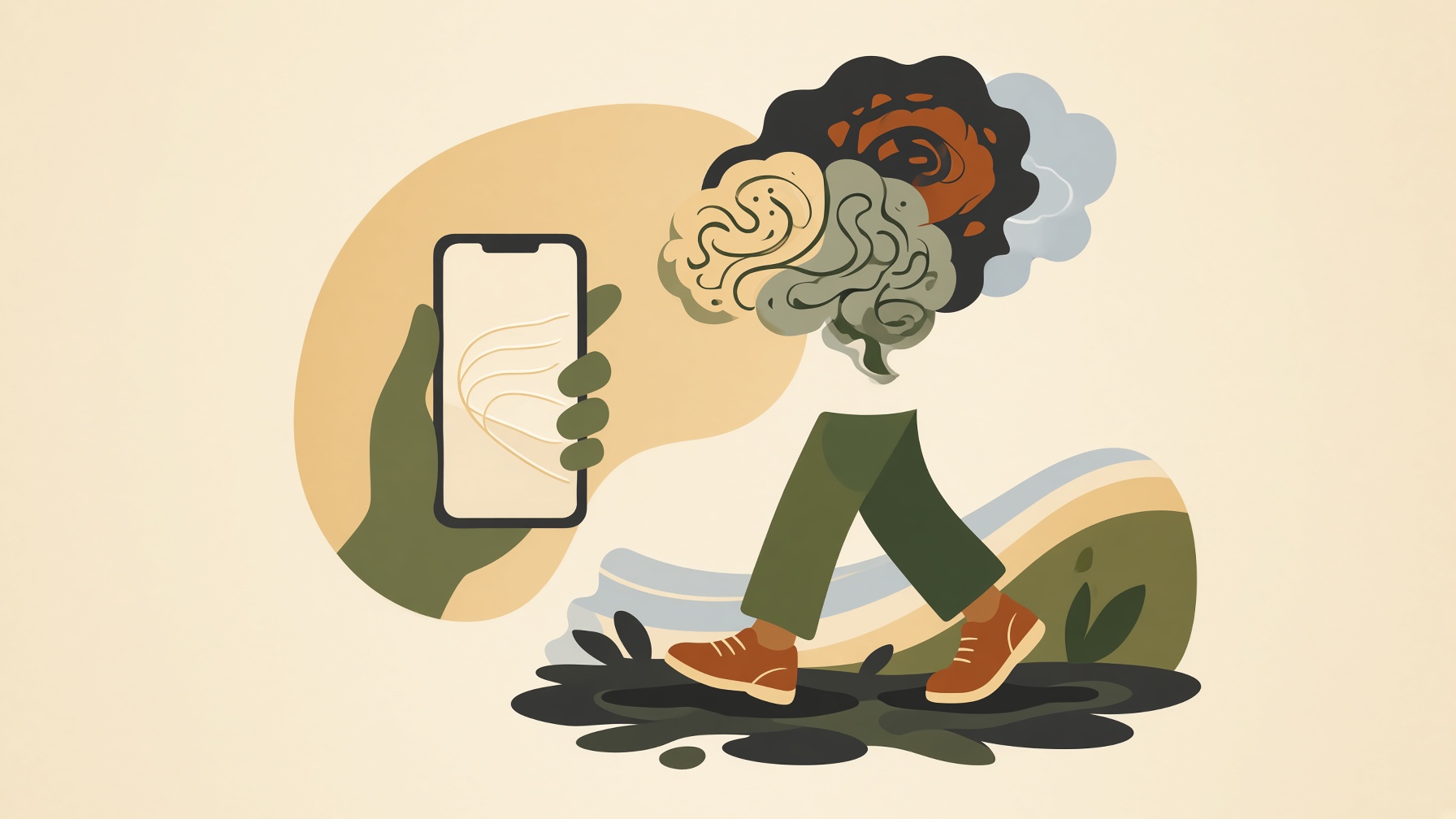
Does the Story behind Your Text Show Up in the Way You Walk?
Walking speed was higher during anger writing than sadness writing in a small experiment, but the task did not isolate the effect of emotion alone.
Wikis
Dual-task interference reduces performance when two tasks overlap in time, compared with performing each task separately under experimental conditions.
Dual-task interference is a reduction in performance when two tasks overlap in time, compared with performing them separately. A common experimental finding is slower responding when a person must deal with two tasks at once. The term describes the added difficulty caused by their combination, rather than the difficulty of either task considered alone .1
One explanation is a processing bottleneck: a particular stage, such as selecting a response, may have to handle one task before the other can proceed. Another explanation is that tasks share a limited amount of processing capacity. Dividing that capacity can slow performance. These are explanatory models, and the evidence does not reduce every instance of interference to one mechanism .1
The timing of the tasks matters. When their processing overlaps less, interference may diminish. Dual-tasking is also distinct from task-switching, in which a person alternates between activities rather than performing overlapping tasks. Both can impose performance costs and involve cognitive control, but their experimental demands and underlying processes are not identical .1
From this collection
Walking speed was higher during anger writing than sadness writing in a small experiment, but the task did not isolate the effect of emotion alone.