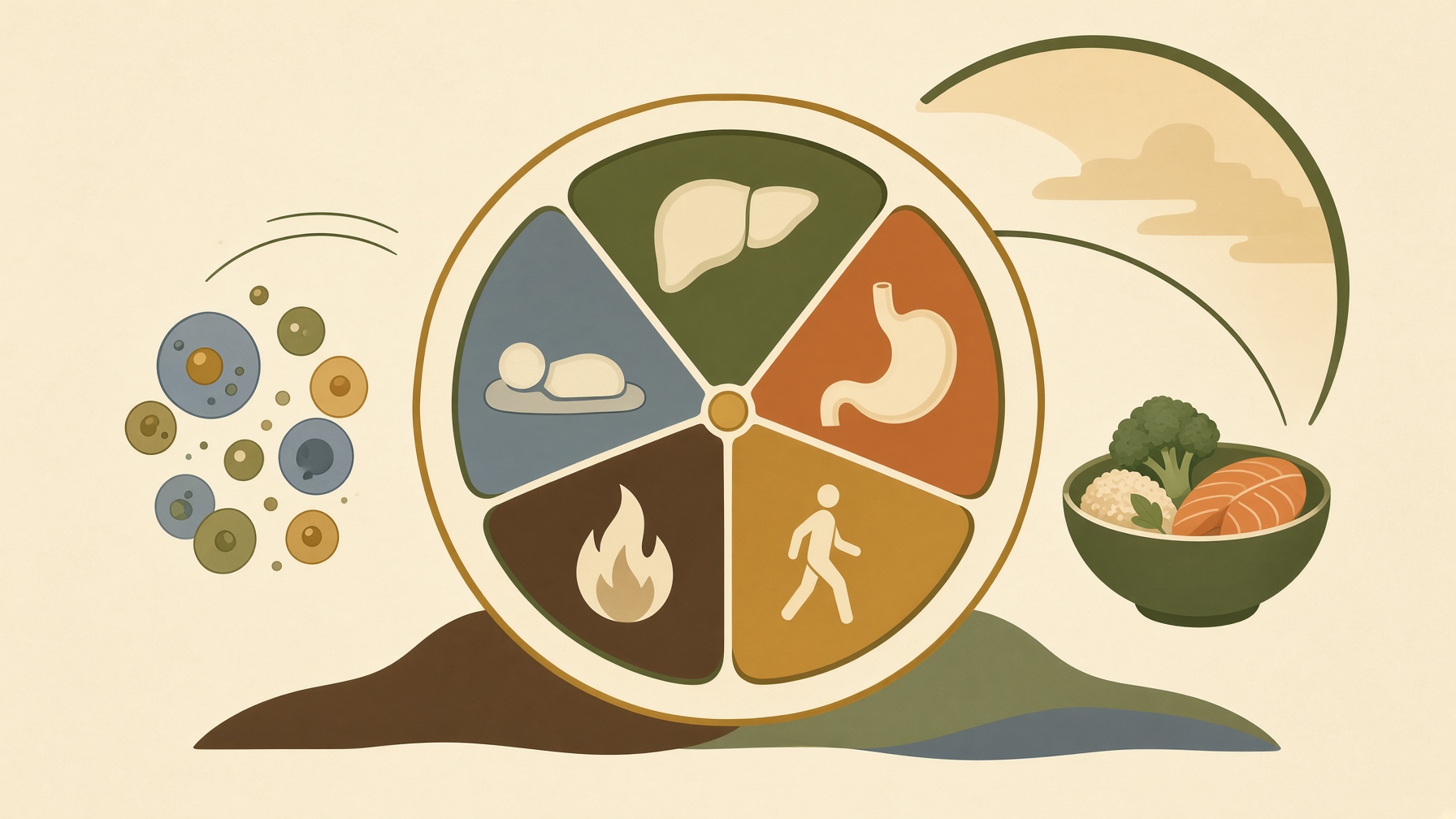
Energy compensation is the partial offset of an intended change in energy balance by other behavioral or physiological changes. In exercise research, the term often describes why the energy deficit expected from added exercise can be smaller than the exercise energy expenditure itself. Compensation can occur when food intake rises, non-exercise activity falls, resting expenditure changes, or several responses occur together .1
The concept matters because changes in body mass or body energy stores reflect total energy balance, not one isolated component. For example, adding an exercise session increases expenditure during that session, but the net daily deficit may be smaller if a person later eats more or moves less. The size and direction of compensation vary substantially among individuals and across interventions .1
Energy compensation is therefore not a fixed percentage or a universal biological rule. It describes the difference between the energy change predicted from an intervention and the net change that occurs after other components of energy intake and expenditure respond. The size and sources of compensation need to be measured rather than assumed .1