
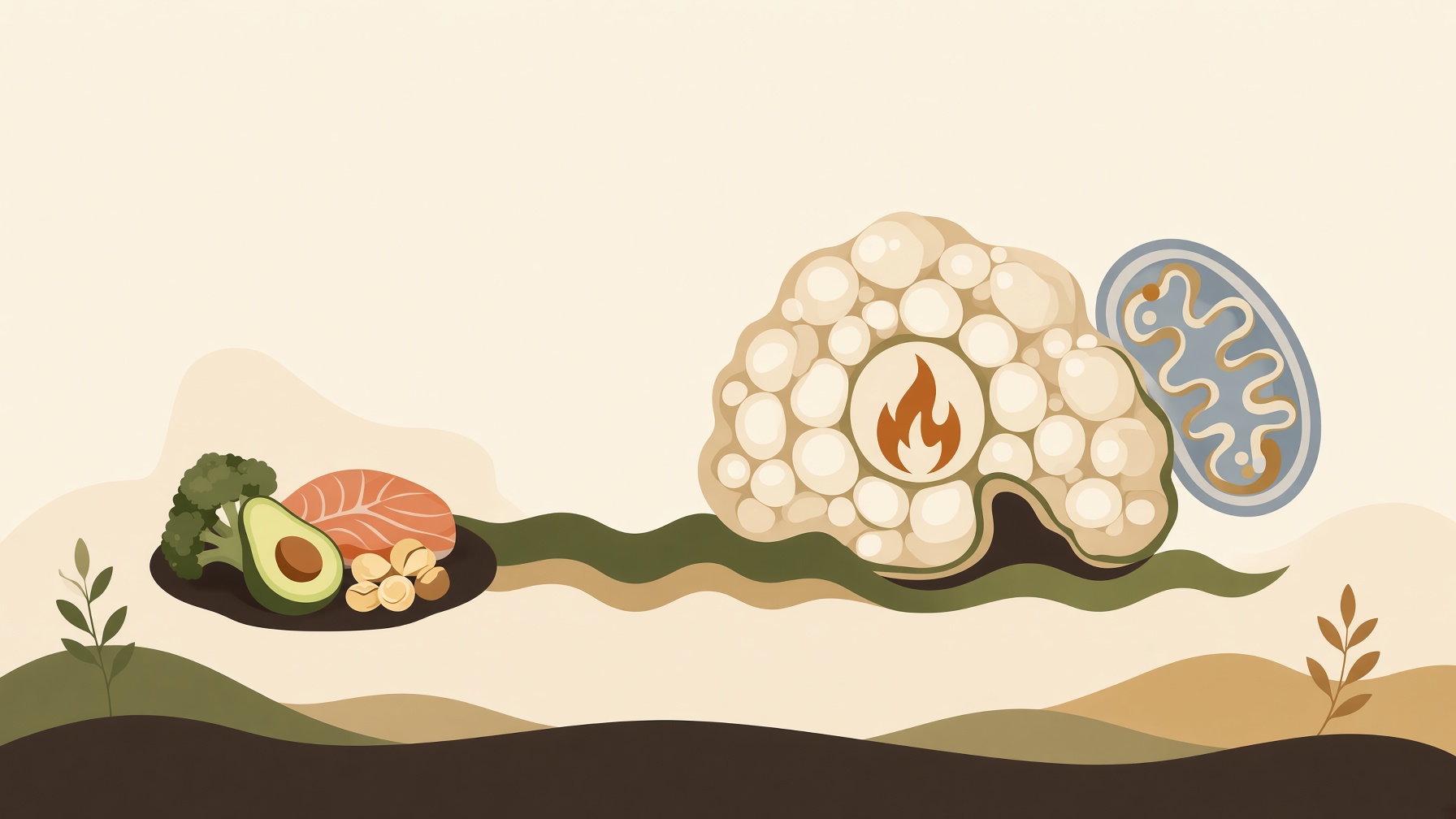
Why Fat Burning Is Not the Same as Fat Loss
Low-carbohydrate diets can increase fat burning, but losing stored body fat still requires an energy deficit sustained over time.
Wikis
Fat oxidation is the metabolic process by which fatty acids are broken down and their chemical energy is used to support cellular energy production. In humans, a major pathway involved is mitochondrial fatty acid beta-oxidation. Fatty acids used in this process can come from dietary fat or from triglycerides stored in tissues such as adipose tissue .1,2
Before mitochondrial oxidation, fatty acids are converted to fatty acyl-CoA molecules. Long-chain fatty acyl groups require the carnitine transport system to reach the mitochondrial matrix. During beta-oxidation, the fatty acyl chain is progressively shortened by two carbon atoms at a time, producing acetyl-CoA and reduced electron carriers. Acetyl-CoA can enter the citric acid cycle, while electrons derived from fatty acid oxidation can ultimately enter the respiratory chain and contribute to ATP production .1
Fat oxidation varies with metabolic conditions and fuel availability. It is particularly important during fasting and other postabsorptive periods and can supply substantial energy to tissues such as skeletal muscle, heart, and kidney. In the liver, acetyl-CoA generated by fatty acid oxidation can also contribute to ketone-body production during prolonged fasting .1
Fat oxidation is distinct from lipolysis. Lipolysis is the breakdown of stored triglycerides into fatty acids and glycerol, making fatty acids available for metabolism, whereas fat oxidation is their subsequent oxidative degradation . Fat oxidation is also not synonymous with loss of body fat. Changes in body-fat stores depend on the longer-term balance between fat storage and utilization within overall energy balance .2,3
From this collection
Low-carbohydrate diets can increase fat burning, but losing stored body fat still requires an energy deficit sustained over time.