
Why the Same Foods Don’t Affect Hunger the Same Way
Foods can change hunger and fullness, but appetite responses depend on the meal and the person rather than following a fixed timetable.
Wikis
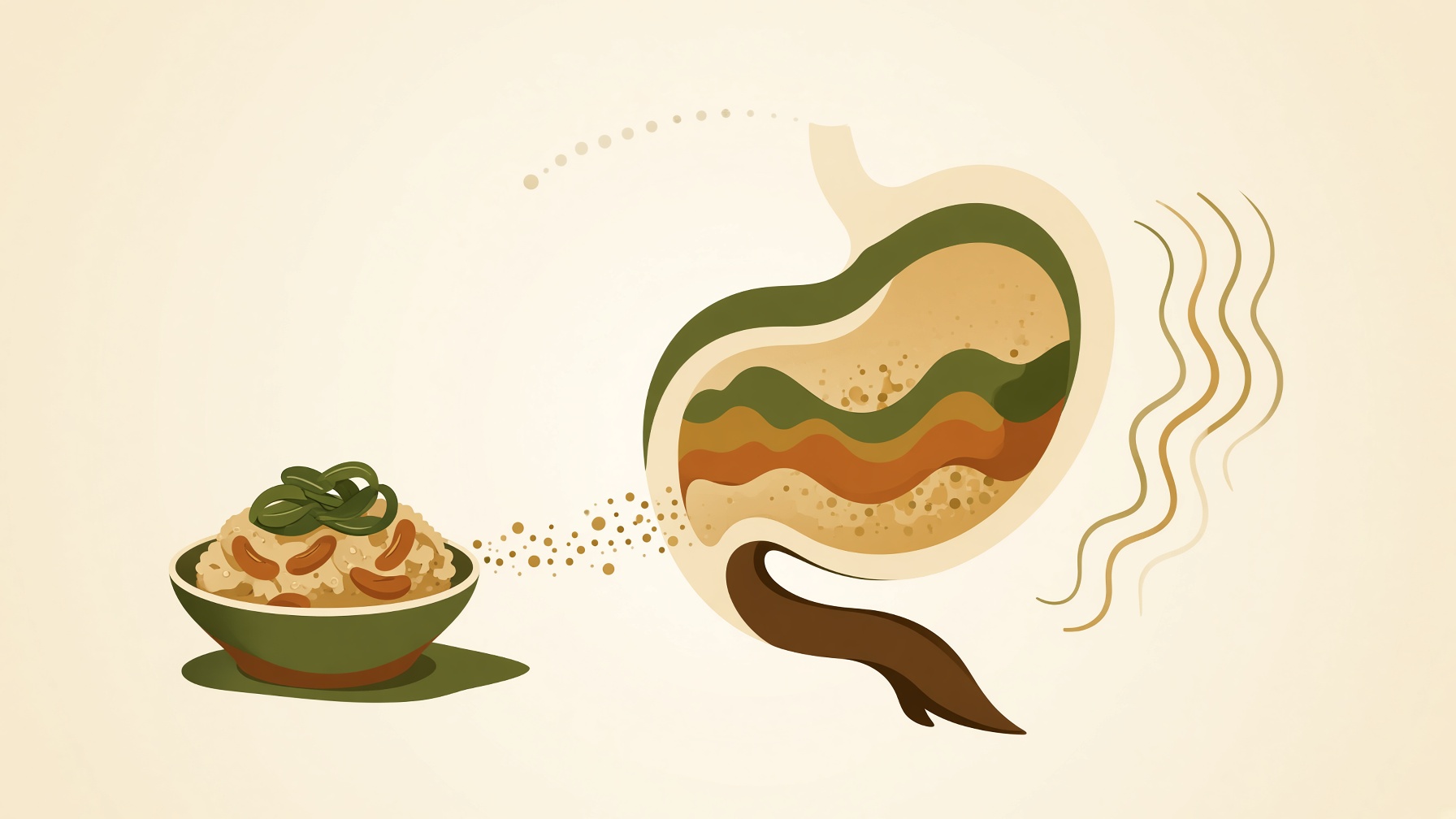
Gastric emptying is the process by which the stomach transfers its contents into the duodenum, the first part of the small intestine. The gastric emptying rate describes how quickly this transfer occurs. The stomach does not empty an entire meal at once; it regulates the delivery of liquids, nutrients, and food particles into the small intestine .1,2
Liquids and solid foods do not leave the stomach in the same way. Liquids, especially low-calorie liquids, can begin passing into the duodenum relatively soon after ingestion. Digestible solids are generally retained while contractions in the lower stomach mix and grind them into smaller particles. Material that is sufficiently small can then pass through the pylorus, the outlet region of the stomach leading into the duodenum .1
Gastric emptying depends on coordinated activity involving the stomach, pylorus, duodenum, nervous system, and gastrointestinal hormones. The physical and chemical properties of stomach contents influence this regulation. Signals generated when nutrients enter the small intestine can slow further emptying, thereby regulating the rate at which nutrients enter the intestine for digestion and absorption .1,2
Gastric emptying is related to, but distinct from, gastric motility. Gastric motility refers broadly to the muscular movements of the stomach, including contractions involved in mixing and grinding. Gastric emptying specifically describes the transfer of stomach contents into the duodenum. Motility is therefore an important part of the emptying process, but the two terms are not interchangeable .1
From this collection
Foods can change hunger and fullness, but appetite responses depend on the meal and the person rather than following a fixed timetable.