
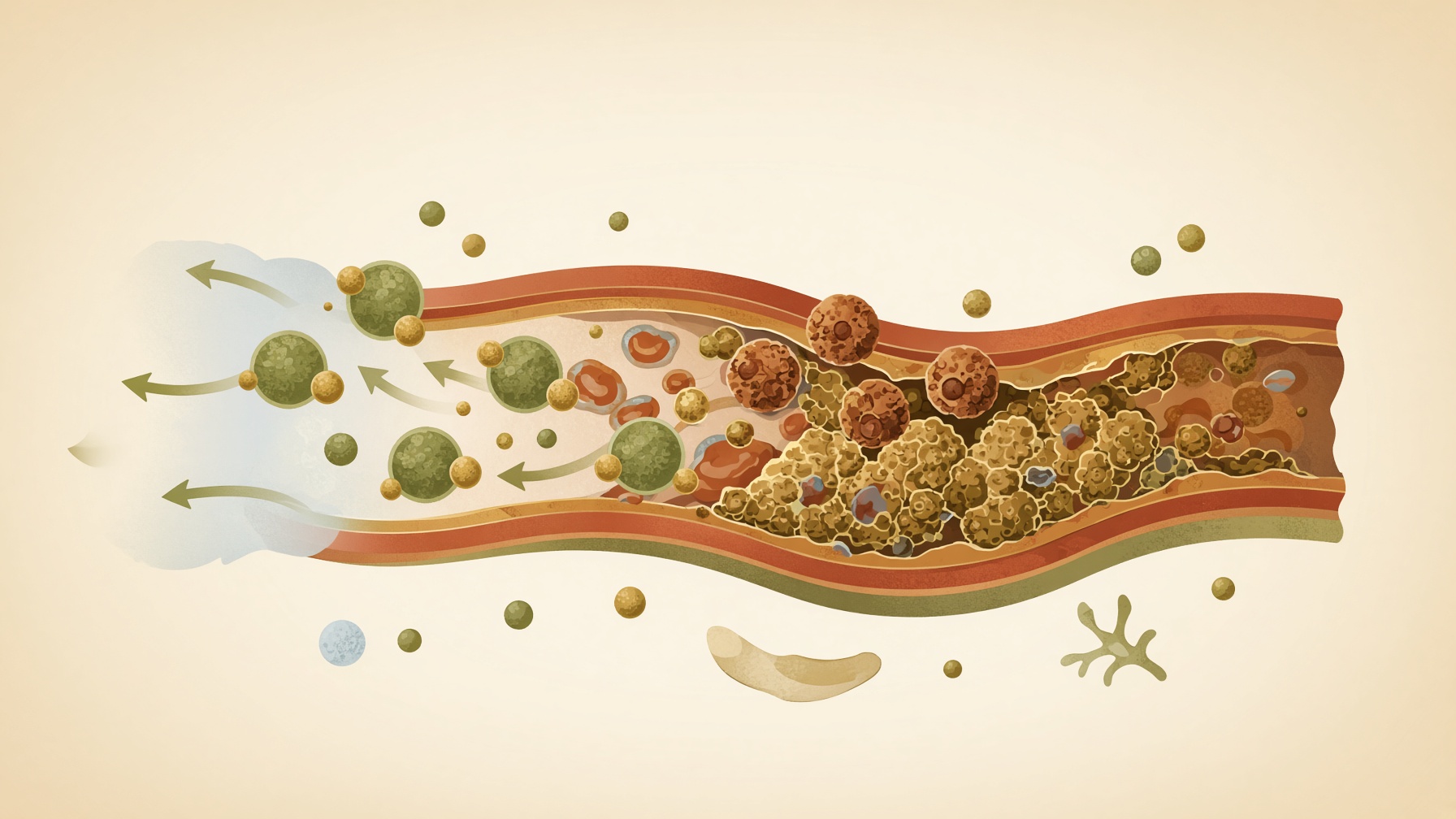
What “Good” and “Bad” Cholesterol Mean
LDL and HDL carry the same cholesterol in different particles, whose behavior matters more for health than the familiar good and bad labels.
Wikis
LDL-C, or low-density lipoprotein cholesterol, is the concentration of cholesterol carried within low-density lipoprotein particles in the blood. It is usually reported in milligrams per deciliter (mg/dL) or millimoles per liter (mmol/L). LDL-C is a standard laboratory measure used to characterize circulating lipids and estimate the amount of cholesterol carried by LDL particles .1,2
LDL-C can be measured directly or, more commonly, estimated from other components of a lipid panel using mathematical equations. These calculations use measurements such as total cholesterol, HDL cholesterol, and triglycerides. Different calculation and measurement methods can produce somewhat different LDL-C values, particularly when triglycerides are elevated or LDL-C concentrations are very low .1,2
When apoB-containing lipoprotein particles such as LDL enter and become retained in the arterial wall, they can contribute to the development of atherosclerosis. LDL-C is therefore widely used as a marker of atherosclerotic cardiovascular risk and as a measure of response to LDL-lowering interventions .1,2
LDL-C is distinct from LDL particle number. LDL-C measures the amount of cholesterol carried within LDL particles, not how many particles are present. Because individual LDL particles can carry different amounts of cholesterol, two people with the same LDL-C can have different numbers of LDL particles. Apolipoprotein B (apoB) more closely reflects the number of circulating atherogenic lipoprotein particles .2
From this collection
LDL and HDL carry the same cholesterol in different particles, whose behavior matters more for health than the familiar good and bad labels.