
What “Good” and “Bad” Cholesterol Mean
LDL and HDL carry the same cholesterol in different particles, whose behavior matters more for health than the familiar good and bad labels.
Wikis
LDL, or low-density lipoprotein, is a class of cholesterol-rich lipoprotein particles that circulates in the blood. Lipoproteins allow poorly water-soluble lipids such as cholesterol to be transported through plasma. An LDL particle contains a core rich in cholesteryl esters surrounded by phospholipids, unesterified cholesterol, and a single molecule of apolipoprotein B-100 (apoB-100) .1
LDL particles arise mainly from the metabolism of very-low-density lipoproteins (VLDL) produced by the liver. As triglycerides are progressively removed from VLDL particles in the circulation, intermediate-density lipoproteins and subsequently cholesterol-enriched LDL particles can form. LDL particles are cleared largely through LDL receptors, especially in the liver. ApoB-100 binds to these receptors, allowing the particles to be taken up by cells .1
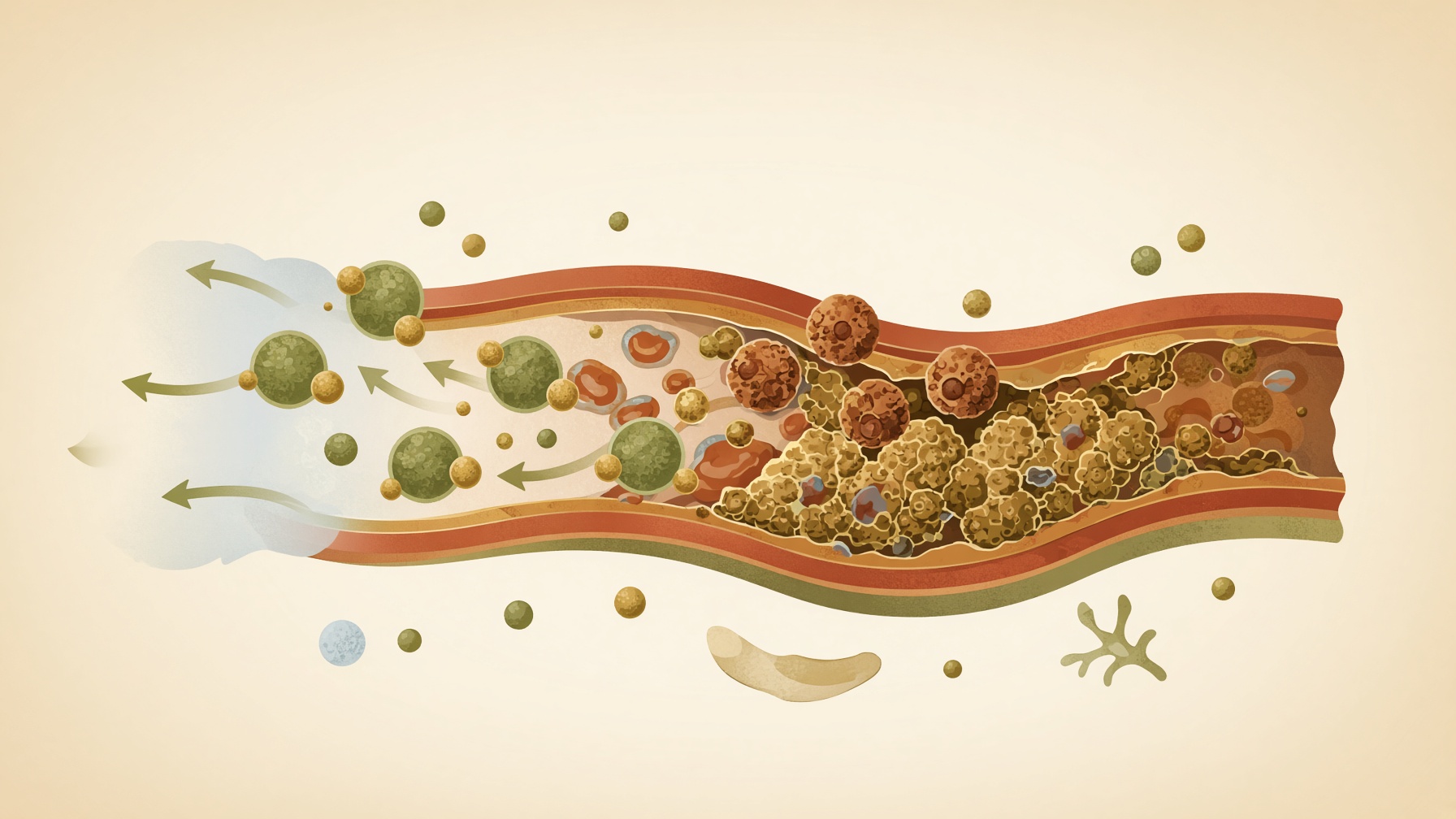
LDL carries cholesterol that can be taken up and used by cells, including as a component of cell membranes and as a precursor for other molecules. However, when apoB-containing lipoproteins such as LDL enter and become retained within the arterial wall, they can initiate and promote atherosclerosis. Cumulative exposure of arteries to these particles is therefore an important determinant of atherosclerotic cardiovascular disease risk .2
LDL should not be confused with LDL cholesterol (LDL-C). LDL refers to the lipoprotein particles themselves, whereas LDL-C refers to the amount of cholesterol carried within LDL particles in a blood sample. LDL-C can be measured or estimated from other lipid measurements and does not directly indicate the number of LDL particles .1,3
From this collection
LDL and HDL carry the same cholesterol in different particles, whose behavior matters more for health than the familiar good and bad labels.