
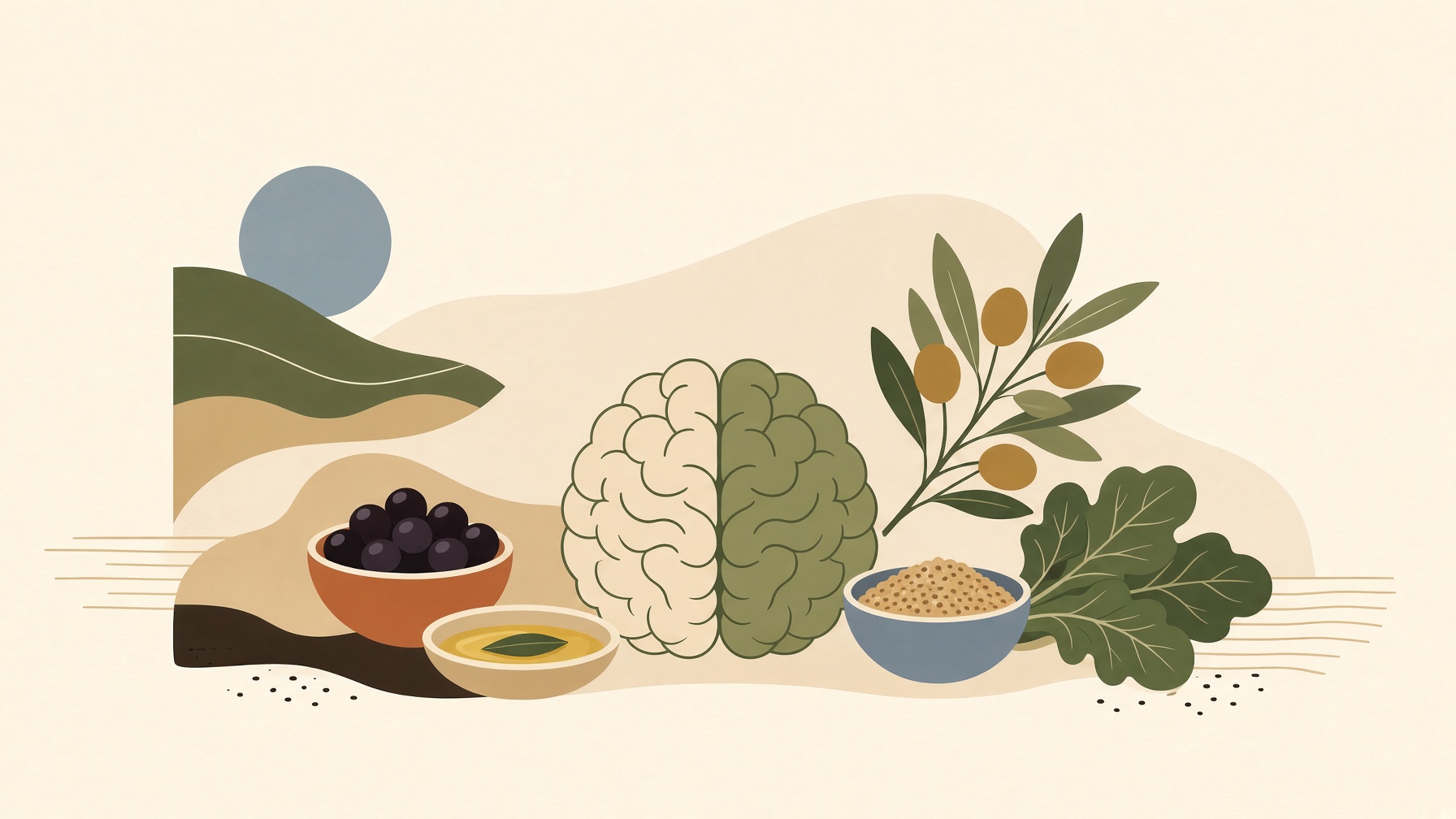
Is There Really a Diet That Helps Keep Your Brain Healthy as You Age?
Brain-healthy dietary patterns show promising observational links, but trials do not establish one superior diet or a single food that protects cognition.
Wikis
The MIND diet scores adherence to a defined food pattern for cognitive-aging research, without proving that the pattern prevents dementia in an individual.
The MIND diet, short for Mediterranean-DASH Intervention for Neurodegenerative Delay, is a dietary pattern developed for research on diet and cognitive aging. It combines features of the Mediterranean and DASH dietary patterns while placing particular emphasis on food groups selected from prior evidence about brain health .1,2
The original MIND score includes components that are encouraged, such as green leafy vegetables, other vegetables, berries, nuts, whole grains, beans, fish, poultry, olive oil, and moderate wine intake, as well as components that are limited in the scoring system, such as red meat, butter and stick margarine, cheese, pastries and sweets, and fried or fast food. A person's score reflects adherence to the pattern rather than consumption of one special food .1,2
The MIND diet is not a medical treatment and should not be interpreted as a proven way to prevent dementia in an individual. Early observational studies found associations between higher MIND scores and slower cognitive decline or lower Alzheimer's disease incidence, but observational associations cannot by themselves establish causation. The term is best understood as a defined dietary-pattern score used to study whether a particular combination of foods relates to cognitive outcomes .1,2
From this collection
Brain-healthy dietary patterns show promising observational links, but trials do not establish one superior diet or a single food that protects cognition.