
Pick Only One Exercise, and Some Muscles Won't Get the Work. Which Ones?
Whole-body movement does not load every muscle equally, so complementary exercises can cover demands that repeating one movement leaves untrained.
Wikis
A movement pattern describes how body segments work together for a task, with normal variation rather than one universally ideal technique.
A movement pattern is a recurring organization of body segments, joints, and muscle activity used to accomplish a motor task. Examples include the coordinated actions used in walking, squatting, reaching, jumping, or throwing. A pattern describes how movement components are arranged in space and time rather than simply whether the task was completed .1
Movement patterns emerge from interactions among the person's anatomy, strength, mobility, motor control, task demands, and environment. They are not perfectly identical from repetition to repetition. Some variability is normal and can be functional, allowing a person to adapt to changing conditions or achieve the same task goal through slightly different coordination strategies .2
The term is often used in movement screening, but a movement pattern should not be confused with a screening score or with a universal ideal technique. Research shows meaningful variability both within and between skilled performers. Whether a particular pattern is efficient, safe, or problematic depends on the specific task, load, individual, and outcome of interest, rather than on deviation from one presumed perfect form .1,2
From this collection
Whole-body movement does not load every muscle equally, so complementary exercises can cover demands that repeating one movement leaves untrained.
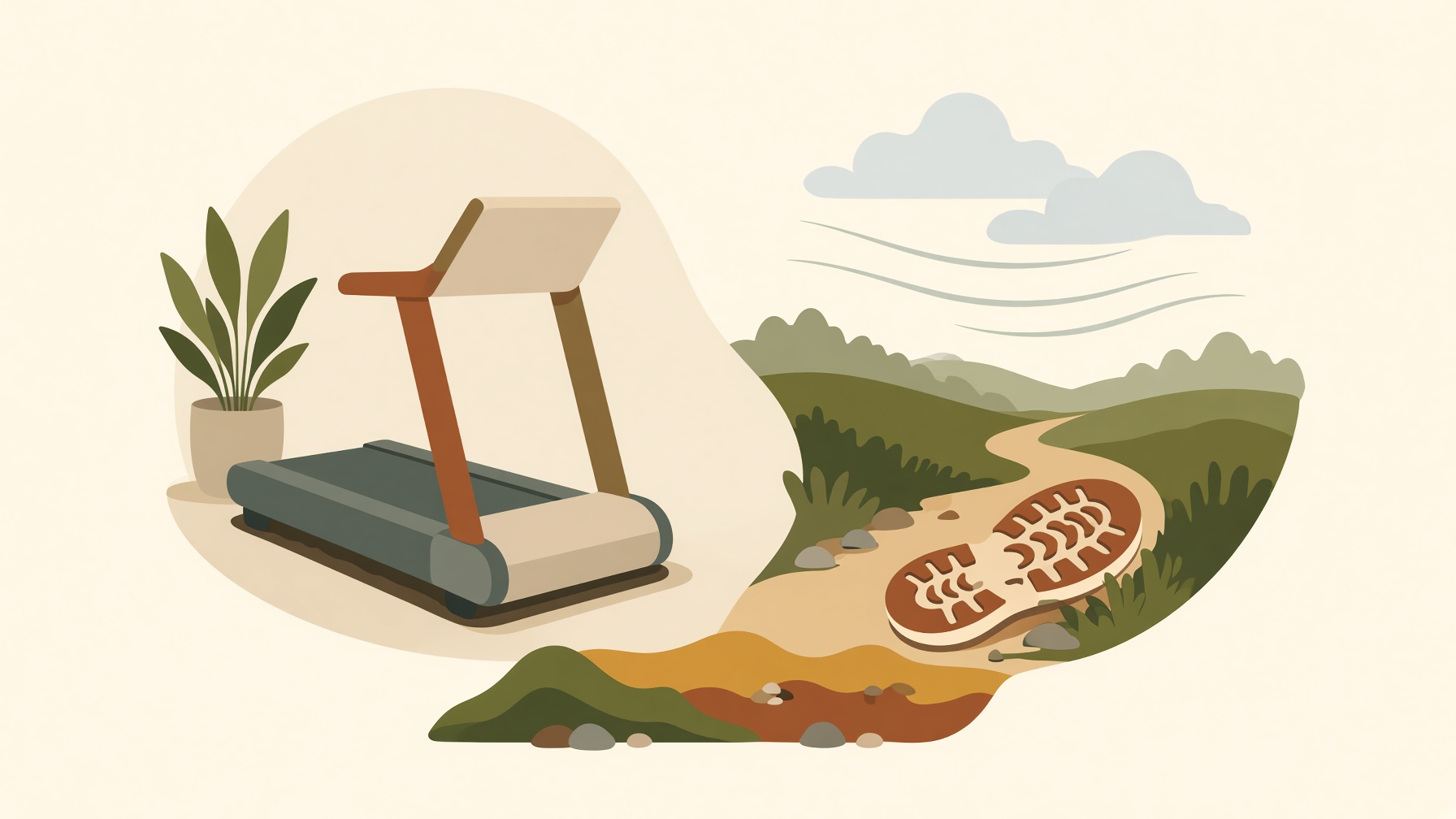
Treadmill running shares many movement patterns with outdoor running, but physiological demands can differ with speed, equipment and the runner.