
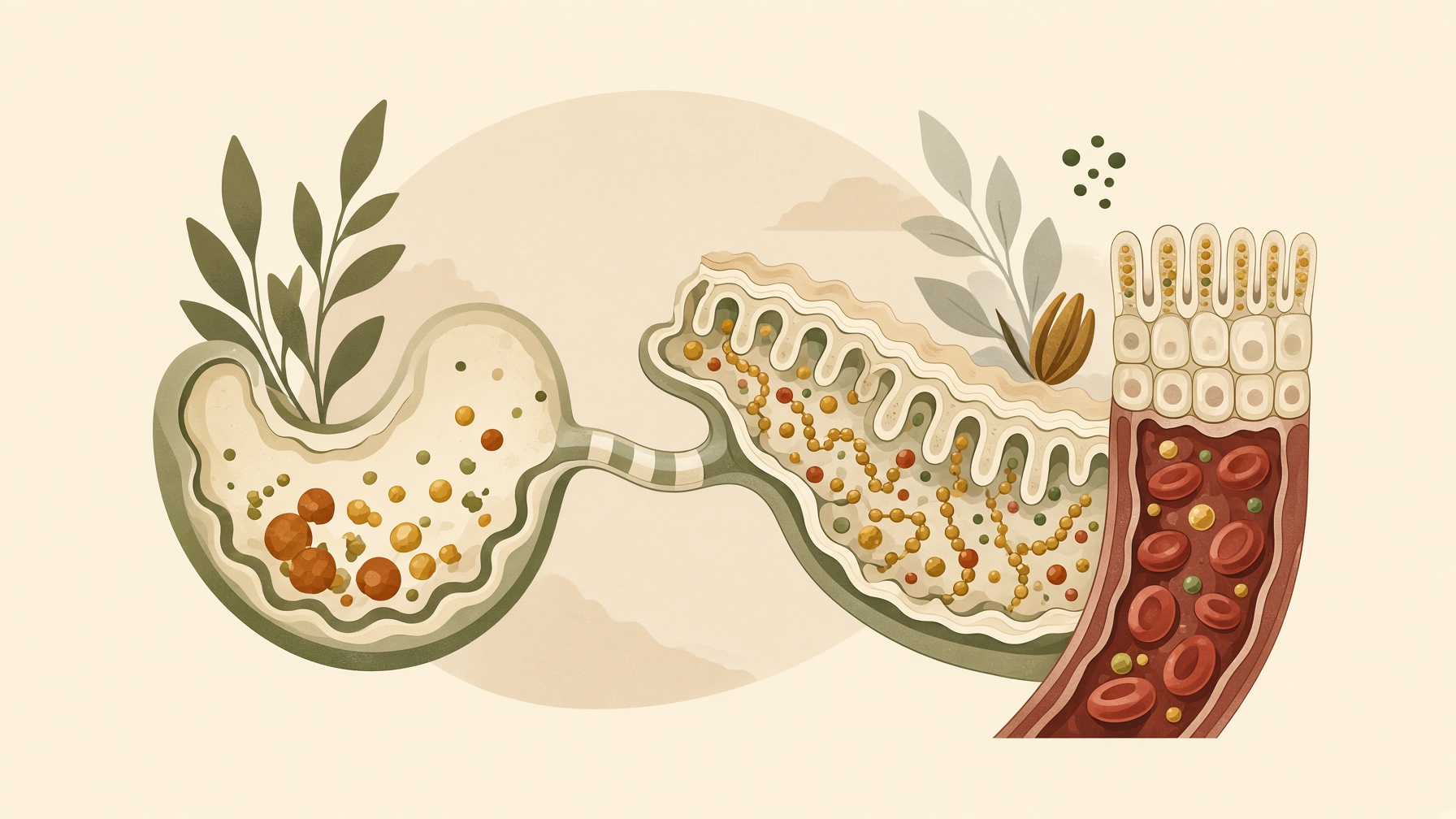
How Your Body Digests and Absorbs Protein
Protein digestion breaks food proteins into amino acids and small peptides that intestinal cells can absorb for the body’s ongoing protein turnover.
Wikis
Pancreatic bicarbonate is bicarbonate ion, HCO₃⁻, secreted in large amounts as part of the watery fluid produced by the exocrine pancreas. It is released mainly by epithelial cells lining the pancreatic ducts, whereas pancreatic acinar cells are primarily responsible for secreting digestive enzymes. The resulting bicarbonate-rich fluid travels through the pancreatic duct system and enters the duodenum .1,2
Its main digestive function is to neutralize the acidic contents entering the duodenum from the stomach. Raising the pH helps protect the duodenal lining from gastric acid and creates conditions in which pancreatic digestive enzymes can function effectively. Bicarbonate secretion also contributes to the fluid that carries pancreatic enzymes through the ducts and into the intestine .1,2
Pancreatic bicarbonate secretion increases substantially after acidic material reaches the duodenum. Acid stimulates specialized intestinal cells to release the hormone secretin into the bloodstream. Secretin then acts on pancreatic duct cells, increasing intracellular cyclic AMP signaling and stimulating secretion of bicarbonate-rich fluid .1
Movement of bicarbonate across pancreatic duct cells depends on several membrane transport proteins, including chloride-bicarbonate exchangers and the cystic fibrosis transmembrane conductance regulator, or CFTR. Together, these transport systems allow the pancreatic ducts to produce fluid containing bicarbonate concentrations substantially higher than those normally present in blood plasma .1,2
From this collection
Protein digestion breaks food proteins into amino acids and small peptides that intestinal cells can absorb for the body’s ongoing protein turnover.