
How Your Body Digests and Absorbs Dietary Fat
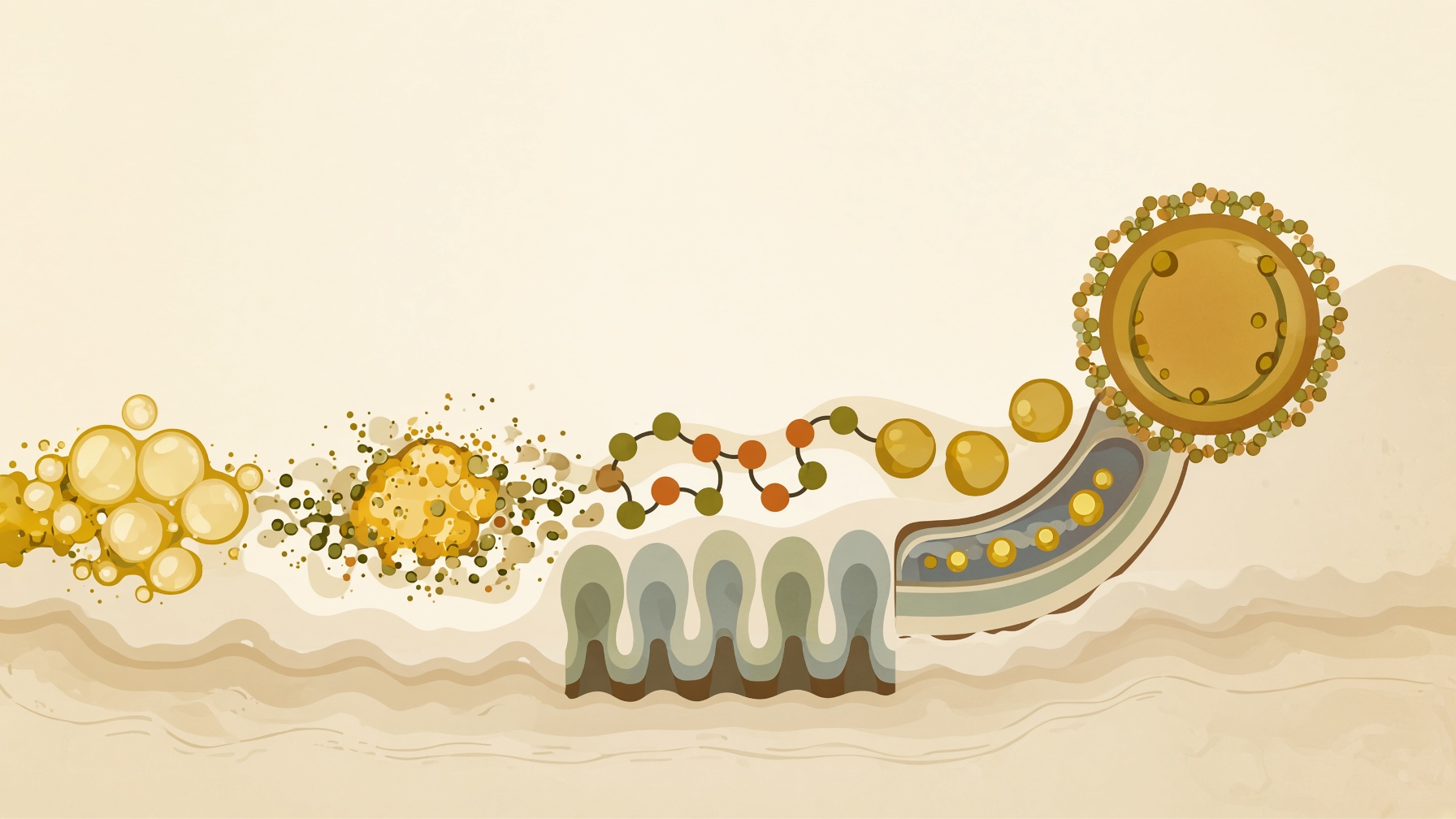
Dietary fat digestion combines physical dispersal by bile salts with enzyme breakdown, producing lipid components that intestinal cells can absorb.
Wikis
Pancreatic lipase, more precisely pancreatic triglyceride lipase, is a digestive enzyme produced by the exocrine pancreas and released into the small intestine in pancreatic juice. Its main function is to hydrolyze dietary triglycerides, which make up a major portion of dietary fat, into smaller lipid molecules that can subsequently be absorbed by intestinal cells .1,2
Pancreatic lipase acts at the interface between water and emulsified fat droplets. It preferentially hydrolyzes the ester bonds at the first and third positions of a triglyceride molecule, producing two fatty acids and a 2-monoacylglycerol. These digestion products can then associate with bile salts in mixed micelles, which help transport poorly water-soluble lipids through the intestinal contents toward the absorptive surface .1,2
Efficient pancreatic lipase activity in the small intestine depends on colipase, a small protein cofactor derived from procolipase secreted by the pancreas. In the bile salt-rich environment of the small intestine, colipase helps pancreatic lipase associate with the lipid-water interface and hydrolyze triglycerides effectively .1,3
Pancreatic lipase is distinct from gastric lipase. Gastric lipase is secreted in the stomach and can function under acidic conditions, beginning triglyceride digestion before intestinal digestion occurs. Pancreatic lipase acts mainly after stomach contents enter the small intestine and carries out much of the subsequent triglyceride hydrolysis .1,2
From this collection
Dietary fat digestion combines physical dispersal by bile salts with enzyme breakdown, producing lipid components that intestinal cells can absorb.