
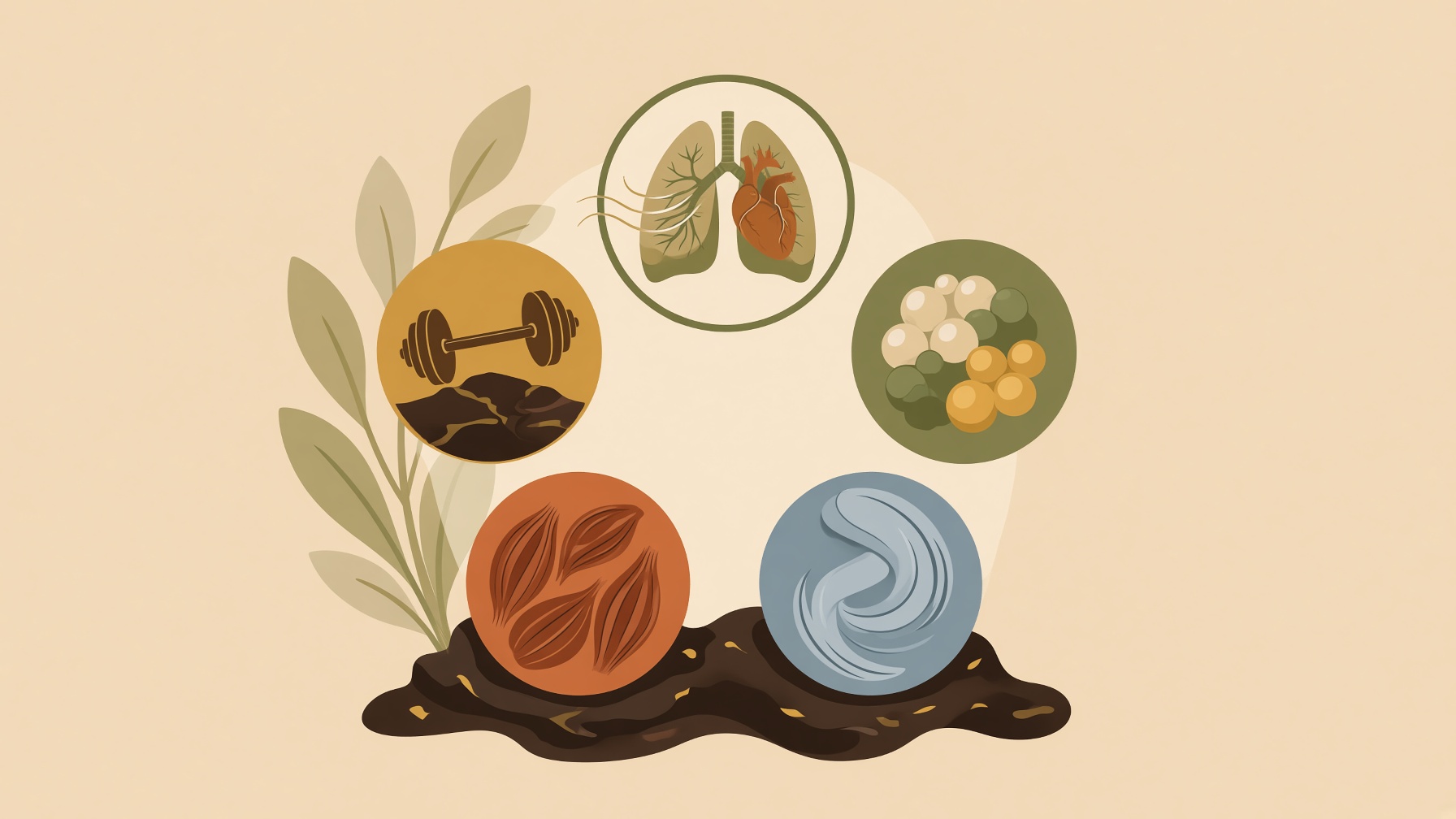
What Makes Up Health-Related Fitness?
Health-related fitness describes several distinct qualities, so strength in one area does not necessarily mean equal ability across the others.
Wikis
Physical fitness is a set of measurable attributes related to a person's ability to perform physical activity. It is not a single ability or measurement. Instead, it is a multidimensional concept that describes attributes of the body that can be assessed with specific tests .1,2
Physical fitness is commonly divided into health-related and skill-related components. Health-related fitness includes attributes such as cardiorespiratory endurance, muscular strength and endurance, flexibility, and body composition. These components describe different aspects of physical fitness, so a person can have a high level of one component while having a lower level of another .1,2
Skill-related or performance-related fitness includes attributes that contribute to performing particular physical tasks effectively, such as agility, balance, coordination, power, speed, and reaction time. The distinction between health-related and skill-related fitness is useful conceptually, although some attributes can contribute to both health and physical performance .1
Physical fitness should not be confused with physical activity or exercise. Physical activity is bodily movement produced by skeletal muscles that increases energy expenditure, while exercise is a planned, structured, and repetitive form of physical activity performed to improve or maintain physical fitness. Physical fitness describes the attributes a person has or develops rather than the activity performed to develop them .1
From this collection
Health-related fitness describes several distinct qualities, so strength in one area does not necessarily mean equal ability across the others.

Physical activity includes everyday movement that uses energy, while exercise adds planned, structured repetition to improve or maintain fitness.