
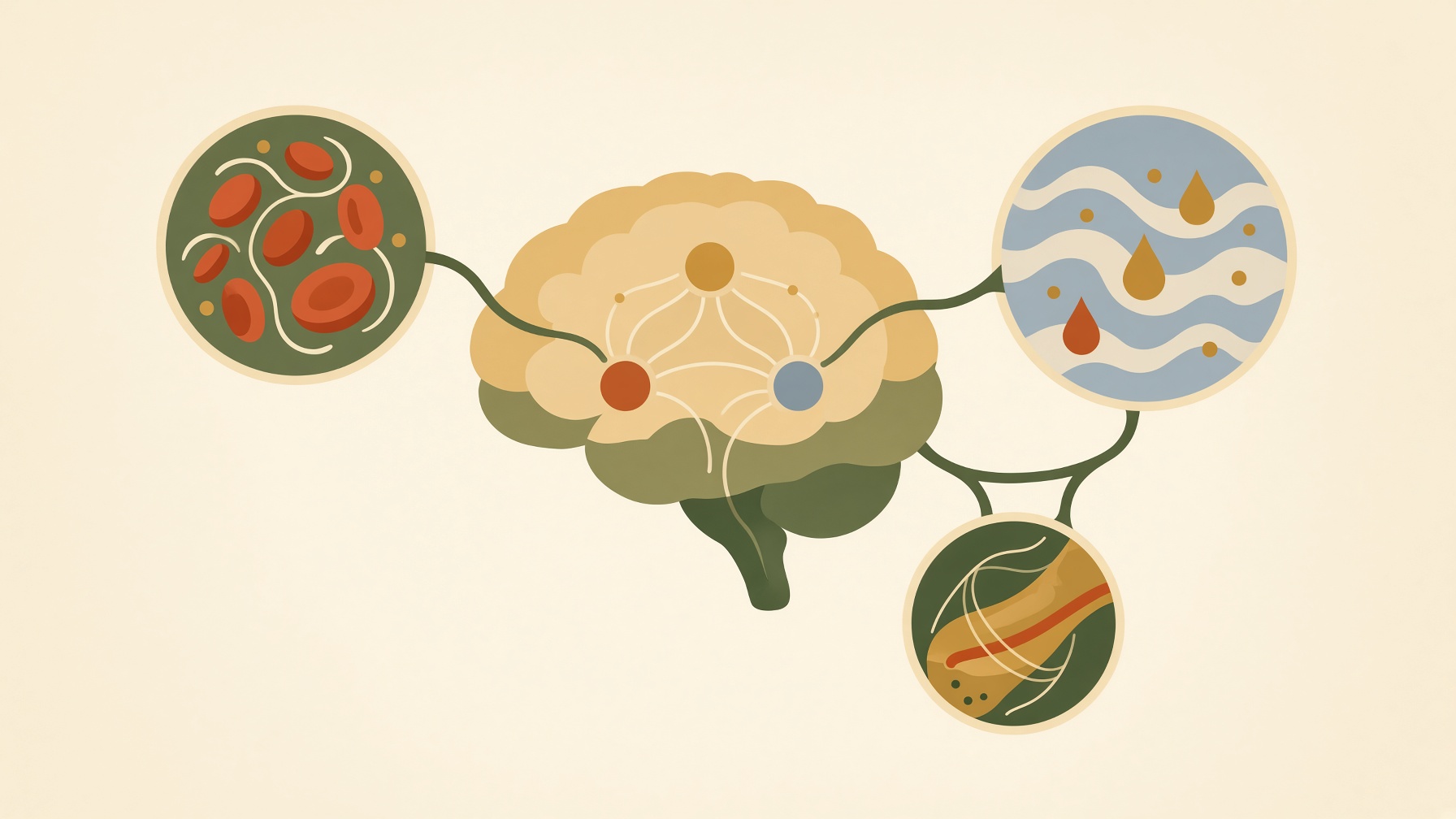
What Actually Makes You Feel Thirsty?
Thirst responds to changes in body-fluid balance, but signals from drinking can reduce the urge before water fully corrects the imbalance.
Wikis
Preabsorptive signals are sensory and physiological signals generated during eating or drinking before absorbed nutrients or water have produced their later systemic effects. They provide the nervous system with rapid information about what is being consumed and the progression of ingestion. Because absorption and subsequent systemic changes take time, these signals allow feeding and drinking behavior to adjust before the body's internal state has fully changed .1
Preabsorptive signals can arise at several stages of ingestion. Sensory information from the mouth and pharynx, including taste and oral stimulation, provides early feedback. After swallowing, stretching of the stomach generates mechanical signals, while nutrients reaching the intestine can activate sensory mechanisms and stimulate enteroendocrine cells to release signaling molecules. Information from the gastrointestinal tract can reach the brain through pathways that include vagal sensory nerves and hormonal signaling .1,2
These signals contribute to the processes that reduce and eventually stop intake during an eating or drinking episode. In fluid regulation, for example, signals from the mouth and gastrointestinal tract can suppress thirst before ingested water has entered the circulation and corrected the underlying fluid imbalance .1
Preabsorptive signals are distinct from postabsorptive signals, which arise after absorbed nutrients or water alter the circulation, metabolism, or internal fluid environment. They are also broader than oropharyngeal feedback because preabsorptive signaling can include information generated within the stomach and intestine before systemic effects of absorption develop .1,2
From this collection
Thirst responds to changes in body-fluid balance, but signals from drinking can reduce the urge before water fully corrects the imbalance.