
Why the Same Foods Don’t Affect Hunger the Same Way
Foods can change hunger and fullness, but appetite responses depend on the meal and the person rather than following a fixed timetable.
Wikis
Satiety is the temporary inhibition of further eating that develops after food has been consumed. It is associated with reduced hunger and a lower motivation to begin eating again. In appetite research, satiety mainly describes the suppression of eating during the interval between eating episodes and helps influence how long it is before hunger and the drive to eat return .1,2
Satiety is closely related to, but distinct from, satiation. Satiation is the collection of processes that develops during an eating episode and contributes to ending that episode, thereby influencing meal size. Satiety operates mainly after eating has stopped and concerns the continued inhibition of further eating. Although feelings such as fullness can form part of satiety, the scientific concept is broader than the sensation of a full stomach because it includes multiple physiological and psychological influences on the motivation to eat .1,2
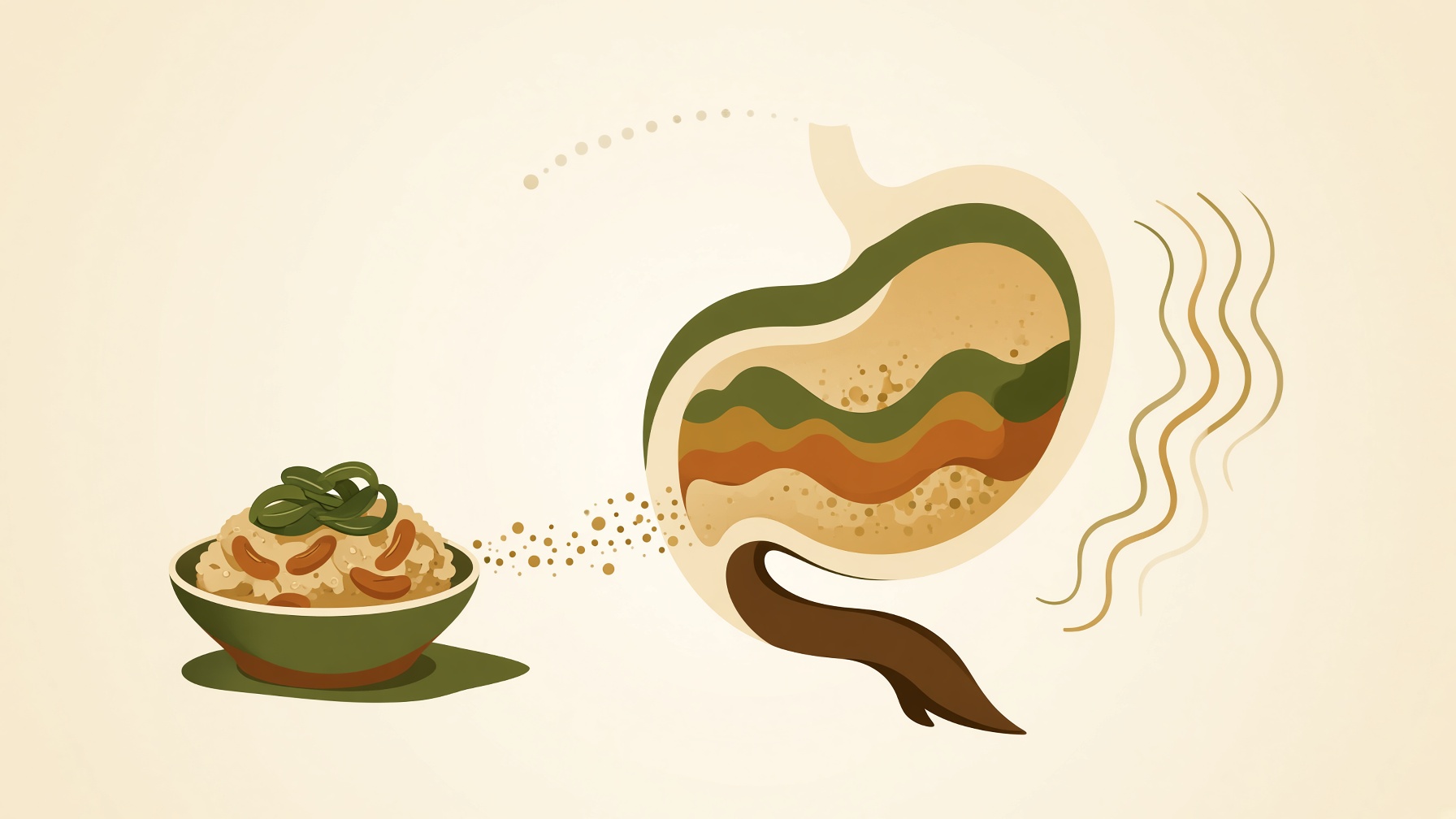
Satiety emerges from the integration of several kinds of information. Sensory and cognitive signals related to food interact with physical and hormonal signals generated as food enters and moves through the gastrointestinal tract. As digestion and absorption proceed, metabolic signals can also contribute. These overlapping influences are often described as a satiety cascade. The nervous system integrates these inputs with other influences on eating behavior rather than relying on a single satiety center or one hormone. The strength and duration of satiety can therefore vary with the food consumed and with the biological and behavioral context in which eating occurs .1,3
From this collection
Foods can change hunger and fullness, but appetite responses depend on the meal and the person rather than following a fixed timetable.