
How Your Body Digests and Absorbs Protein
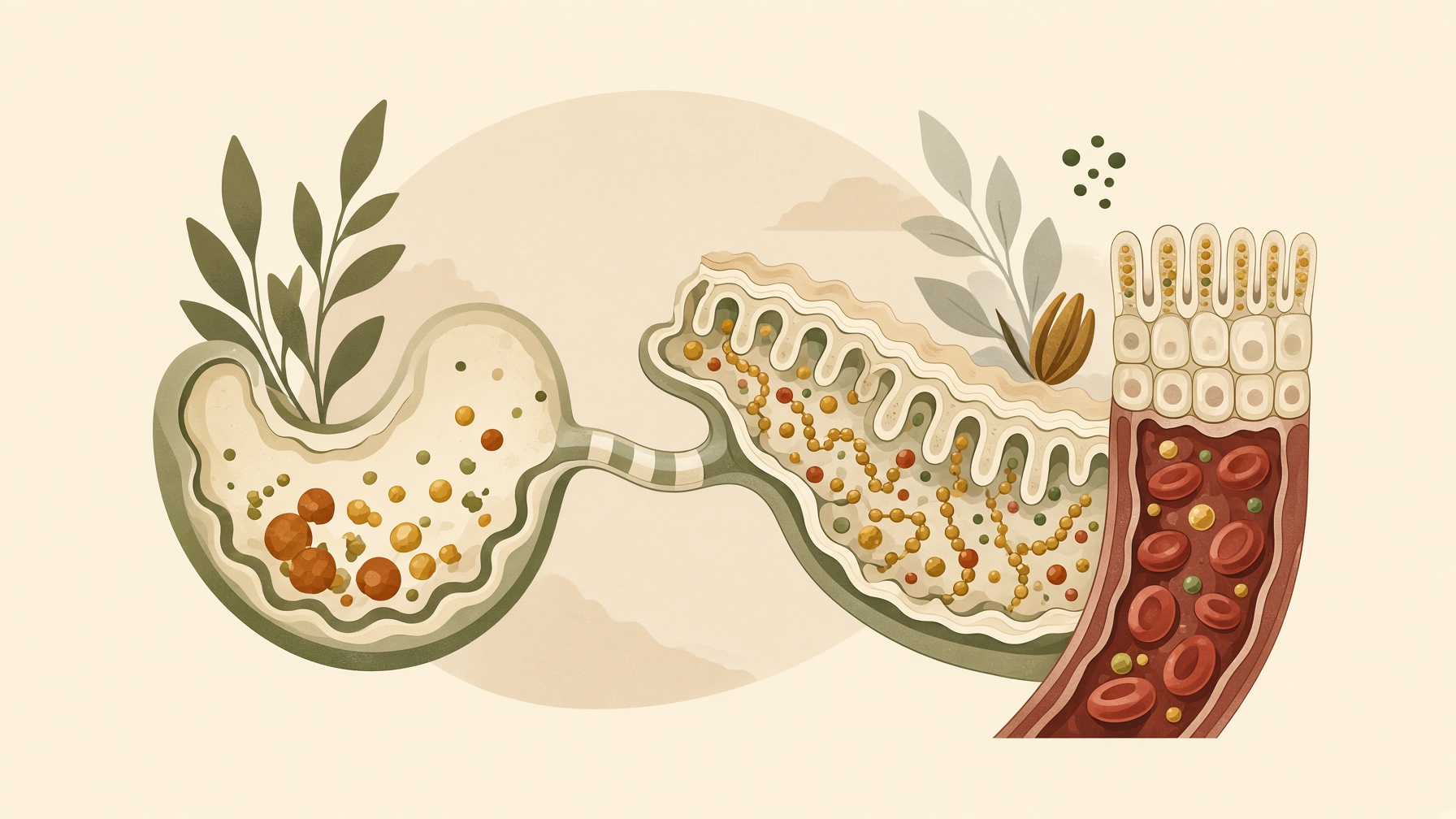
Protein digestion breaks food proteins into amino acids and small peptides that intestinal cells can absorb for the body’s ongoing protein turnover.
Wikis
Trypsin is a digestive enzyme that hydrolyzes peptide bonds within proteins and peptides in the small intestine. It belongs to the serine protease family and is classified as an endopeptidase because it cleaves peptide chains internally rather than removing amino acids only from their ends. Trypsin preferentially cleaves peptide bonds on the carboxyl side of the basic amino acids lysine and arginine .1,2
The pancreas produces trypsin as an inactive precursor, or zymogen, called trypsinogen. Pancreatic acinar cells package trypsinogen into secretory granules and release it into the intestinal lumen. In the duodenum, the brush-border enzyme enteropeptidase cleaves trypsinogen to form active trypsin. Producing the enzyme initially as an inactive precursor helps limit inappropriate proteolytic activity within the pancreas .1
Trypsin also helps coordinate pancreatic protein digestion. Once activated, it can activate additional trypsinogen and convert several other pancreatic zymogens into their active enzymes, including chymotrypsinogen, proelastase, and procarboxypeptidases. Trypsin therefore functions both as a protein-digesting enzyme and as a key component of the pancreatic digestive-enzyme activation cascade .1
Trypsin is distinct from trypsinogen and from other pancreatic proteases. Trypsinogen is its inactive precursor, whereas trypsin is the active enzyme. Trypsin and chymotrypsin are structurally related serine proteases, but their substrate preferences differ. Trypsin preferentially cleaves peptide bonds on the carboxyl side of lysine or arginine residues, whereas chymotrypsin preferentially cleaves peptide bonds on the carboxyl side of certain large hydrophobic or aromatic amino acids .1,2
From this collection
Protein digestion breaks food proteins into amino acids and small peptides that intestinal cells can absorb for the body’s ongoing protein turnover.