
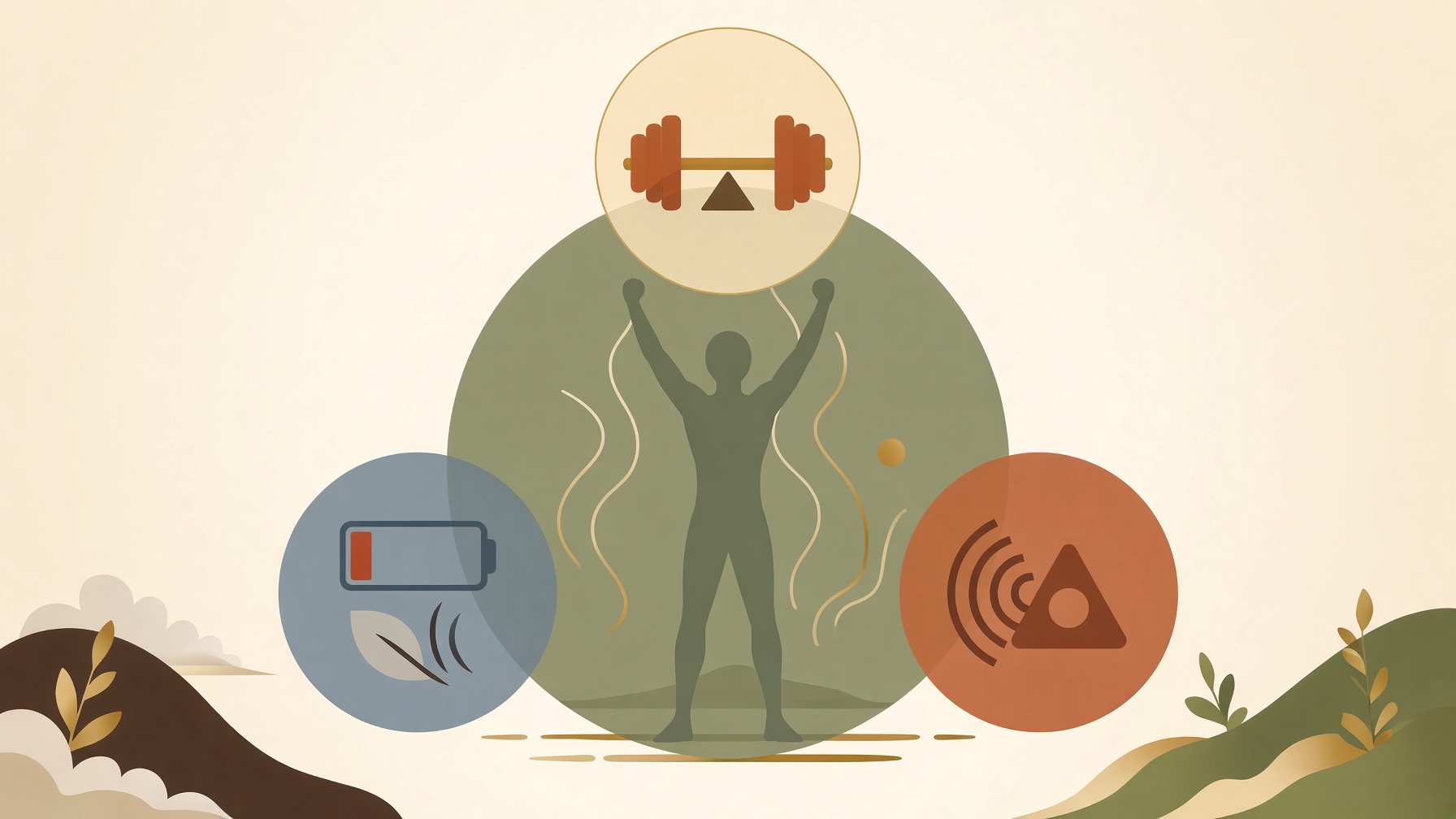
A workout can feel hard, tiring, uncomfortable, or painful, and those words are easy to blur together in the middle of a demanding session. The distinction matters most when one sensation starts being used as shorthand for all the others—or as proof that the workout somehow counted more.
Perceived exertion describes the conscious sense of how hard, heavy, or strenuous exercise feels. Pain is a different experience. The International Association for the Study of Pain defines it as an unpleasant sensory and emotional experience associated with, or resembling that associated with, actual or potential tissue damage. High perceived exertion therefore does not, by itself, mean that exercise is painful, and pain is not simply the upper end of an exertion scale.1,2
Fatigue adds another distinction. Contemporary frameworks separate performance fatigue—a measurable decline in motor or cognitive performance—from perceived fatigue, the sensations experienced as fatigue develops. Perceived exertion, pain, perceived fatigue, and measurable performance decline can occur together during exercise, but one is not a substitute measure for another.1,3
This also matters when deciding what makes a training session productive. In resistance training, an American College of Sports Medicine overview found that taking sets to momentary muscle fatigue did not consistently produce better training outcomes. That finding concerns resistance-training prescription rather than pain, but it reinforces an important distinction: reaching a demanding endpoint in a set is not the same question as whether exercise needs to hurt in order to be effective.4
Research comparing painful and nonpainful exercise addresses a much narrower setting. A 2025 systematic review examined randomized trials in adults with chronic musculoskeletal pain in which prescribed exercise either allowed or encouraged pain or was intended to remain nonpainful. It found no clear difference between the approaches for pain intensity or disability across short-, medium-, or long-term follow-up. Confidence intervals were wide, all included trials were judged at high risk of bias, and the certainty of evidence ranged from low to very low, so the comparative effect remains uncertain.5
Those findings should stay within that clinical context. They do not establish how new pain from an acute injury, severe unexplained pain, or symptoms arising in another medical setting should be interpreted. Nor do they show that deliberately producing pain makes exercise more effective. Within the chronic musculoskeletal pain trials reviewed, allowing pain during prescribed exercise did not show a clear advantage or disadvantage for pain intensity or disability compared with nonpainful exercise.5
A session can be demanding without being painful, and pain can appear without telling you how productive the session was. Keeping those experiences separate makes it easier to describe what actually happened instead of turning pain into another way of saying the workout counted.
Join the discussion
No account or email is required. Your display name and comment will be public.