
Published in connection with World Heart Day 2026 | September 29, 2026
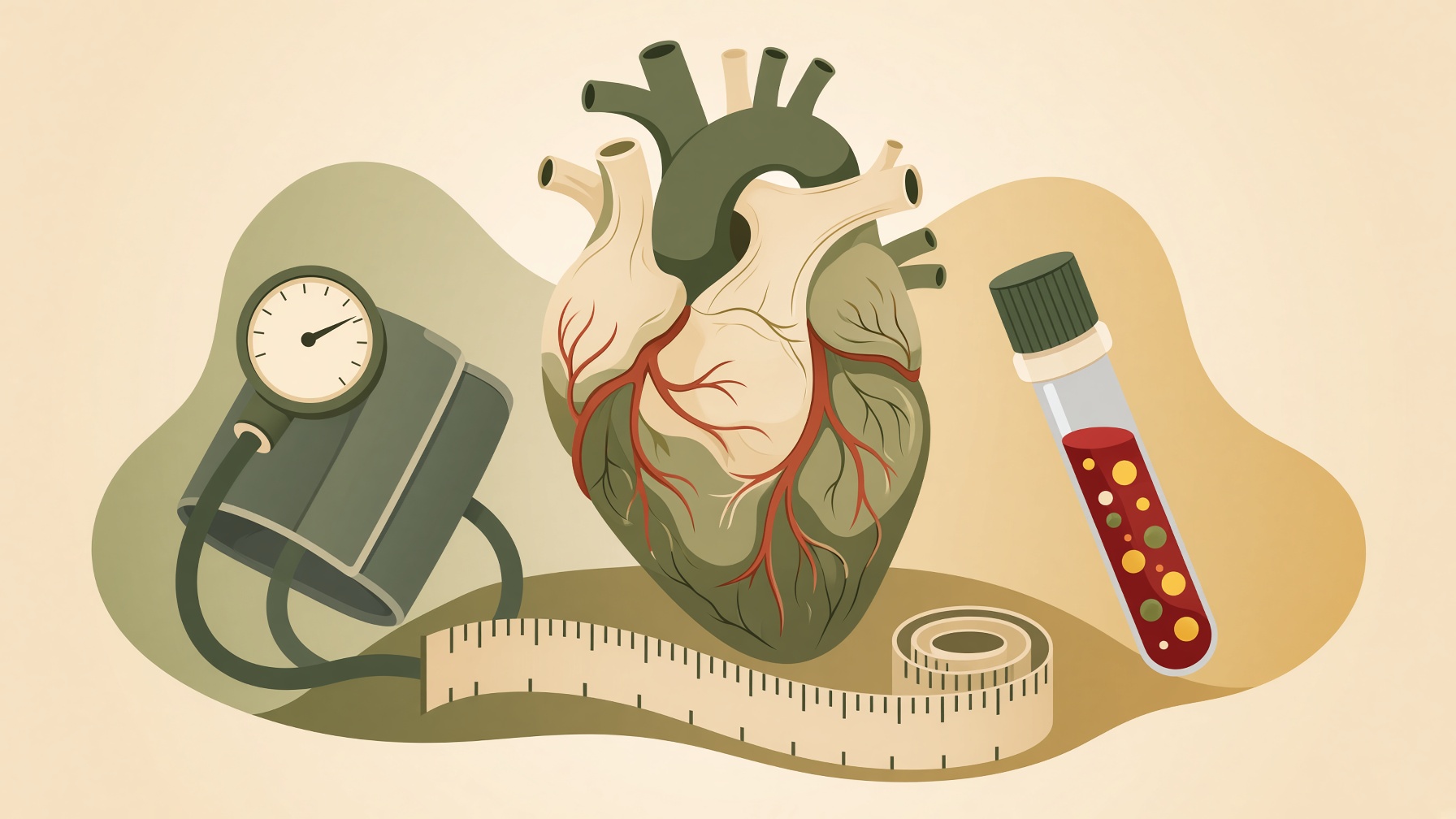
A cholesterol result may look reassuring while blood pressure still needs attention. Body weight may change without revealing what has happened to blood glucose. These measurements describe different aspects of cardiovascular health, so one favorable result cannot stand in for all the others.
World Heart Day takes place each year on September 29. The World Heart Federation’s 2026 campaign, “Don’t Miss a Beat,” encourages people to recognize warning signs, protect their hearts, and call for action on cardiovascular disease. Its Keep the Beat challenge also encourages greater physical activity throughout September.1
Recognizing symptoms and assessing risk are related but different tasks. Symptoms may signal an existing problem, while risk factors help identify the likelihood of disease developing. The World Health Organization identifies unhealthy diet, insufficient physical activity, tobacco use, and harmful alcohol use among important behavioral risks. Raised blood pressure, blood glucose, and blood lipids, along with overweight and obesity, also contribute to cardiovascular risk.2
The American Heart Association’s Life’s Essential 8 framework brings several of these elements together. It includes four health behaviors, diet, physical activity, nicotine exposure, and sleep, and four health factors: body mass index, blood lipids, blood glucose, and blood pressure. Its combined cardiovascular health score draws on these components rather than replacing them with a single test.3
What the Different Measurements Tell Us
Blood pressure, blood lipids, and blood glucose are distinct components of cardiovascular health assessment. Their inclusion in the same framework reflects their complementary roles, not their interchangeability.3
Raised blood pressure increases cardiovascular risk, and managing it can help prevent heart attacks and strokes. Looking at other markers does not make an elevated blood pressure result less important; it helps place that result within a broader assessment.2
Blood lipids provide another type of information. Cholesterol-related measurements contribute to cardiovascular risk assessment, but they do not reveal whether blood pressure, glucose regulation, sleep, or other health behaviors are also favorable.3
Body mass index, or BMI, has a different role. It is a screening measure calculated from weight and height. It does not directly measure body fat, distinguish fat from muscle and bone, or identify where fat is distributed. The CDC recommends interpreting BMI alongside other information, including blood pressure, cholesterol levels, and physical examination.4
A useful assessment therefore asks what each measurement contributes and which questions remain unanswered.
How Daily Behaviors Fit Into the Assessment
The behaviors included in Life’s Essential 8 are part of the assessment because cardiovascular health is influenced by more than laboratory results and measurements taken in a clinic.3
Diet is one example. The American Heart Association’s 2026 guidance emphasizes vegetables and fruits, whole grains, healthy protein sources, and minimally processed foods. It also recommends replacing sources of saturated fat with unsaturated fats, minimizing added sugars, reducing sodium, and balancing energy intake and expenditure to support a healthy body weight.5
These recommendations address several connected concerns, including blood lipids, blood pressure, and body weight. They focus on an eating pattern maintained over time rather than an individual food expected to determine heart health.2,5
Physical activity belongs in the same assessment, but exercise-related measurements need context. Heart rate can help estimate workout intensity, yet target ranges are general guides and some medications affect the response. A heart-rate reading during one session is not a substitute for assessing cardiovascular health more broadly.3,6
WHO guidance includes both aerobic and muscle-strengthening activity and recommends limiting sedentary time. These complementary behaviors contribute to health over time; their relevance extends beyond the pulse recorded during a workout.7
Diet and movement also sit alongside nicotine exposure and sleep. Life’s Essential 8 includes all four, helping prevent attention from becoming concentrated on the most visible behavior or the easiest number to track.3
Interpreting Change Without Dismissing Risk
Blood glucose is often discussed mainly in relation to diabetes, but it also matters for cardiovascular risk. WHO identifies raised blood glucose alongside raised blood pressure, raised blood lipids, and overweight and obesity as important measurable risk factors.2
Following several components over time can show where progress is occurring and where attention is still needed. Life’s Essential 8 was designed to support this kind of monitoring through both individual component scores and a combined assessment.3
An improvement in one area remains valuable even if another has not improved. Equally, a favorable result should not become a reason to dismiss a concerning one. WHO recognizes that treatment of hypertension, diabetes, and high blood lipids may be needed to reduce cardiovascular risk in people with these conditions.2
World Heart Day offers a useful prompt to review what a result means in the context of other measurements and health behaviors. The next step is not to collect numbers for their own sake, but to use them to identify what deserves attention and what should be followed over time.
Join the discussion
No account or email is required. Your display name and comment will be public.