
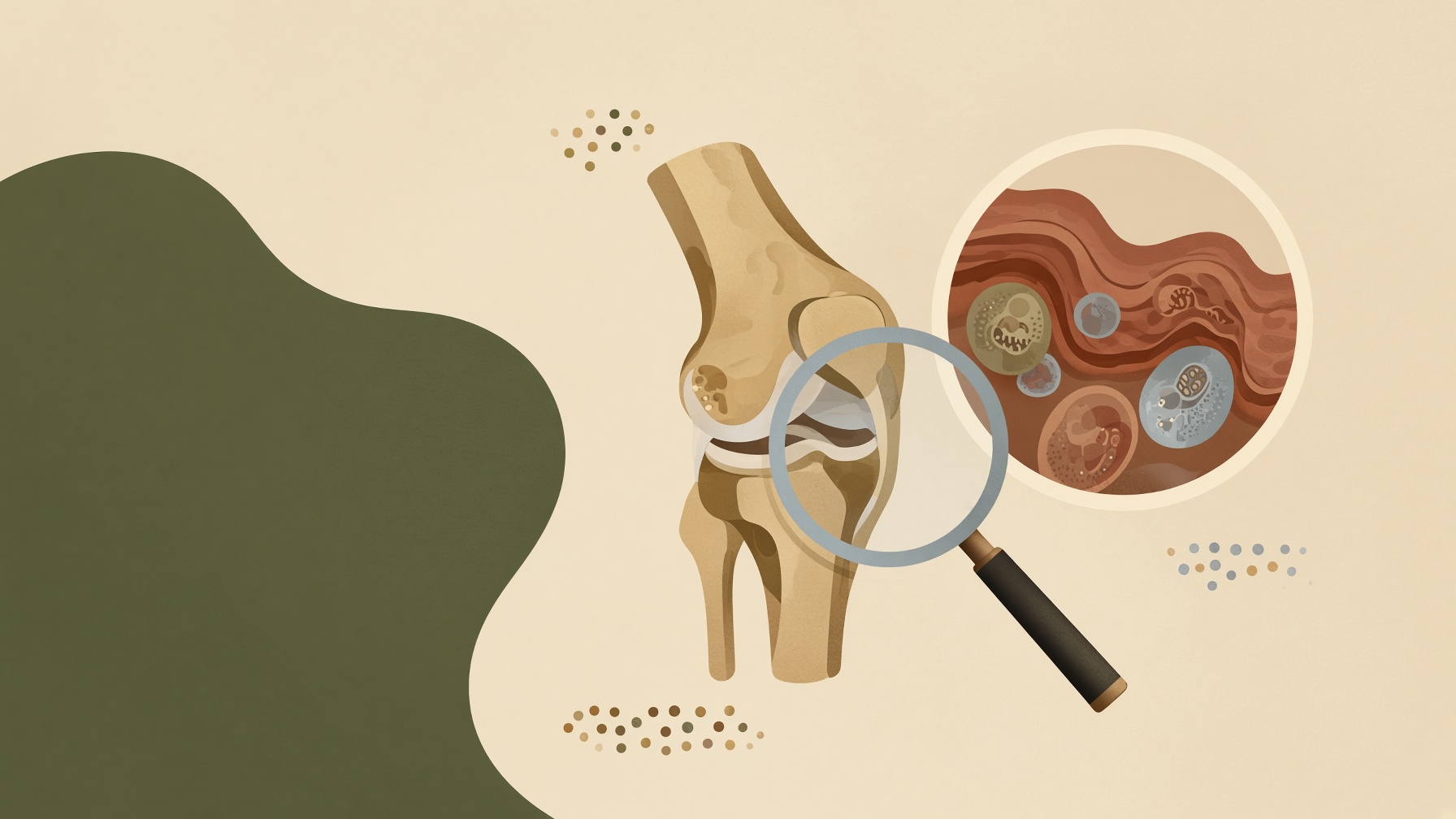
Imagine trying a stretch, then checking how far you can reach. If you get a little farther, you might wonder what happened inside your leg. What would you want to know about the nerve and muscle themselves? Let’s look at the measurements behind that question, rather than stop at how far you reached.
A movement endpoint and a tissue reading measure different things. A joint angle records the range attained; a reach test records distance. Ultrasound-based shear-wave velocity records how fast a mechanical wave travels through a small tissue region. It serves as a local proxy for stiffness at the tested posture, not a direct measurement of tissue length. The tissue reading can therefore add information that the movement endpoint does not contain.1,2
In a comparison involving 20 young active adults, passive knee-extension and standing-reach performance improved after the stretching conditions but not control. Only flossing at the study's maximal tested range produced a distinct reduction in local sciatic-nerve shear-wave velocity. Flossing uses alternating joint movements intended to mobilize a nerve; it was compared with held nerve-directed tensioning, static stretching and control on separate visits. The movement improvements were broader than this particular nerve response.1
The sampled muscle supplied another distinction. Shear-wave velocity in the biceps femoris, one of the hamstring muscles, changed over time overall, without evidence that its change differed between conditions. Because that overall pattern included control, it could not establish a stretching-specific muscle effect. Both nerve and muscle readings were taken with the hip and knee held at standardized angles, rather than across each person's newly attained range.1
A procedure's intended target did not uniquely identify the tissue response in older men either. Among 27 men with a mean age of 75, ankle dorsiflexion range (the angle reached as the foot moves toward the shin) increased and local sciatic-nerve shear-wave velocity decreased as overall before-and-after patterns across muscle-directed ankle stretching and nerve-directed seated stretching. No difference in change between procedures was detected. This experiment sampled a different muscle, the medial gastrocnemius in the calf, with the ankle neutral during tissue measurements. No significant changes were detected in the sampled muscle or fascia, the connective tissue layers also examined. There was no unstretched control or equivalence test. The findings establish neither identical effects between procedures nor an absence of muscle or fascia change.2
The technique labels described intended targets, not proof that only the named tissue was loaded or changed. Even when range and a local stiffness proxy changed together, neither experiment established that the tissue change caused the added range. These immediate measurements also did not test permanent lengthening.1,2
When evaluating a stretching explanation, it helps to specify what you want explained: the change in a movement test, the response of a particular tissue, or an effect that lasts beyond the session. A useful explanation should address the same question you are asking. This gives you a straightforward basis for reading about flexibility without having to choose a muscle-based or nerve-based account in advance.


Join the discussion
No account or email is required. Your display name and comment will be public.