
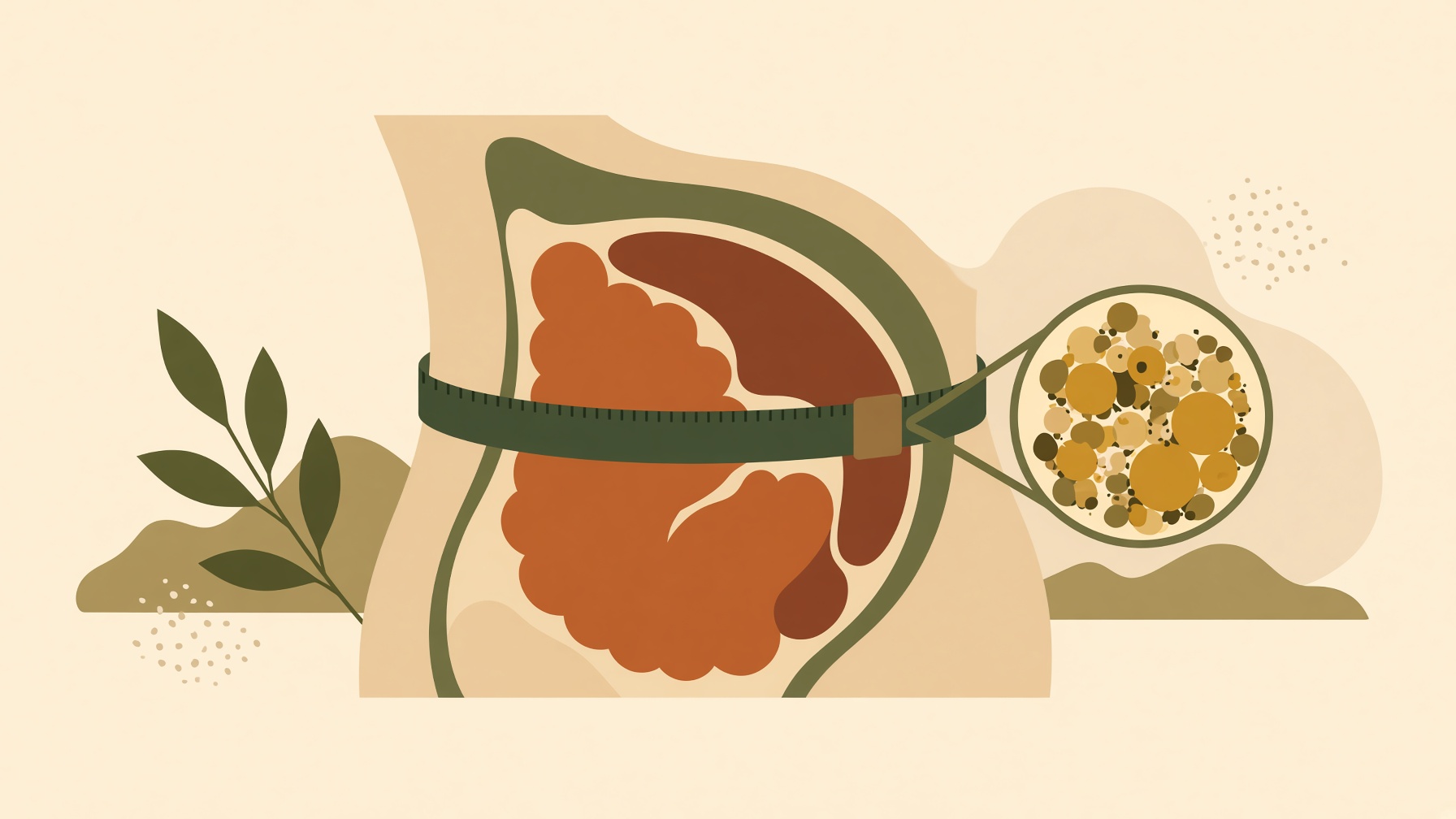
A tape measure can give you a precise number around the waist, but that precision can make the measurement seem more revealing than it really is. The useful question is not simply what the number is, but what it can tell you about the fat stored inside the abdomen.
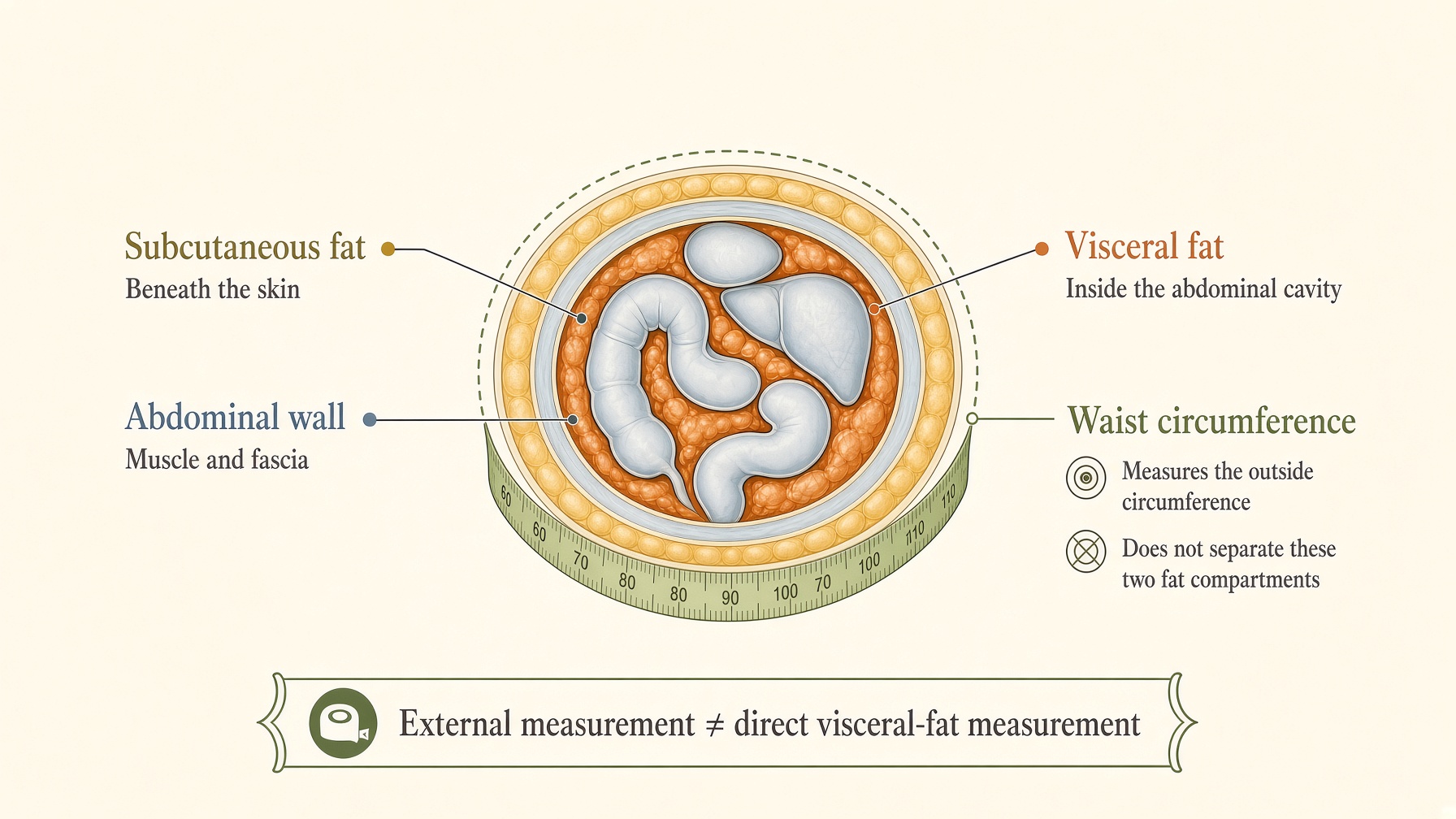
Waist circumference is an external measure of central body size and a useful marker of abdominal adiposity. It is related to visceral fat, but it does not directly measure how much visceral adipose tissue a person has or provide an internal view of where that fat is stored. Estimating an individual’s visceral fat precisely requires methods that can distinguish internal body compartments rather than relying on circumference alone.1,2
That distinction matters because abdominal fat is not all in the same place. Visceral adipose tissue is located within the abdominal cavity in association with internal organs, while subcutaneous abdominal fat lies beneath the skin. Both can contribute to waist size, so a tape measure cannot separate how much of the circumference comes from each compartment.1,2
The clinical value of waist circumference comes largely from its relationship with health risk rather than from its ability to quantify visceral fat directly. Greater central and visceral adiposity are associated with less favorable metabolic profiles, including lower insulin sensitivity and disturbances in lipid metabolism. Prospective evidence also links larger waist measurements with a higher risk of type 2 diabetes. Associations with all-cause mortality are also present, although the relationship across the full range of waist measurements is not simply linear and varies across studies and populations.2,3,4,5
Waist circumference can also add information beyond body mass index, or BMI, because the two measurements describe different aspects of body size. BMI relates weight to height, while waist circumference focuses on central body size. Neither measurement identifies the cause of disease or provides a complete assessment of an individual’s health on its own.2
Waist-to-hip ratio offers another way to describe body proportions by comparing waist circumference with hip circumference. It remains an indirect anthropometric measure rather than a direct measurement of visceral fat. Whether it performs better than waist circumference for identifying risk depends on the population and the outcome being studied, rather than one measure being universally superior.6,7
How the waist is measured also matters. The World Health Organization protocol places the tape midway between the lower margin of the last palpable rib and the top of the iliac crest, with the measurement taken at the end of a normal expiration. Other protocols use different anatomical sites, and those choices can produce different absolute values. A waist measurement is therefore most useful when the method used to obtain it is clear and consistent.2,7
Cutoffs need similar context. Screening thresholds vary across guidelines and populations and are used to identify levels at which additional assessment may be warranted. They should not be interpreted as sharp biological boundaries where risk suddenly appears, and evidence on diabetes risk does not support a single universal waist value at which risk begins.4,7
A waist measurement is most useful when it is treated as one piece of information rather than a picture of what is happening inside the abdomen. Its value comes from the context it adds—not from pretending a tape measure can see beneath the skin.
Join the discussion
No account or email is required. Your display name and comment will be public.