
What Makes Air Move In and Out of Your Lungs?
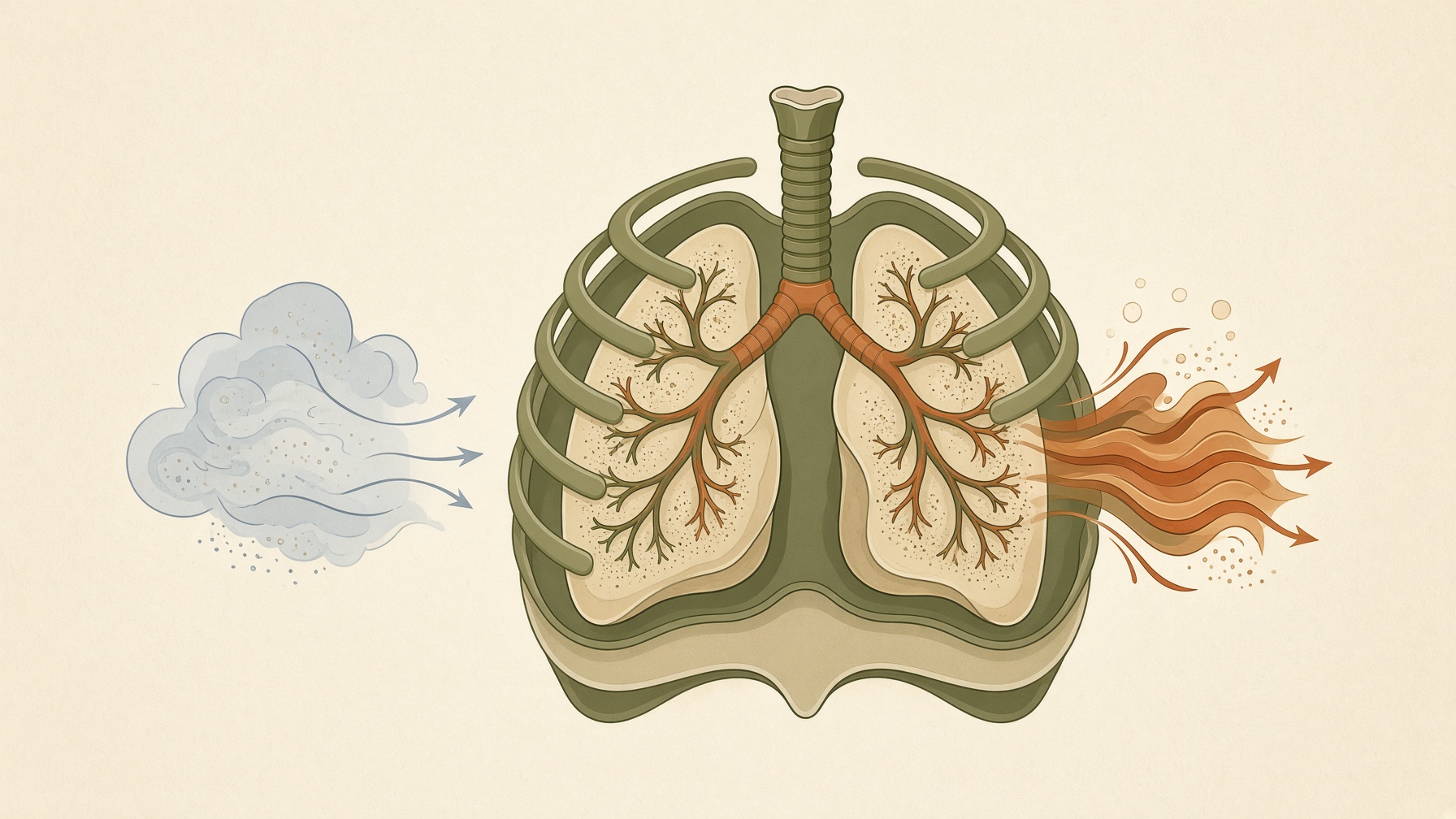
Breathing moves air through pressure differences created as the lungs expand and recoil, with airflow traveling from higher to lower pressure.
Wikis
Alveolar pressure is the pressure of gas inside the lung’s alveoli, the microscopic air spaces where gas exchange occurs. It is commonly expressed relative to atmospheric pressure, with atmospheric pressure treated as zero. When alveolar pressure equals atmospheric pressure and the airway is open, there is no pressure gradient to drive airflow between the lungs and the outside environment .1
During normal spontaneous inspiration, contraction of the respiratory muscles expands the thorax and lungs. As the lungs expand, alveolar pressure falls slightly below atmospheric pressure, creating a pressure gradient that draws air into the lungs. When alveolar pressure again equals atmospheric pressure at the end of inspiration, airflow temporarily stops .1,2
During passive expiration, relaxation of the inspiratory muscles and elastic recoil of the lungs reduce lung volume. Alveolar pressure then rises above atmospheric pressure, causing air to flow out of the lungs. Airflow therefore depends on the pressure difference between the alveoli and the airway opening, as well as on resistance to airflow .1,2
Alveolar pressure is distinct from intrapleural pressure, which is the pressure within the pleural space surrounding the lungs. The difference between alveolar and intrapleural pressure is called transpulmonary pressure and represents the distending pressure across the lung. These pressures are related but describe different aspects of respiratory mechanics .1,2
From this collection
Breathing moves air through pressure differences created as the lungs expand and recoil, with airflow traveling from higher to lower pressure.