
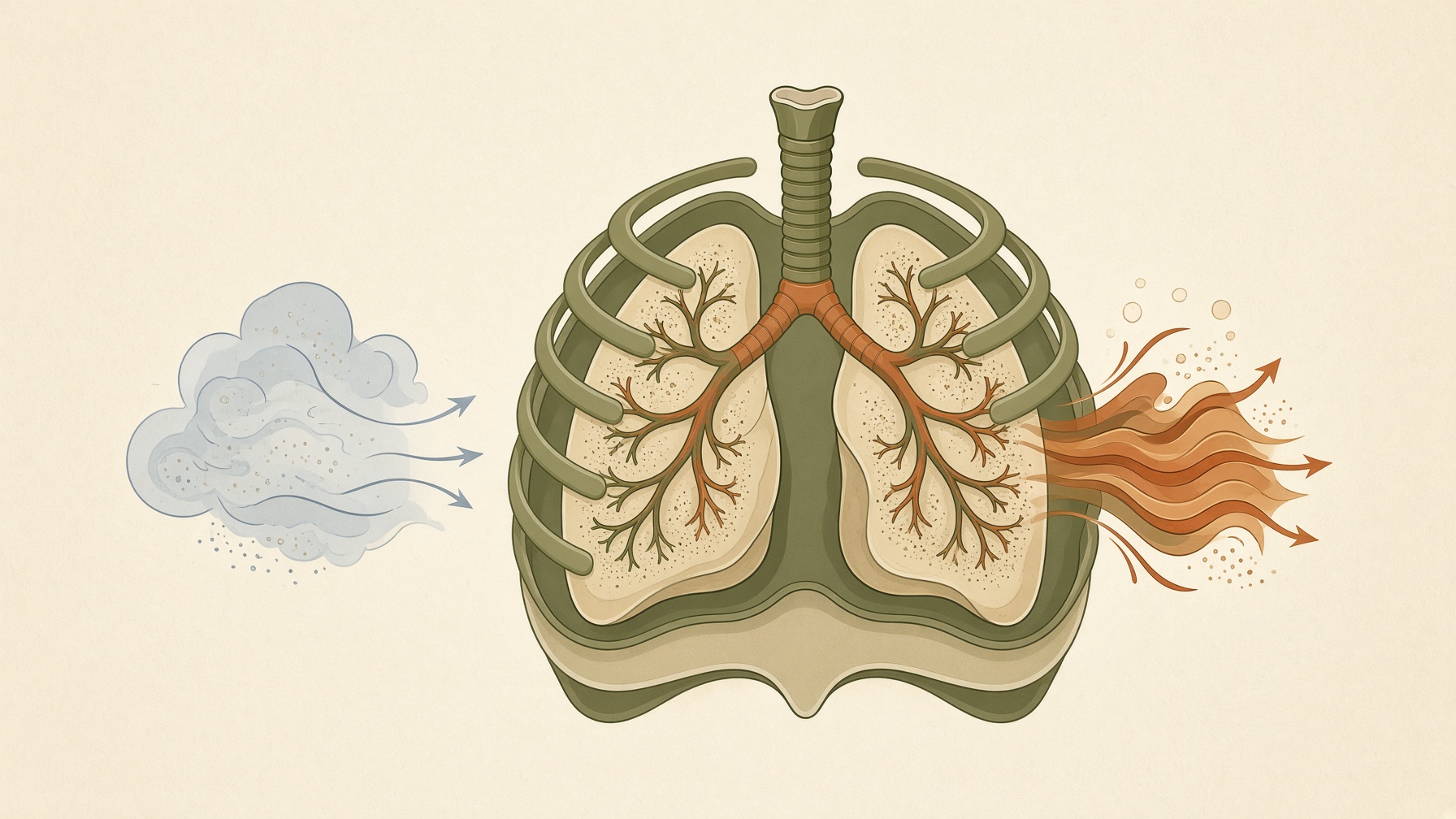
Air does not enter the lungs because the lungs actively pull it inward. Instead, breathing depends on mechanical changes that create small differences in pressure between the air inside the lungs and the surrounding atmosphere. Following how those pressures change makes the movement of air during a normal breath much easier to understand.
Pulmonary ventilation depends on pressure differences between the alveoli and the atmosphere. When a pressure gradient exists, air flows from higher pressure toward lower pressure. Alveolar pressure, often also called intrapulmonary pressure, therefore helps determine the direction of airflow .1
During inspiration, contraction of the diaphragm and other inspiratory muscles expands the thoracic cavity and makes intrapleural pressure more negative. This increases the pressure difference that keeps the lungs expanded, allowing lung volume to increase. As the lungs expand, alveolar pressure falls slightly below atmospheric pressure, creating a gradient that drives air into the lungs .1
Quiet expiration is largely passive. As the inspiratory muscles relax, elastic recoil of the respiratory system reduces lung volume toward its resting level. Alveolar pressure rises slightly above atmospheric pressure, reversing the pressure gradient and driving air out of the lungs. Forced expiration is different because expiratory muscles can actively assist in reducing thoracic volume .1
Breathing is less about the lungs actively pulling air in and more about creating the pressure differences that allow air to move. Changes in lung volume alter the pressure inside the lungs relative to the atmosphere, and airflow follows that difference. This simple relationship links the movement of the diaphragm, the expansion and recoil of the lungs, and the flow of air into and out of the body with each quiet breath.
Join the discussion
No account or email is required. Your display name and comment will be public.