
Does “Fresh” Tell You Enough about the Vitamins in Your Vegetables?
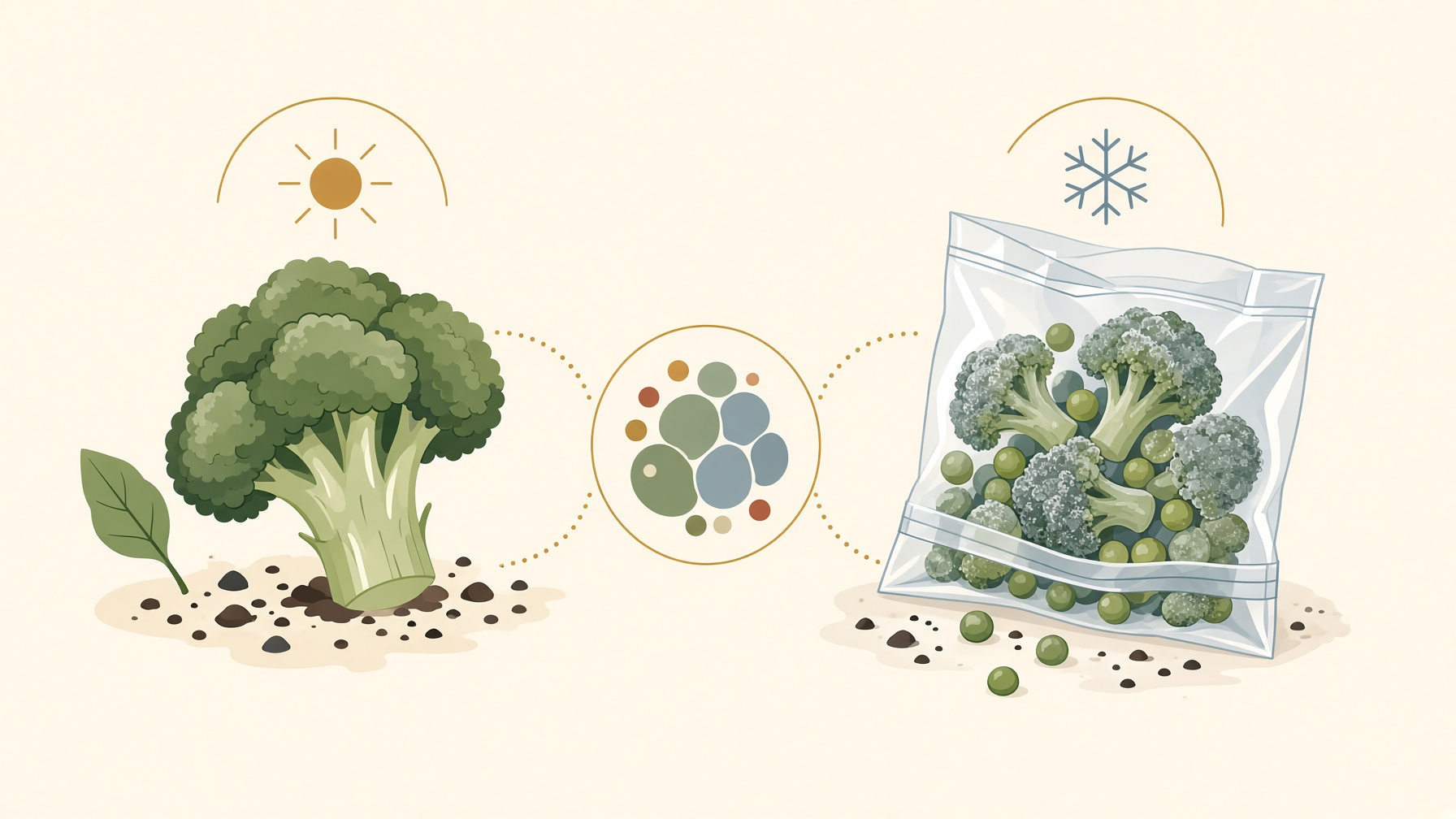
Fresh versus frozen vegetable comparisons depend on the crop, nutrient and storage timeline, so a single result cannot rank all produce.
Wikis
Blanching is a brief heat treatment in which vegetables are exposed to boiling water or steam. When preparing vegetables for freezing, this heating is followed by rapid cooling to stop further cooking. The treatment also softens plant tissue and can brighten its color .1
A central purpose is to slow or stop enzymes that would otherwise contribute to changes in flavor, color, and texture during storage. Blanching is therefore a preparation step before freezing, rather than another name for freezing itself. Its effect depends on how thoroughly and how long the vegetable is heated .1
The appropriate duration varies with the vegetable and the size of the pieces. Too little heating can stimulate enzyme activity instead of adequately controlling it, while excessive heating can cause losses of flavor, color, vitamins, and minerals. Blanching is thus a controlled treatment, not simply cooking for as long as possible .1
From this collection
Fresh versus frozen vegetable comparisons depend on the crop, nutrient and storage timeline, so a single result cannot rank all produce.