
BMI Doesn’t Tell the Whole Story
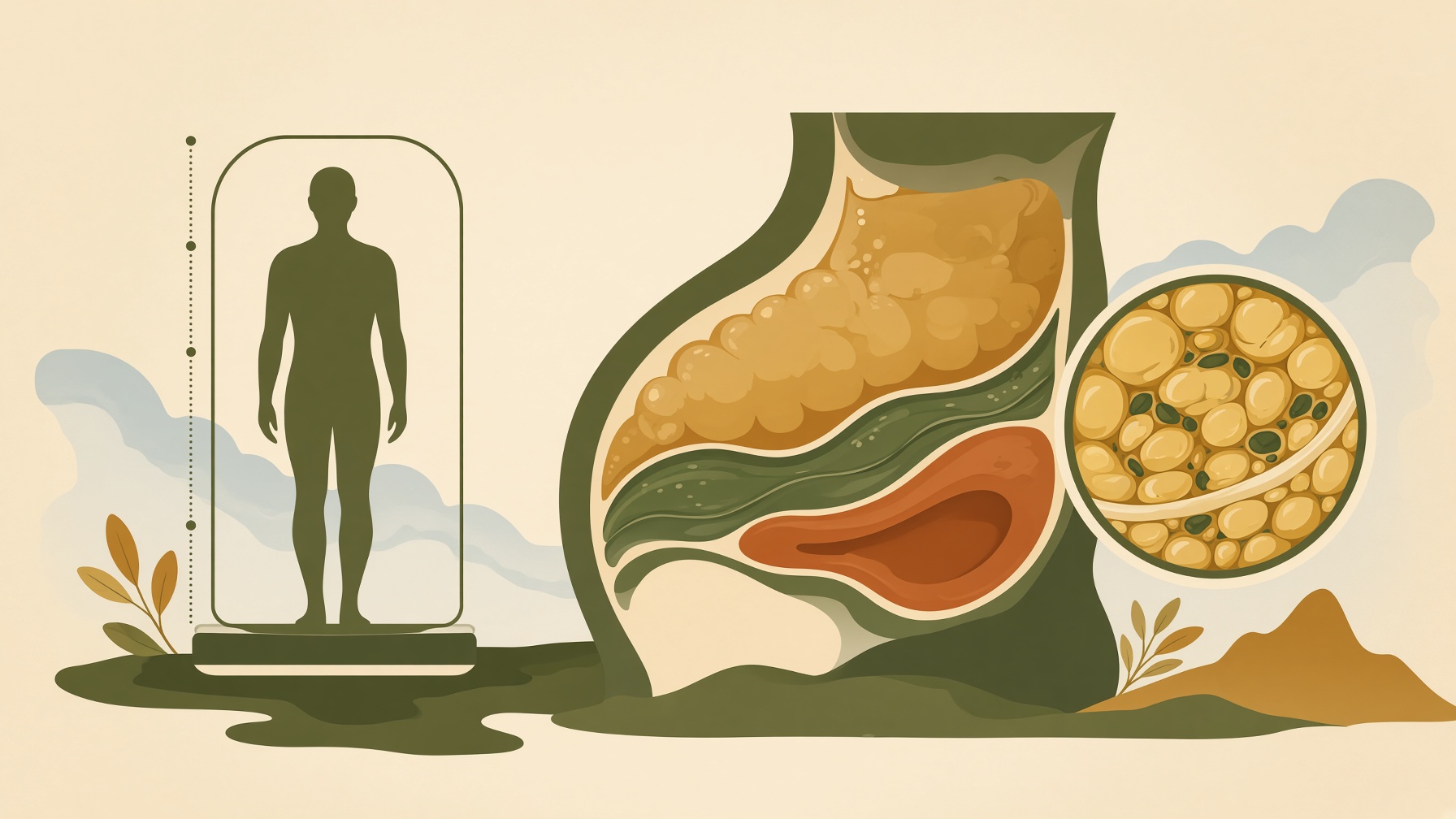
BMI screens weight relative to height, but cannot distinguish muscle from fat or show where body fat sits when assessing individual health.
Wikis
Body mass index, or BMI, is a calculated measure of body weight relative to height. It is obtained by dividing a person’s weight in kilograms by the square of their height in meters, giving units of kilograms per square meter, or kg/m². BMI is widely used as a simple way to categorize weight status and as a screening measure in clinical and population health settings .1,2
For adults, BMI values are commonly grouped into categories such as underweight, healthy weight, overweight, and obesity. These categories provide a standardized way of interpreting weight relative to height, but BMI itself does not directly measure body fat. In children and adolescents, the same calculation is used, but BMI is interpreted in relation to age and sex because body composition and the relationship between weight and height change during growth .1,2
BMI is an indirect indicator of adiposity, or body fatness. It is correlated with more direct measures of body fat, but it cannot distinguish fat mass from muscle, bone, and other lean tissues. It also does not show where fat is distributed in the body. Consequently, two people with the same BMI can have different body compositions .1
BMI is therefore distinct from a direct measurement of body composition. Its main advantages are that it requires only height and weight and can be calculated quickly and inexpensively. For an individual, it is best understood as one measure that can contribute to health assessment rather than as a complete measure of body composition or overall health .1
From this collection
BMI screens weight relative to height, but cannot distinguish muscle from fat or show where body fat sits when assessing individual health.