
What Happens to Food Before It Reaches Your Stomach?
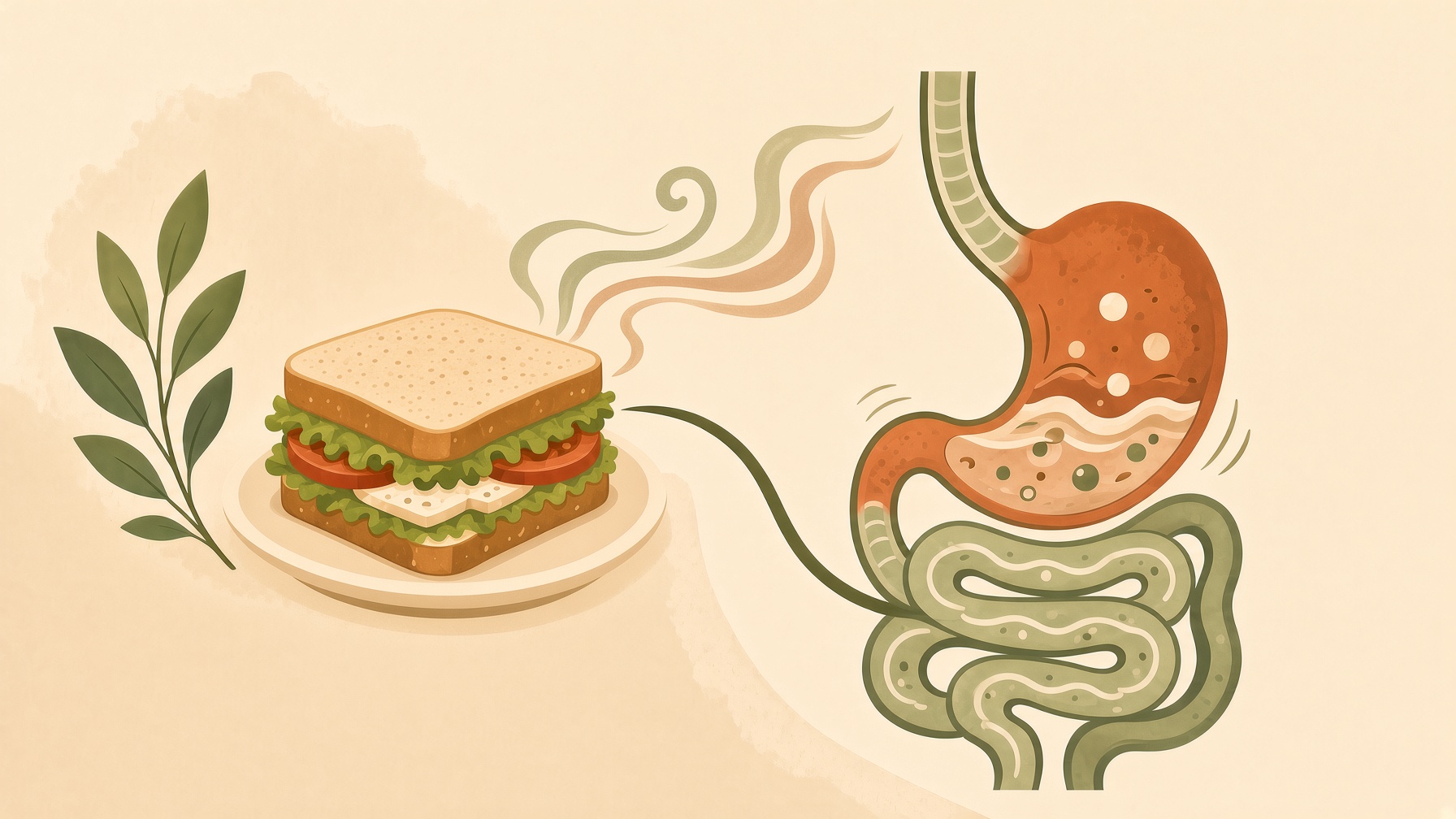
Digestion starts with chewing and starch breakdown in the mouth, while swallowing moves food toward a stomach already preparing for the meal.
Wikis
In digestive physiology, a bolus is a cohesive mass of chewed food mixed with saliva and formed in the mouth for swallowing. As food is chewed, it is mechanically broken into smaller pieces and mixed with saliva. Saliva moistens and lubricates the food, while coordinated movements of the jaw and tongue help form a mass that can be swallowed .1,2
Bolus formation is part of oral food processing. The physical properties of the bolus change as chewing continues because the original food structure is broken down and saliva is incorporated. The properties needed for a swallowable bolus depend partly on the food, so different foods can require different amounts and patterns of oral processing .1
Once swallowed, the bolus passes through the pharynx and into the esophagus. Coordinated muscular contractions, including peristalsis, then move it toward the stomach. In the stomach, the bolus is mixed and churned with gastric contents as digestion continues .2
A bolus is distinct from chyme. Bolus generally describes the swallowed mass of food produced by oral processing and transported through the esophagus. Chyme is the mixture produced after food undergoes further mechanical and chemical processing in the stomach. The two terms therefore describe food at different stages of digestion .2
From this collection
Digestion starts with chewing and starch breakdown in the mouth, while swallowing moves food toward a stomach already preparing for the meal.