
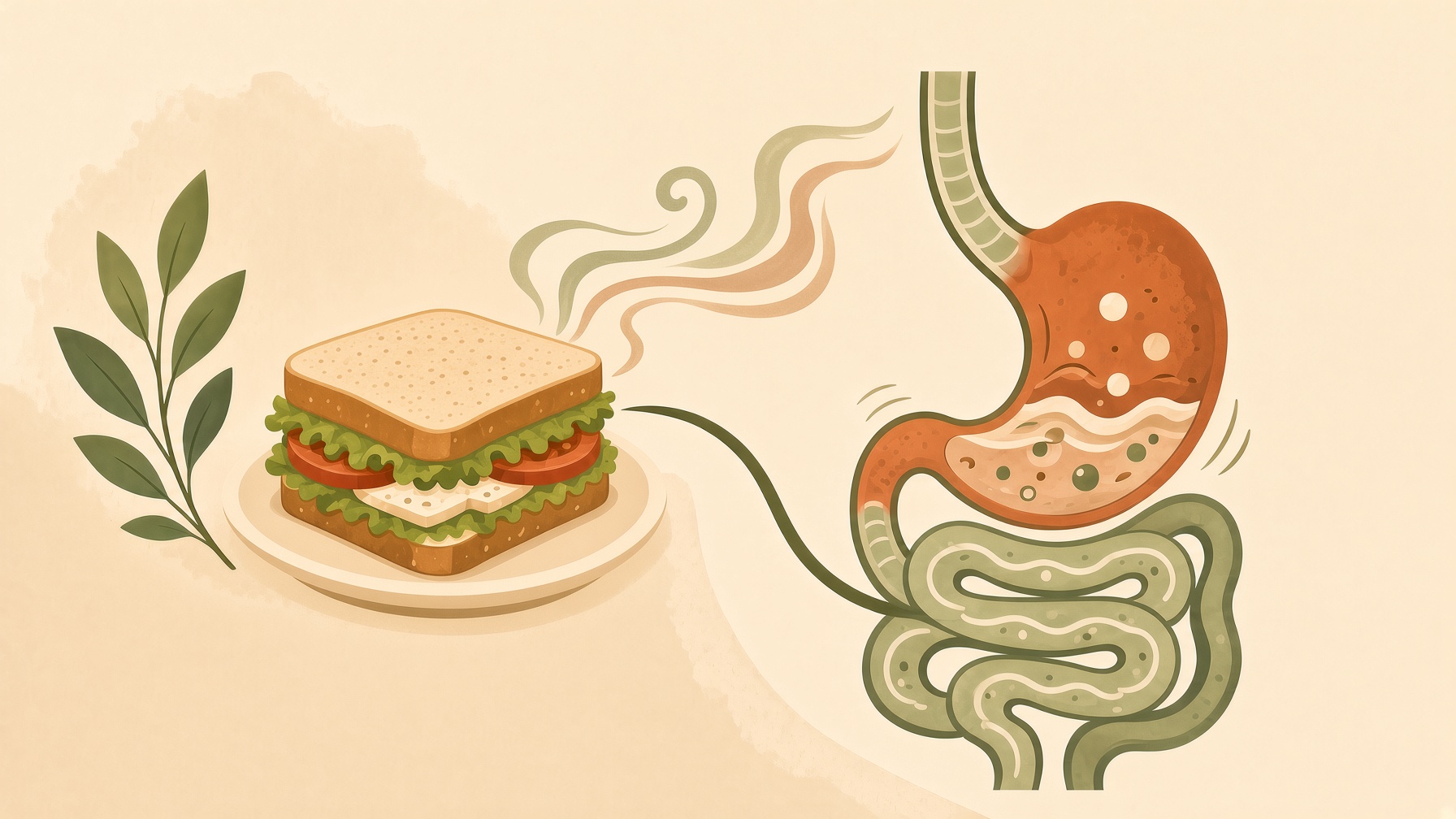
Digestion may seem to begin only when food reaches the mouth, but the digestive system can start responding before the first bite. Simply seeing or smelling food can trigger physiological changes that prepare the body for what is about to arrive. The important distinction is between preparing for digestion and actually beginning to break the food down.
Before food enters the mouth, digestive preparation can already be underway. The sight and smell of food can trigger anticipatory physiological responses that ready the body for eating. Neural responses to those food cues can, for example, increase salivation. These are preparatory responses, not mechanical or chemical digestion of the food itself, since the food has not yet entered the mouth .1
Once food is in the mouth, both mechanical and chemical digestion begin. Chewing, or mastication, starts the mechanical process by physically breaking down the food. Salivary amylase also begins the chemical breakdown of starch. As chewing continues, the food mixes with saliva and forms a cohesive mass called a bolus, which is the form in which the food is swallowed .2
Swallowing starts with a voluntary oral phase. The tongue propels the bolus toward the pharynx, after which the pharyngeal and esophageal phases proceed involuntarily. Once the bolus is in the esophagus, peristalsis propels it toward the stomach. At the lower end of the esophagus, the lower esophageal sphincter is normally tonically contracted between swallows. During swallowing, it relaxes before the bolus reaches the stomach, rather than waiting for the food to press directly against it. That relaxation permits the bolus to pass from the esophagus into the stomach .3
The key distinction is that the digestive system can prepare for food before it has anything to digest. Sensory cues can set physiological responses in motion, but actual breakdown of the food begins only after contact with it occurs. From that point on, digestion and transport become coordinated parts of the same process, allowing a meal to move smoothly from ingestion toward the next stages of digestion.
Join the discussion
No account or email is required. Your display name and comment will be public.