
What Happens to Fiber Your Small Intestine Can’t Digest?
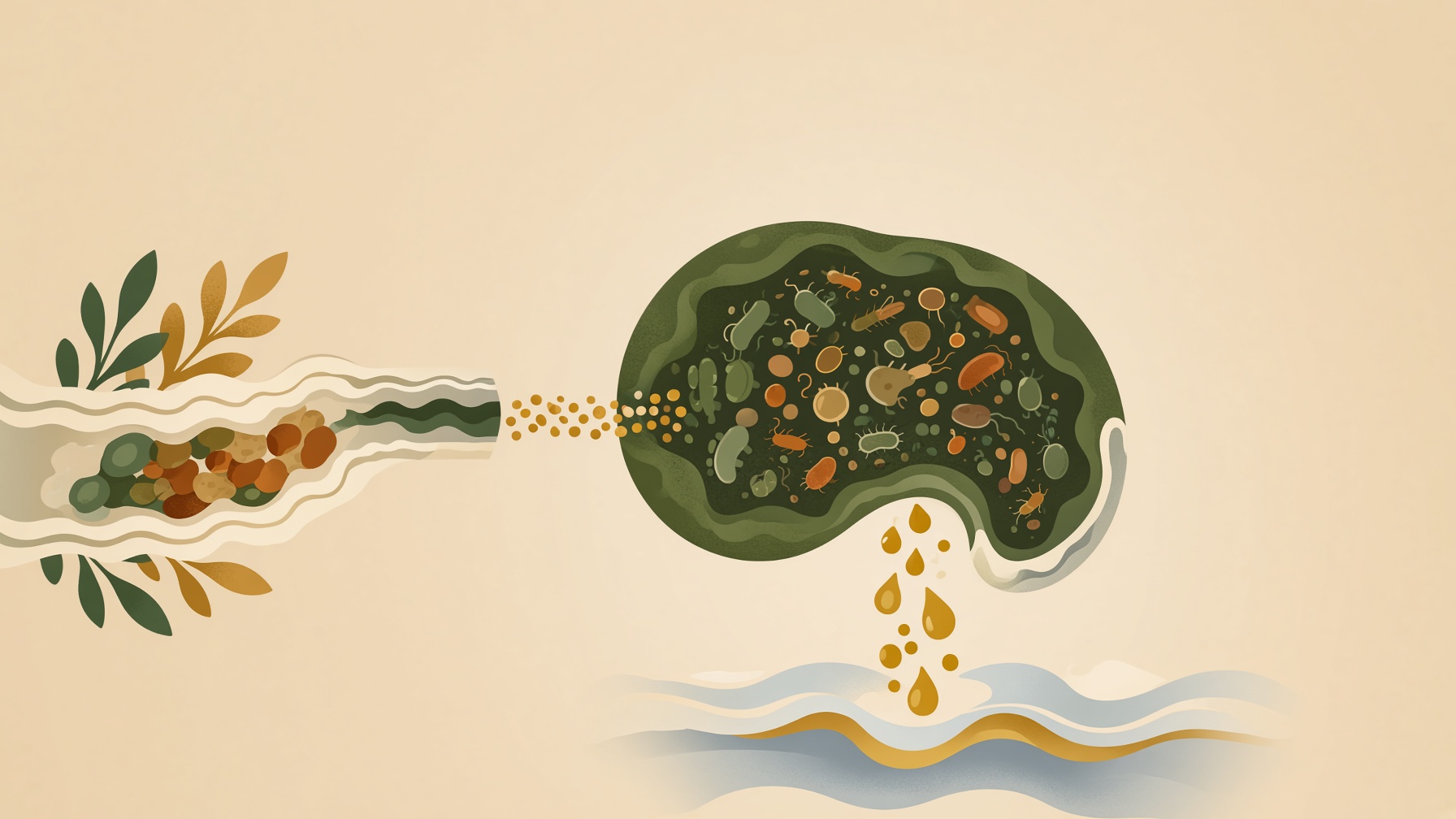
Colon microbes ferment some dietary fiber into short-chain fatty acids that the body can absorb, recovering energy human enzymes cannot release.
Wikis
Butyrate, also called butanoate, is the negatively charged conjugate base of butyric acid, a four-carbon short-chain fatty acid. In the human colon, butyrate is produced mainly by members of the gut microbiota during anaerobic fermentation of carbohydrates that escape digestion, including components of dietary fiber. Along with acetate and propionate, it is one of the principal short-chain fatty acids generated by colonic fermentation .1,2
Butyrate production involves several microbial metabolic pathways and interactions between different microorganisms. Some bacteria can use fermentation products made by other species to produce butyrate, a process known as cross-feeding. Consequently, the amount of butyrate produced depends on both the substrates reaching the colon and the composition and metabolic activity of the microbial community .2
Much of the butyrate produced in the colon is taken up by cells lining the colon, called colonocytes, where it can be used as an energy source. Butyrate also acts as a signaling molecule, including through certain G-protein-coupled receptors and effects on histone deacetylases involved in regulating gene expression .2,3
Butyrate is a specific member of the broader short-chain fatty acid group, not a synonym for short-chain fatty acids in general. It is chemically related to butyric acid: the two terms refer to different protonation states of the same underlying compound, with butyrate being the negatively charged form .1
From this collection
Colon microbes ferment some dietary fiber into short-chain fatty acids that the body can absorb, recovering energy human enzymes cannot release.