What Makes Skeletal, Cardiac, and Smooth Muscle Different?
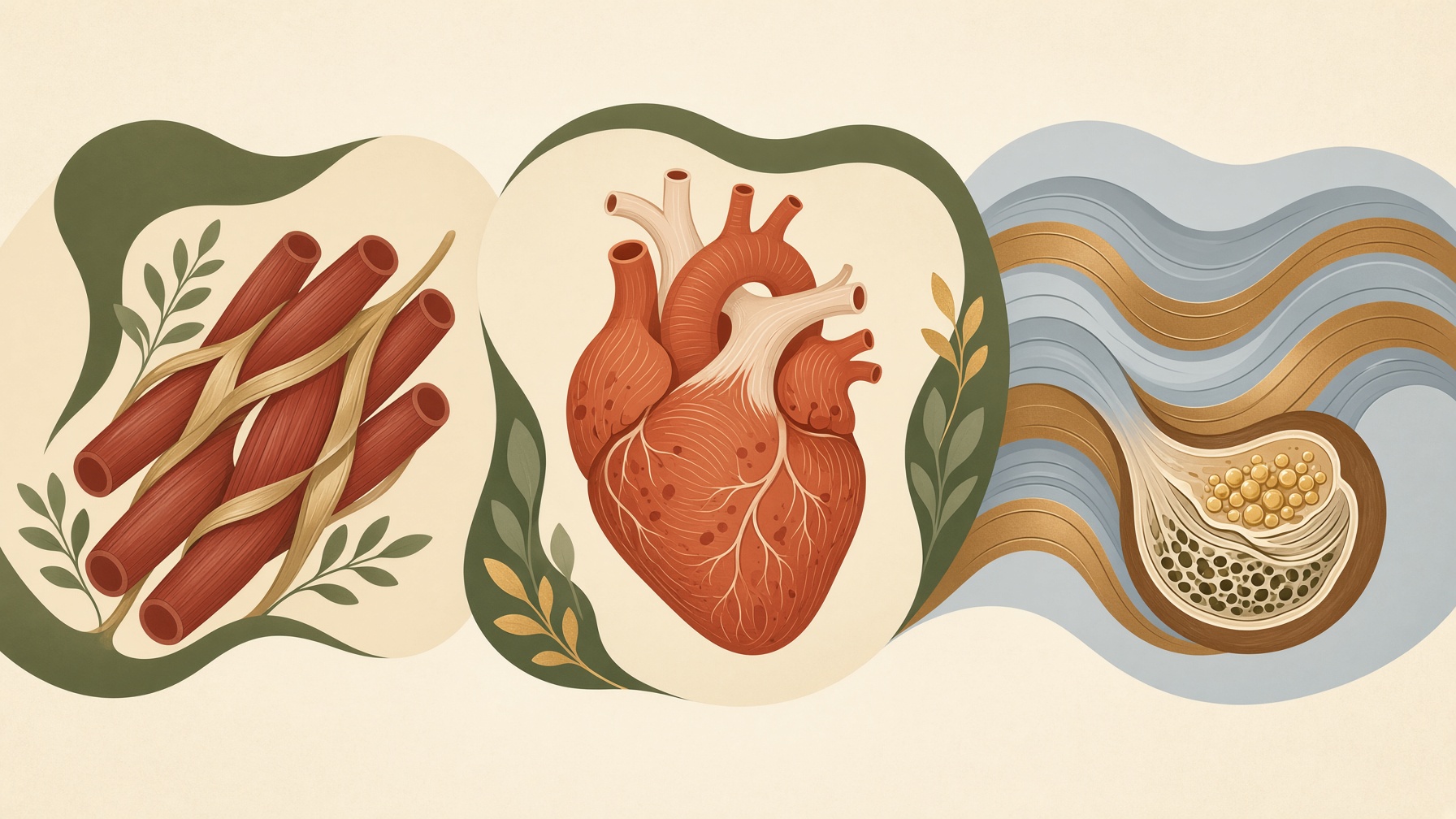
Skeletal, cardiac, and smooth muscle share the ability to contract, but differences in cell structure and control suit each to different tasks.
Wikis
Cardiac muscle is the specialized muscle tissue that forms the myocardium, the contractile middle layer of the heart wall. It is one of the three major types of muscle tissue, alongside skeletal and smooth muscle. Its repeated contractions generate the pressure needed to pump blood through the heart and circulatory system .1,2
Cardiac muscle is made of individual cells called cardiomyocytes. These cells are relatively short and branching and usually contain one centrally located nucleus, although some contain two. Like skeletal muscle, cardiac muscle has a striated appearance because its actin and myosin filaments are organized into repeating contractile units called sarcomeres. Contraction occurs when calcium enables interactions between actin and myosin, allowing the sarcomeres to generate force .1,2
Neighboring cardiomyocytes are connected by specialized structures called intercalated discs. These contain mechanical junctions that hold cells together during contraction and gap junctions that provide electrical coupling between cells. This coupling helps excitation spread through the myocardium so that cardiomyocytes contract in a coordinated manner .1,2
Cardiac muscle differs from skeletal muscle because its activity is not normally initiated by voluntary motor commands. Specialized pacemaker cells can generate electrical impulses that initiate each heartbeat, while autonomic nerves and circulating signals modify cardiac electrical activity and the force of contraction. Cardiac muscle also differs from smooth muscle because it contains organized sarcomeres and is therefore striated .1,2
From this collection
Skeletal, cardiac, and smooth muscle share the ability to contract, but differences in cell structure and control suit each to different tasks.