
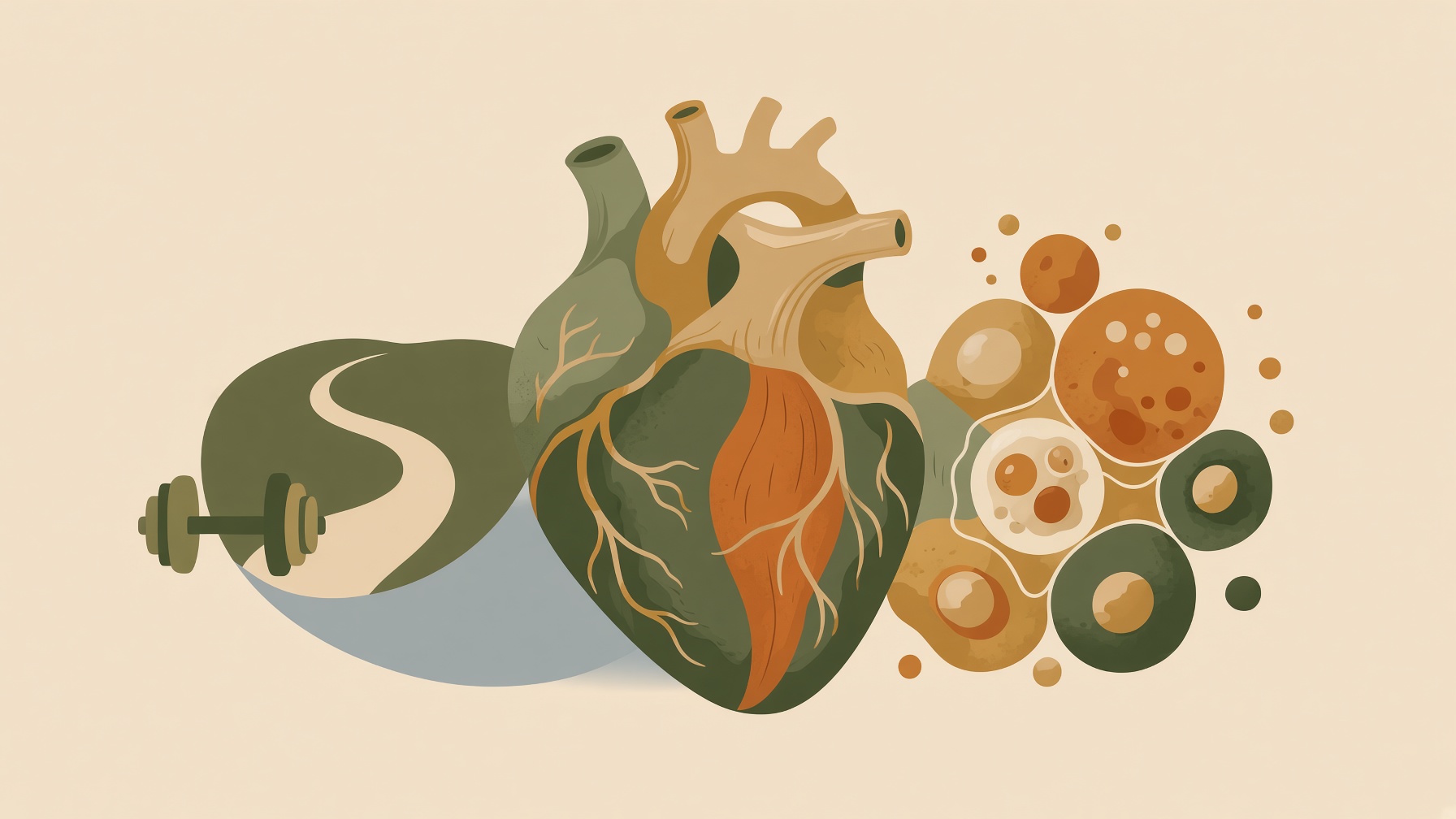
A larger heart may sound like a simple finding. But what does “larger” actually mean, and why has the heart changed in the first place? In a well-trained athlete, the answer can be exercise. In other cases, enlargement can reflect a very different biological process.
Long-term intensive athletic training can produce a physiologically larger heart. The well-trained athlete is therefore one example in which the heart may be larger than the typical textbook description .1
At the cellular level, this physiological hypertrophy primarily involves cardiomyocytes, the muscle cells of the heart, becoming larger. Exercise-induced cardiac growth is predominantly a matter of enlarging existing cardiomyocytes rather than producing large increases in the number of those cells. That distinction gives “growth” a more precise meaning here: the emphasis is on enlargement of existing cardiac muscle cells .2
Cardiac enlargement, however, can be physiological or pathological, and it is not necessarily caused by exercise. Hypertrophic cardiomyopathy provides one example of pathological cardiac hypertrophy. In this condition, the left ventricular myocardium can become abnormally thickened. Exercise-related physiological hypertrophy is one context; pathological myocardial thickening is another .3
That difference matters because hypertrophic cardiomyopathy can have serious consequences. It can cause sudden cardiac death in young people, including some who had previously appeared healthy. That potential consequence is why the distinction between physiological and pathological enlargement matters .3
The important question is not simply whether the heart is larger. It is why it is larger. Athletic training can produce a larger heart through exercise-related hypertrophy, but enlargement should not automatically be treated as evidence of a training effect. The same general finding can arise in very different biological contexts.

Join the discussion
No account or email is required. Your display name and comment will be public.