
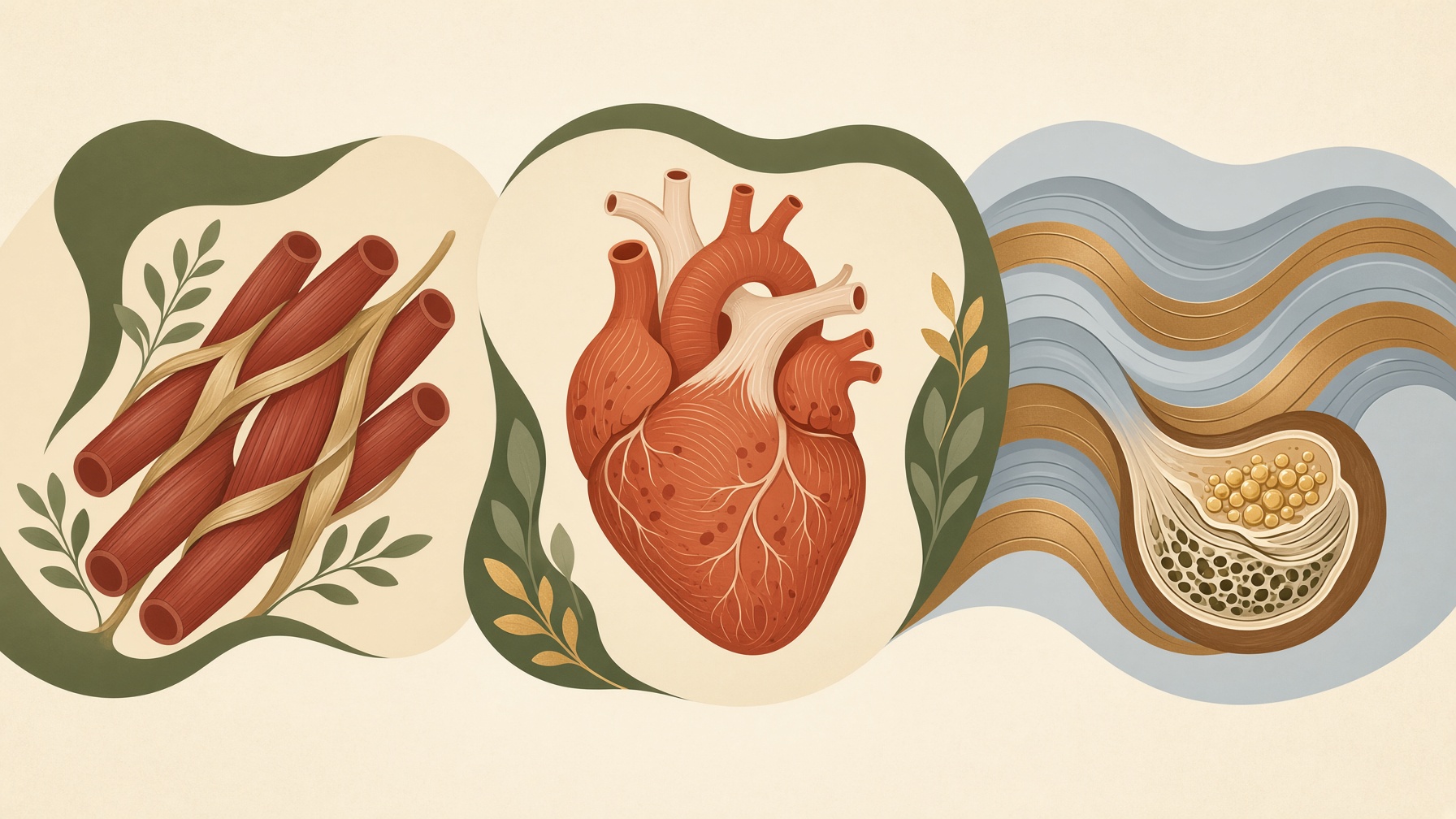
What Makes Skeletal, Cardiac, and Smooth Muscle Different?
Skeletal, cardiac, and smooth muscle share the ability to contract, but differences in cell structure and control suit each to different tasks.
Wikis
Cardiomyocytes, also called cardiac myocytes, are the specialized muscle cells of the heart. They form the contractile component of the myocardium and generate the force that pumps blood. Most working cardiomyocytes are elongated, striated cells containing repeating contractile units called sarcomeres, which are built from proteins including actin and myosin. Specialized cardiomyocyte populations also participate in generating or conducting the electrical signals that coordinate the heartbeat .1,2
Cardiomyocytes are electrically excitable. When an action potential activates a working cardiomyocyte, voltage-dependent calcium channels open and allow calcium to enter the cell. This calcium entry triggers further calcium release from the sarcoplasmic reticulum, an intracellular calcium store. The resulting rise in cytosolic calcium activates the contractile machinery and produces contraction. Calcium is subsequently removed from the cytosol so that the cell can relax before the next contraction .1
Neighboring cardiomyocytes are joined at specialized structures called intercalated discs. Mechanical junctions within these discs hold cells together as they repeatedly generate force, while gap junctions allow electrical current to pass between cells. This electrical coupling helps cardiomyocytes activate in a coordinated manner rather than contracting independently .1,2
Cardiomyocytes are not the only cells in the heart. Cardiac tissue also contains fibroblasts, endothelial cells, vascular cells, immune cells, and other cell types that provide structural, vascular, and regulatory functions. The term cardiomyocyte specifically refers to the cardiac muscle-cell lineage rather than to any cell located in the heart .2
From this collection
Skeletal, cardiac, and smooth muscle share the ability to contract, but differences in cell structure and control suit each to different tasks.