
Why Celiac Disease Is Different from a Food Allergy
Celiac disease causes gluten-triggered autoimmune damage to the small intestine, a different immune process from the reactions behind food allergy.
Wikis
Celiac disease is a chronic immune-mediated disorder in which eating gluten triggers an abnormal immune response that damages the lining of the small intestine in genetically susceptible people. Gluten is a group of proteins found in wheat, barley, and rye. The disease can occur at any age and may affect the digestive system as well as other parts of the body .1,2
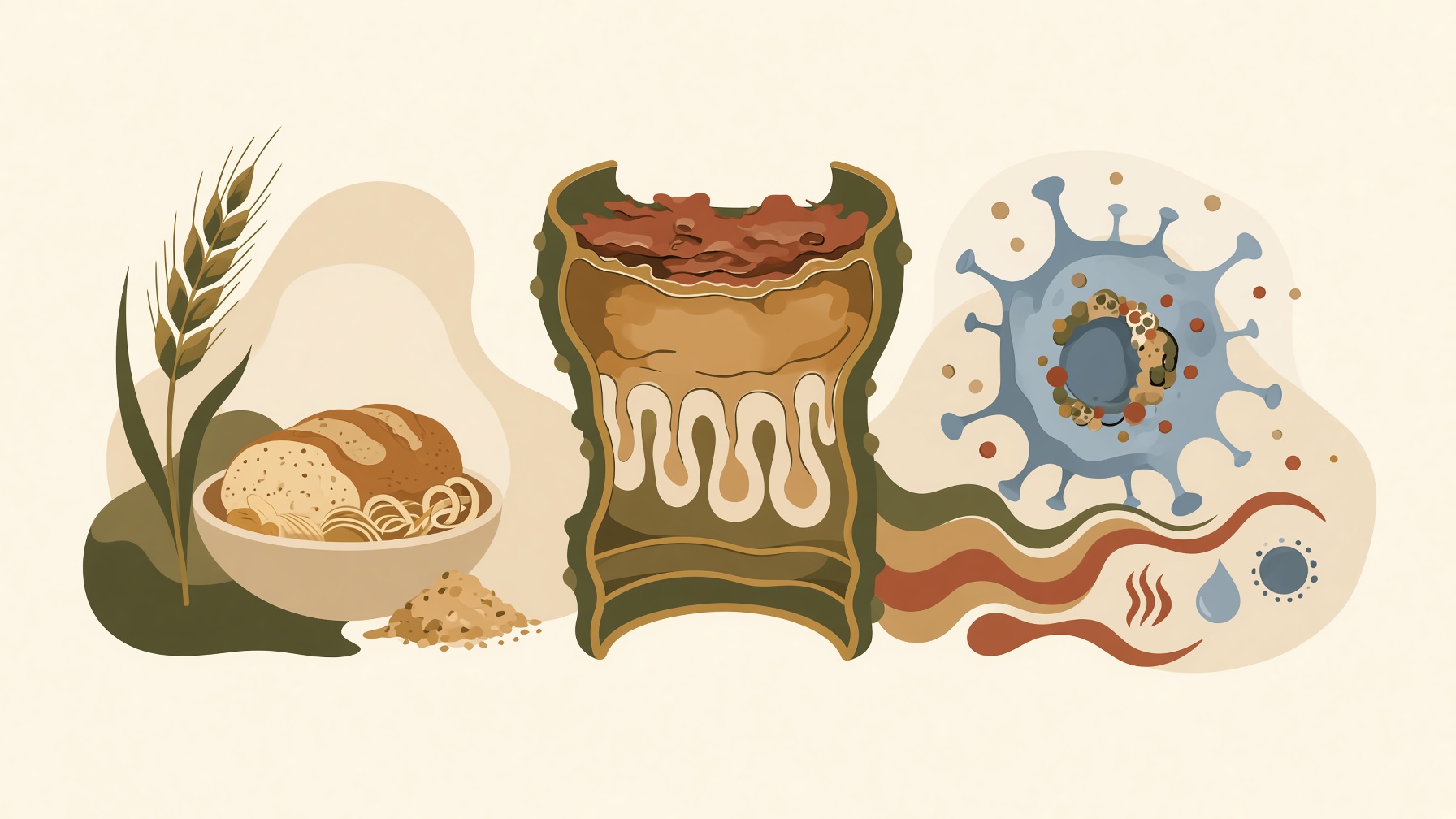
The immune reaction primarily affects the mucosa of the small intestine. Gluten-derived peptides are presented to immune cells by certain HLA molecules, particularly HLA-DQ2 or HLA-DQ8. The resulting immune response can damage intestinal epithelial cells and produce characteristic changes including shortening or loss of the finger-like villi, known as villous atrophy, along with increased numbers of immune cells in the intestinal lining .1,2
Damage to the villi reduces the intestine's effective absorptive surface and can interfere with nutrient absorption. However, celiac disease does not always produce obvious digestive symptoms. Some people have predominantly non-digestive manifestations, and others may have few or no noticeable symptoms despite having the characteristic immune response and intestinal changes .1,2
Celiac disease is distinct from wheat allergy and non-celiac gluten sensitivity. Wheat allergy is an allergic reaction to proteins in wheat and does not produce the characteristic chronic small-intestinal injury of celiac disease. Non-celiac gluten sensitivity describes symptoms associated with consuming wheat- or gluten-containing foods in people who do not have celiac disease or wheat allergy, without the characteristic autoimmune intestinal injury of celiac disease .1,3
From this collection
Celiac disease causes gluten-triggered autoimmune damage to the small intestine, a different immune process from the reactions behind food allergy.