
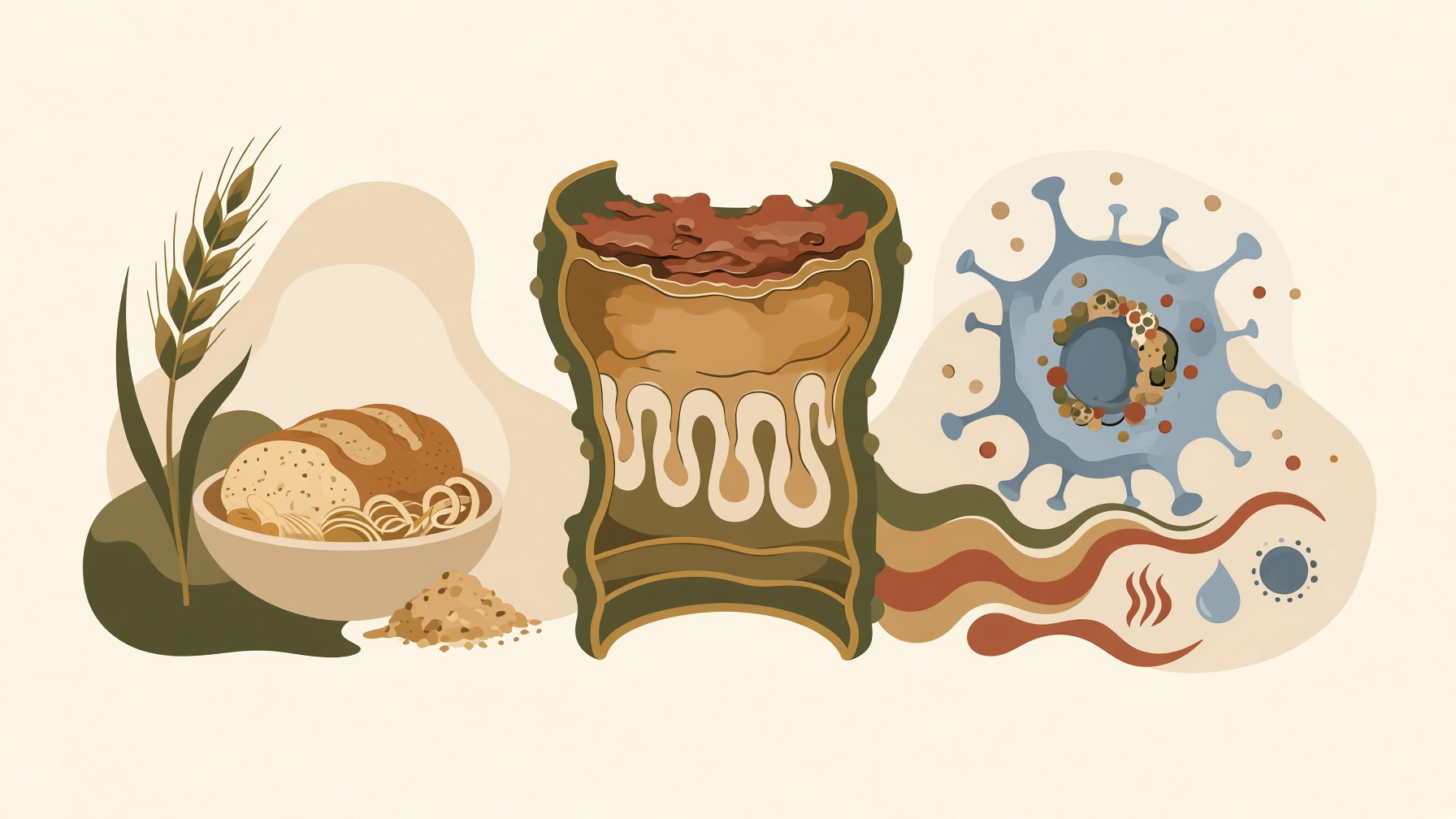
Celiac disease and food allergy can both be triggered by something a person eats, which makes them easy to lump together as versions of the same problem. But the immune responses involved, the effects on the body, the way the conditions are diagnosed, and the strategies used to manage them are meaningfully different.
Celiac disease is an autoimmune disorder. In genetically susceptible people, gluten triggers an abnormal immune response that damages the small intestine. Food allergy is also immune-mediated, most often involving responses to food proteins, but it belongs to a different category of immune reaction. Food allergies can operate through different mechanisms. In IgE-mediated food allergy specifically, the immune system produces allergen-specific IgE antibodies. Not every food allergy is IgE-mediated .1,3
The consequences can look different as well. Damage to the small-intestinal lining in celiac disease can interfere with nutrient absorption. Food allergy, by contrast, can produce reactions ranging from mild symptoms to life-threatening anaphylaxis. In IgE-mediated food allergy, symptoms typically begin within minutes to a few hours after the food is eaten. That rapid timing is characteristic of IgE-mediated reactions, not a rule that applies to every immune-mediated food reaction .1,3
The diagnostic pathways also reflect the biological differences between the conditions. Celiac disease is usually evaluated with celiac-specific blood tests and, in many patients, a small-intestinal biopsy. A biopsy may not be required in all patients, because selected patients can meet validated criteria for diagnosis without one. Food-allergy testing raises a different issue: skin-prick tests and blood tests for specific IgE can show sensitization even in people who do not have a clinical food allergy. When confirmation is needed, a supervised oral food challenge is the reference standard. Double-blind, placebo-controlled challenges are the most rigorous format, but they are not necessary for every patient .1,2,4
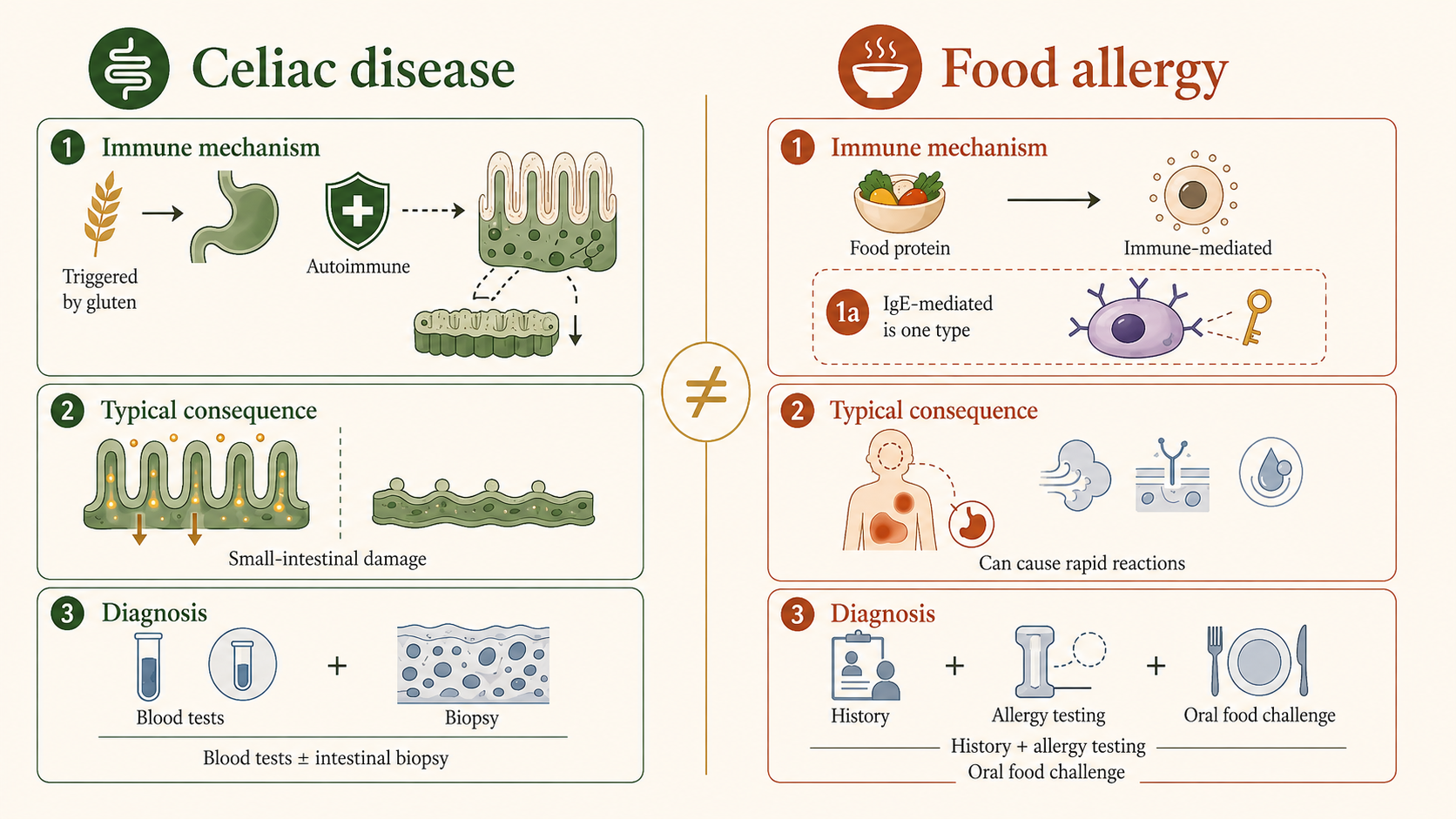
Management differs just as clearly. People with celiac disease need to follow a gluten-free diet for life. With food allergy, avoiding the causative food is the primary way to prevent reactions, although avoidance cannot guarantee that accidental exposure will never occur. Food allergy can also have an emergency-treatment component. If food-induced anaphylaxis develops, epinephrine is the first-line emergency treatment. Preventive strategies for food allergy do not replace the need to continue avoiding the relevant allergen .1,5
The shared feature is an immune response related to food, but the similarity does not extend to the underlying immune mechanisms, typical consequences, diagnosis, or management. Celiac disease is a gluten-triggered autoimmune disease that can damage the small intestine, while food allergy encompasses other immune reactions, including IgE-mediated reactions capable of causing rapid anaphylaxis. Because the underlying biology differs, diagnosis and management cannot be reduced to a single generic idea of “food sensitivity”.
Join the discussion
No account or email is required. Your display name and comment will be public.