
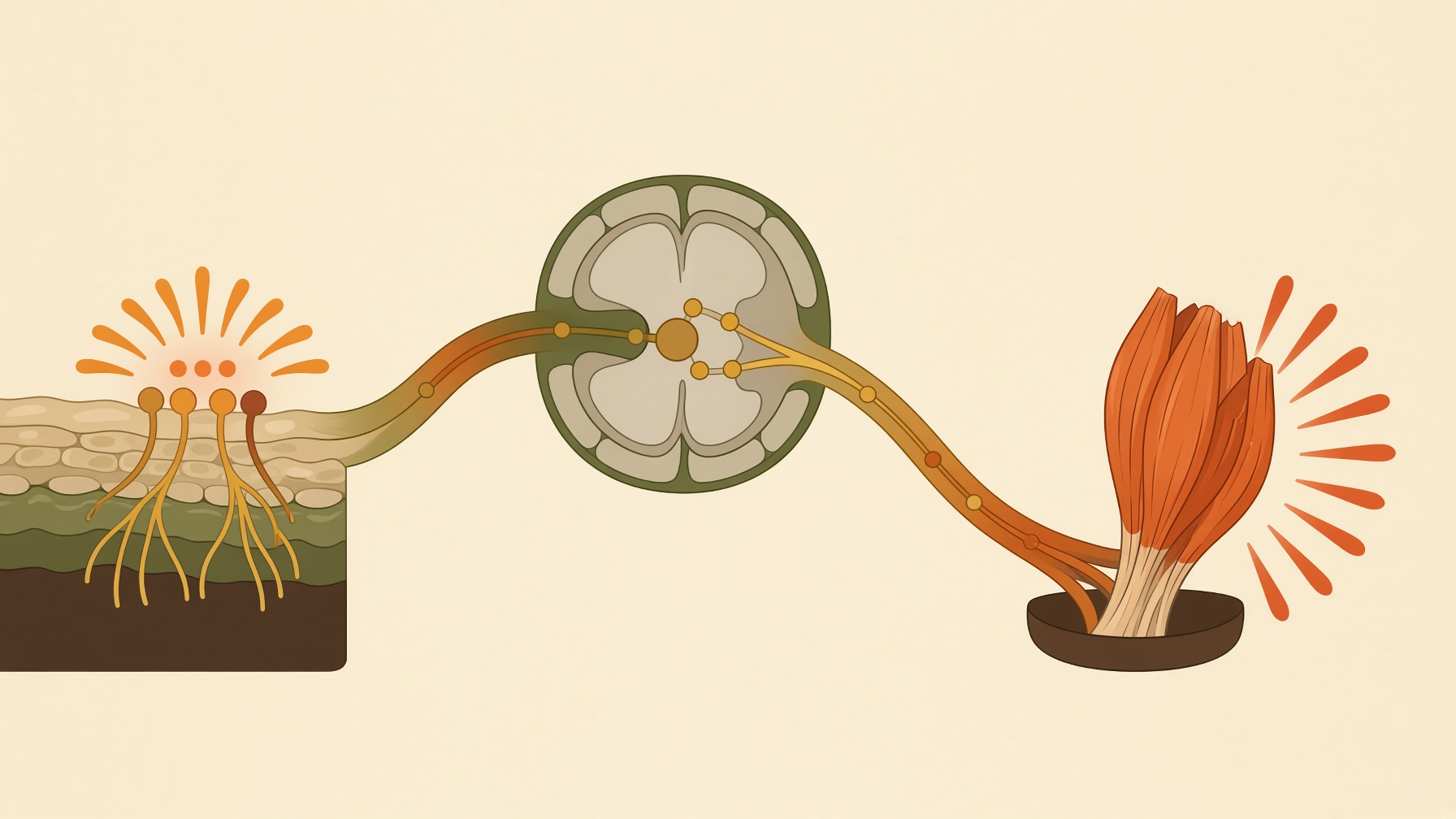
How Your Body Turns a Stimulus Into a Reflex
A reflex arc carries sensory information into the central nervous system and sends motor commands outward to produce an automatic response.
Wikis
The central nervous system, or CNS, is the part of the nervous system composed of the brain and spinal cord. It serves as a major center for receiving and integrating sensory information, generating motor commands, and coordinating functions ranging from reflexes and movement to cognition, memory, emotion, and regulation of internal body processes .1,2
The brain contains several major regions, including the cerebrum, diencephalon, brainstem, and cerebellum. These regions contain interconnected networks of neurons and supporting glial cells that perform different but overlapping functions. The spinal cord extends from the brainstem into the vertebral canal and provides major pathways for signals traveling between the brain and the rest of the body. It also contains neural circuits capable of producing responses such as spinal reflexes without requiring initial processing by the brain .1,2
Within the CNS, gray matter contains relatively high concentrations of neuronal cell bodies, dendrites, and synapses, while white matter consists largely of myelinated axons connecting different neural regions. Their arrangement differs between the brain and spinal cord, but both are fundamental components of CNS organization .1
The central nervous system is distinguished from the peripheral nervous system, or PNS. The PNS consists of neural structures outside the brain and spinal cord and provides sensory and motor connections between the CNS and the rest of the body. Together, the CNS and PNS form the nervous system .1,2
From this collection
A reflex arc carries sensory information into the central nervous system and sends motor commands outward to produce an automatic response.