
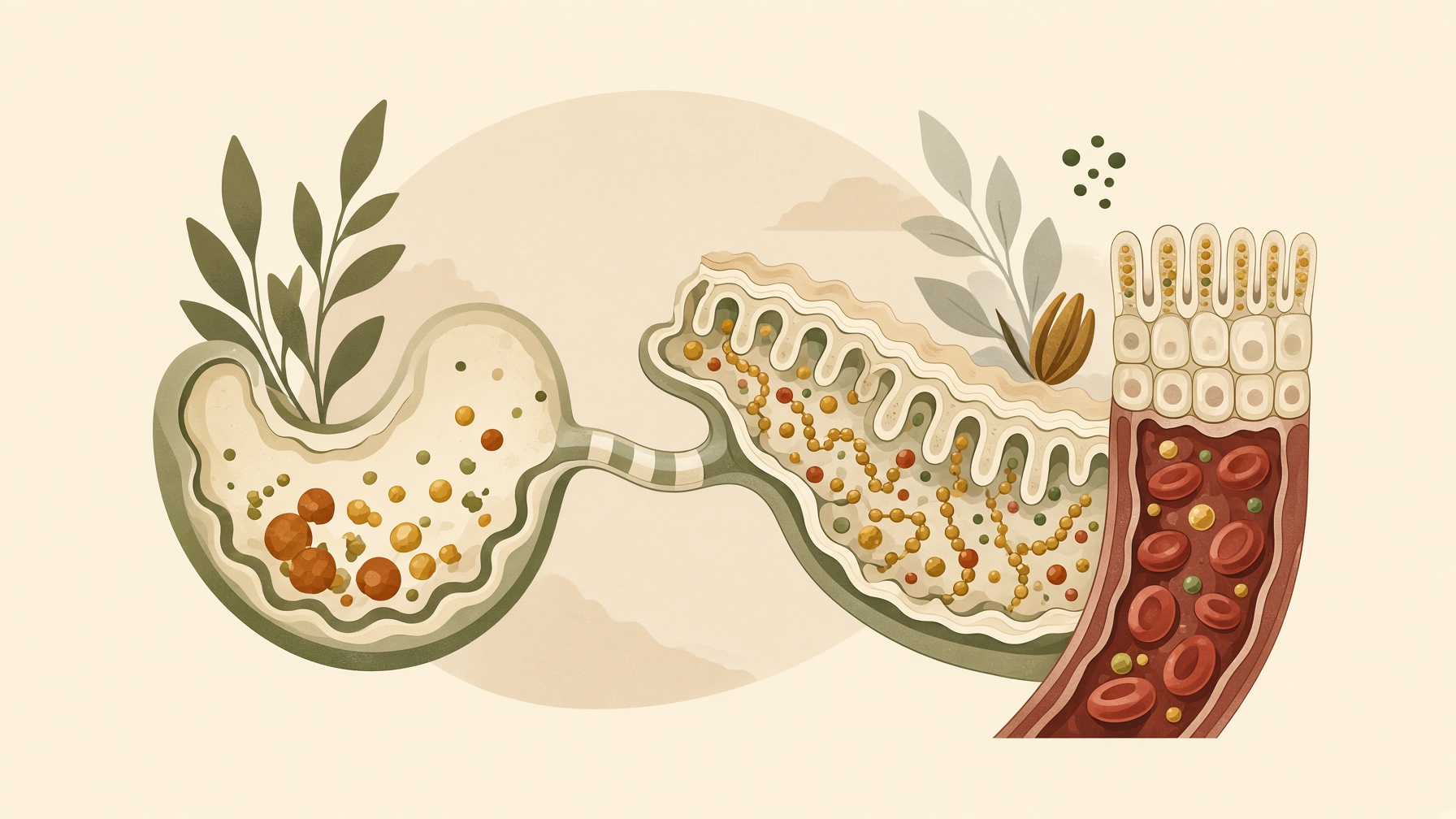
How Your Body Digests and Absorbs Protein
Protein digestion breaks food proteins into amino acids and small peptides that intestinal cells can absorb for the body’s ongoing protein turnover.
Wikis
Chymotrypsin is a digestive enzyme that hydrolyzes peptide bonds within proteins and peptides in the small intestine. It belongs to the serine protease family and is an endopeptidase, meaning that it cleaves peptide bonds within a protein chain. Chymotrypsin preferentially cleaves peptide bonds on the carboxyl side of amino acids with bulky hydrophobic side chains, especially aromatic amino acids such as phenylalanine, tyrosine, and tryptophan .1,2
The pancreas produces chymotrypsin as an inactive precursor, or zymogen, called chymotrypsinogen. Pancreatic acinar cells store and secrete chymotrypsinogen into pancreatic juice, which carries it to the duodenum. There, trypsin cleaves chymotrypsinogen and initiates its conversion into active chymotrypsin. Additional proteolytic cleavage steps produce the mature active enzyme .1,2
Chymotrypsin uses three amino-acid residues known as a catalytic triad to hydrolyze peptide bonds. Its substrate-binding pocket helps determine which amino-acid side chains fit most favorably near the bond being cleaved. This specificity complements the actions of other pancreatic proteases, allowing dietary proteins to be broken into progressively smaller peptides .1,2
Chymotrypsin is closely related to trypsin but has a different substrate preference. Both are pancreatic serine endopeptidases, but trypsin preferentially cleaves peptide bonds on the carboxyl side of lysine and arginine residues, whereas chymotrypsin favors residues with bulky hydrophobic side chains. Chymotrypsin should also be distinguished from chymotrypsinogen, its inactive pancreatic precursor .1,2
From this collection
Protein digestion breaks food proteins into amino acids and small peptides that intestinal cells can absorb for the body’s ongoing protein turnover.