
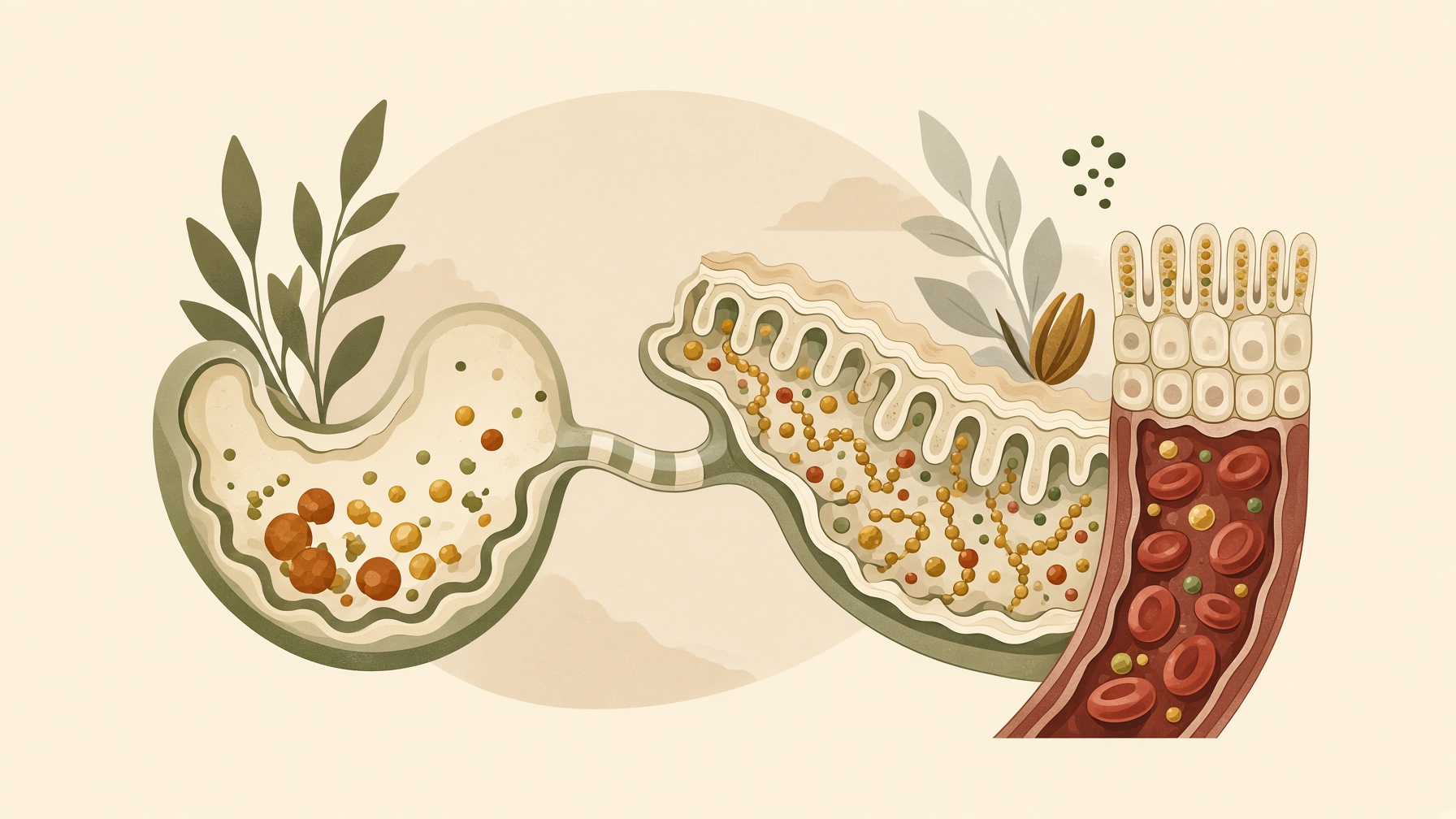
A protein-rich meal cannot be absorbed in the form in which it is eaten. Before the amino acids it contains become available to the body, proteins must be unfolded, broken into progressively smaller fragments, and transported across the intestinal lining. That process begins in the stomach but depends heavily on what happens later in the small intestine.
Chemical digestion of dietary protein begins in the stomach, where proteins encounter hydrochloric acid and active pepsin. The acid denatures proteins, unfolding their structure, but denaturation itself does not hydrolyze all of their peptide bonds. Pepsin performs a different job, cleaving dietary proteins into smaller polypeptides and peptides. Even this does not complete protein digestion. The process continues extensively after the stomach contents move into the small intestine .1
As those acidic contents enter the duodenum, the pancreas contributes bicarbonate-rich fluid. Pancreatic bicarbonate neutralizes much of the gastric acid arriving there, creating a transition from the gastric phase of digestion to the next stage in the small intestine. Secretion of this bicarbonate-rich pancreatic fluid is stimulated by secretin. Pancreatic bicarbonate is therefore part of the changing digestive environment that accompanies protein as it moves beyond the stomach .2
Pancreatic proteases then continue the breakdown of protein. Major examples include trypsin, chymotrypsin, and carboxypeptidases. Trypsin and chymotrypsin hydrolyze internal peptide bonds, producing smaller peptides from the protein material that has already undergone gastric digestion .1
Most pancreatic proteases are released as inactive zymogens, which limits digestion within the pancreas itself. In the small intestine, enteropeptidase initiates activation by converting trypsinogen to trypsin, and trypsin then activates several other pancreatic zymogens .3
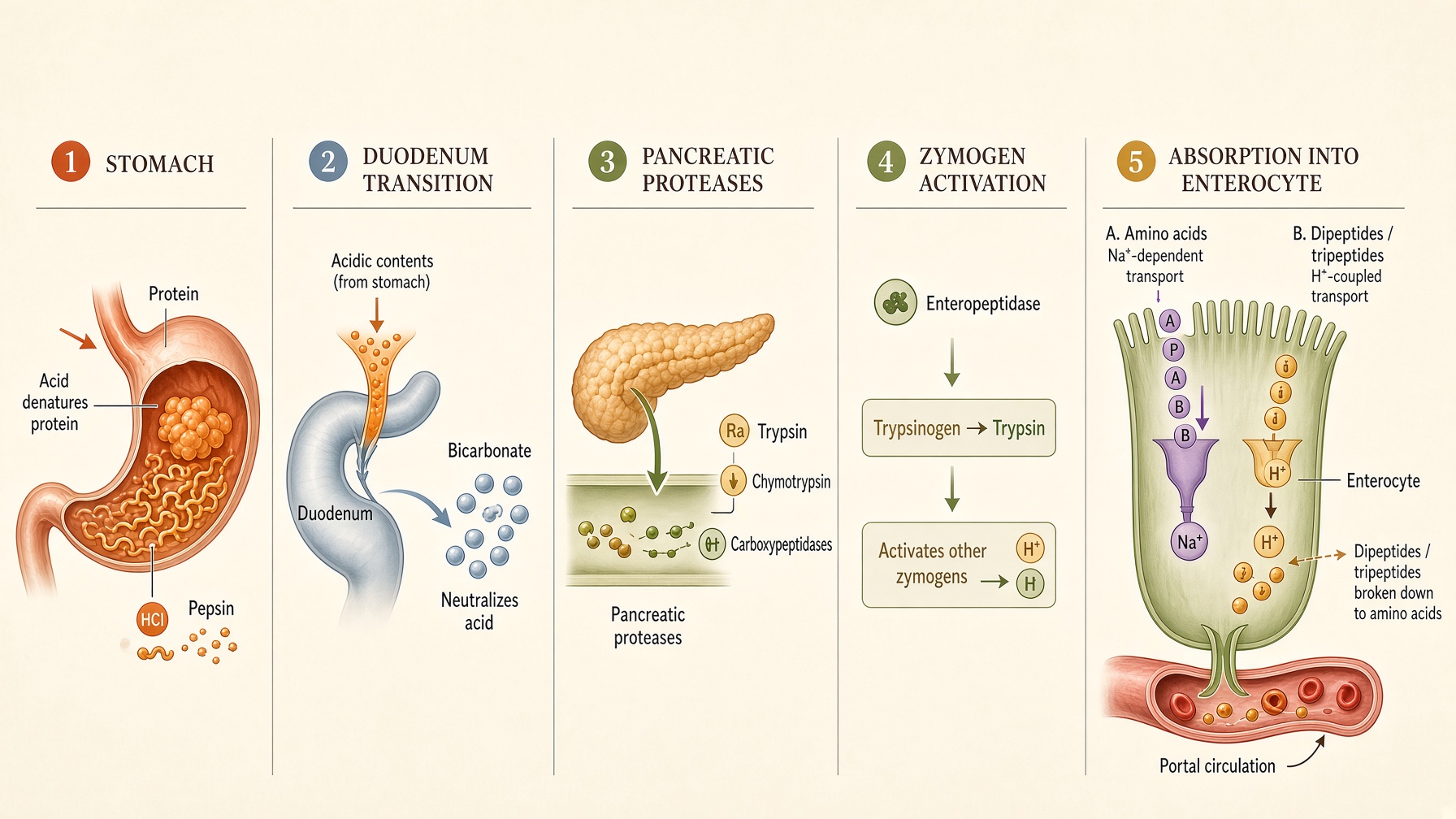
Absorption follows this digestive processing. Many free amino acids cross the apical membrane of intestinal absorptive cells, or enterocytes, through sodium-dependent amino-acid transport systems. Dipeptides and tripeptides use a separate, hydrogen-ion-coupled transport route, so not every product of protein digestion enters by the same mechanism. Most absorbed dipeptides and tripeptides are then broken down into amino acids within the enterocytes before their components enter the portal circulation. Once amino acids have been absorbed, they can serve as substrates for the synthesis of new proteins .4,5
By the time dietary protein has passed through these stages, the large molecules present in food have been transformed into forms the intestinal epithelium can handle. Digestion and absorption are therefore closely linked: breaking proteins apart produces amino acids and small peptides that can be taken up by intestinal cells and ultimately made available to the body. From there, their components become available for metabolism and the continual turnover of body proteins.
Join the discussion
No account or email is required. Your display name and comment will be public.