
How Your Body Digests and Absorbs Protein
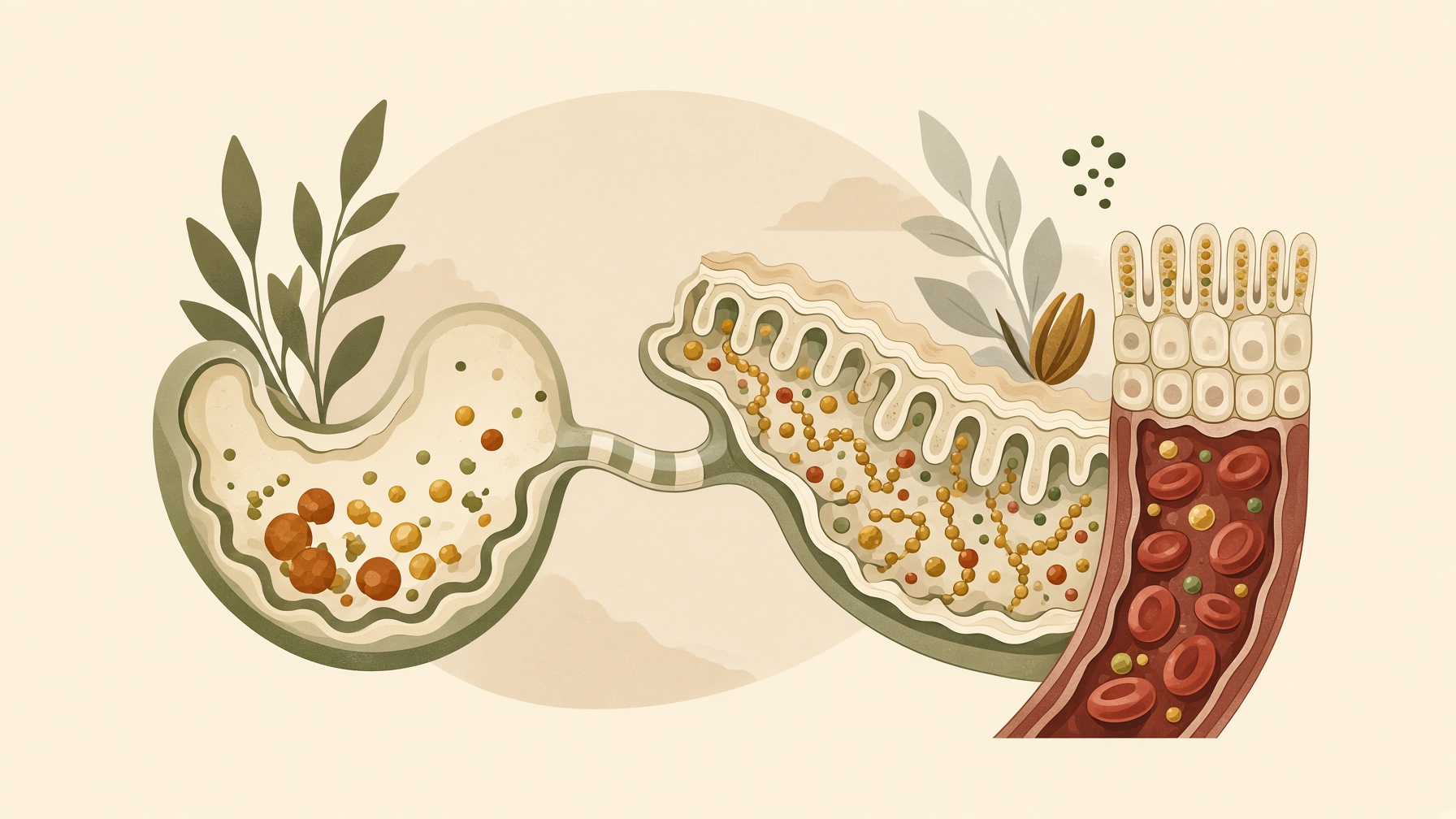
Protein digestion breaks food proteins into amino acids and small peptides that intestinal cells can absorb for the body’s ongoing protein turnover.
Wikis
The term complete protein is commonly used for a dietary protein that supplies all of the indispensable, or essential, amino acids in proportions that meet a human reference amino acid pattern. Humans require nine indispensable amino acids from the diet because the body cannot synthesize them in adequate amounts. The amino acid pattern of a protein can be compared with reference patterns based on human requirements to assess its adequacy .1,2
Completeness therefore depends on relative proportions, not simply on whether every indispensable amino acid is present. A protein may contain all nine but still provide too little of one relative to the reference pattern. The indispensable amino acid with the greatest relative shortfall is called the limiting amino acid. Reference requirement patterns also differ with age, so the assessment depends on the population for which the protein is being evaluated .1
Complete protein is related to, but not identical with, high-quality protein. Amino acid composition is only one determinant of protein quality; digestibility and the amount of each indispensable amino acid that becomes available for absorption also matter. Protein-quality methods such as the Digestible Indispensable Amino Acid Score (DIAAS) therefore evaluate digestible indispensable amino acids relative to a reference requirement pattern rather than considering amino acid composition alone .1,2
A mixture of protein sources can also provide an adequate overall amino acid pattern when one source supplies indispensable amino acids that are relatively limited in another. Amino acid adequacy can therefore apply to the combined protein in a diet as well as to an individual protein source .1,2
From this collection
Protein digestion breaks food proteins into amino acids and small peptides that intestinal cells can absorb for the body’s ongoing protein turnover.