

Protein quality is often reduced to a familiar binary: complete or incomplete. That shorthand can be useful, but it leaves out an important part of the picture. To understand how well a protein source can meet human amino-acid needs, you have to consider the amounts and proportions of its indispensable amino acids as well as how digestible those amino acids are.
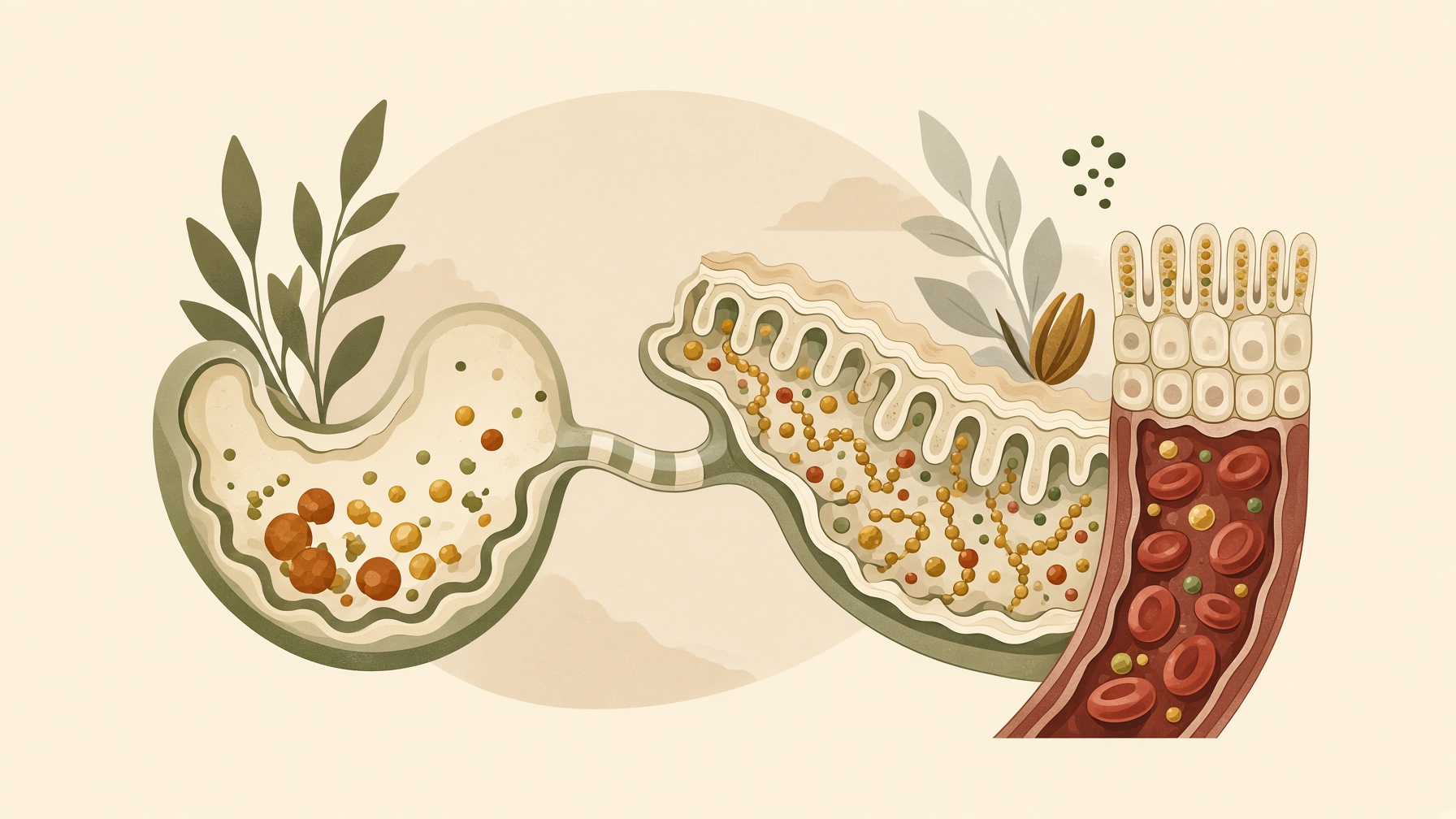
A high-quality protein provides indispensable amino acids in proportions that meet human requirements and in a sufficiently digestible form. Both dimensions matter. Protein and amino-acid digestibility varies among food sources, so amino-acid composition alone does not fully determine protein quality. A protein source may have a favorable amino-acid pattern, but its quality also depends on how effectively those amino acids are made available through digestion .1
The term “complete protein” is an informal label commonly used for protein sources that provide all nine indispensable amino acids, often with the implication that they are present in nutritionally adequate proportions. Even so, “complete” is not a comprehensive measure of protein quality. A protein’s quality can be constrained by its limiting indispensable amino acid, the one supplied in the lowest proportion relative to human requirements, even when all nine are present. The relative amounts of those amino acids and their digestibility therefore still matter .1
Complementary plant proteins also show why the complete-versus-incomplete label does not tell the whole dietary story. Cereal grains and legumes often have complementary limiting-amino-acid patterns, although this is a general pattern rather than a rule for every grain and legume. When both are part of a mixed diet, their essential-amino-acid profiles can complement one another. They do not need to be eaten in the same meal for that complementarity to matter. What matters is that the overall dietary pattern provides enough total protein and a sufficient supply of digestible indispensable amino acids .2
The broader lesson is that protein quality is a matter of adequacy, not simply membership in a “complete” or “incomplete” category. Foods are eaten as part of diets, and their amino acids can contribute alongside those from other foods. Looking beyond the label makes it easier to evaluate protein sources in terms of what they actually provide rather than whether they fit a binary classification.
Join the discussion
No account or email is required. Your display name and comment will be public.