
What Happens to Fiber Your Small Intestine Can’t Digest?
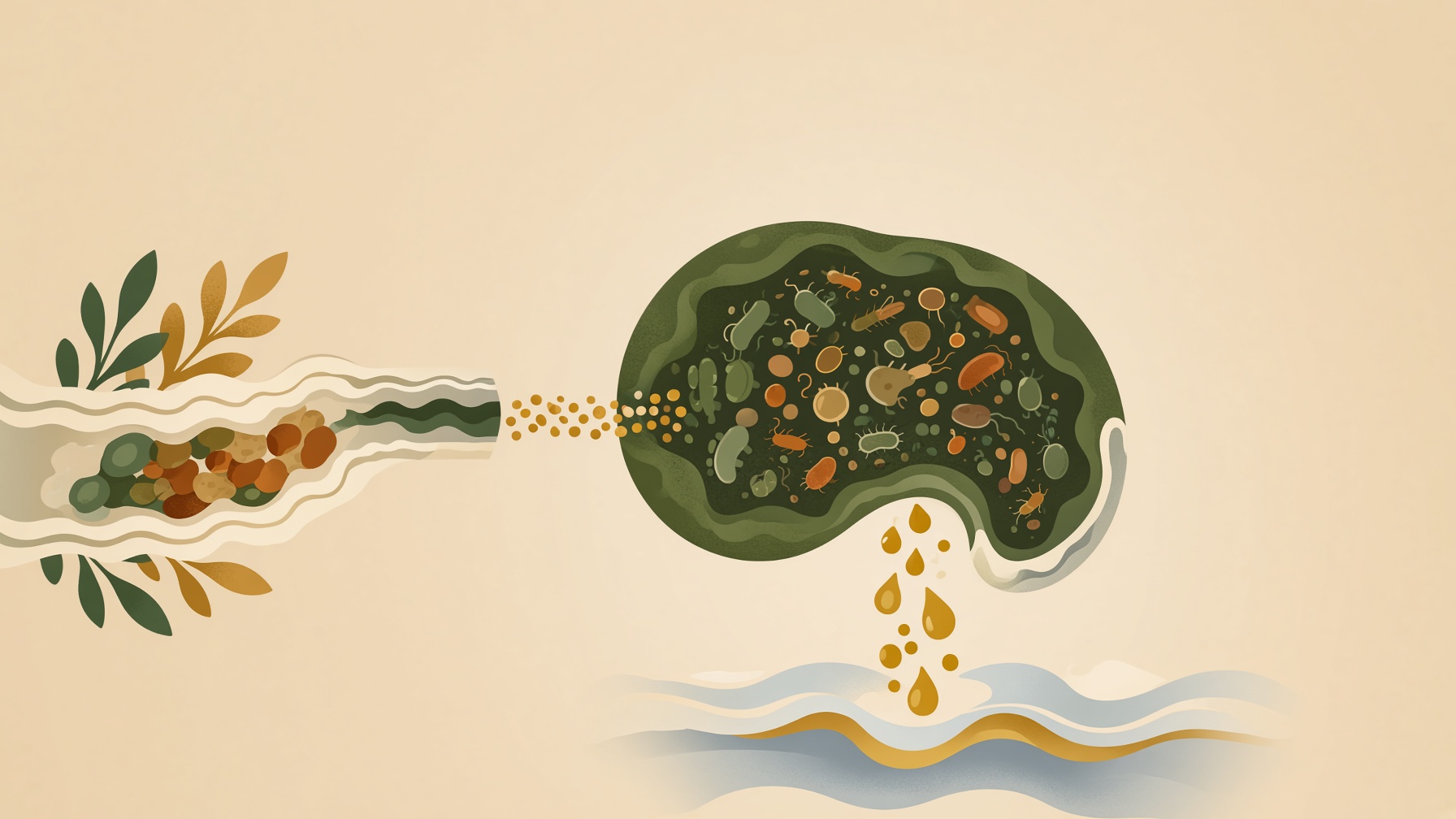
Colon microbes ferment some dietary fiber into short-chain fatty acids that the body can absorb, recovering energy human enzymes cannot release.
Wikis
Dietary fiber is a group of substances that resist digestion and absorption in the human small intestine. It includes nondigestible carbohydrates that are intrinsic and intact in plant foods, together with lignin, a noncarbohydrate component associated with plant cell walls. Depending on the scientific or regulatory definition being used, certain isolated or synthetic nondigestible carbohydrates may also qualify as dietary fiber .1,2
Dietary fiber is not a single chemical substance. It includes structurally diverse components such as cellulose, hemicelluloses, pectins, beta-glucans, gums, and some resistant starches. Because these substances resist digestion in the small intestine, they reach the large intestine to varying extents rather than being absorbed as ordinary digestible carbohydrate .1,2
Once in the colon, different fibers behave differently. Some are readily fermented by the gut microbiota, producing metabolites including short-chain fatty acids, while others undergo relatively little fermentation. Fibers also differ in properties such as solubility, viscosity, and water-holding capacity. These characteristics help explain why individual fibers can have different physiological effects .1
Dietary fiber is closely related to, but not identical with, nondigestible carbohydrate. Nondigestible carbohydrate is a broader description based mainly on resistance to small-intestinal digestion. Definitions of dietary fiber can impose additional requirements. For example, the U.S. Food and Drug Administration includes certain isolated or synthetic nondigestible carbohydrates as dietary fiber when they have demonstrated beneficial physiological effects .1,2
From this collection
Colon microbes ferment some dietary fiber into short-chain fatty acids that the body can absorb, recovering energy human enzymes cannot release.