How Your Body Digests and Absorbs Protein
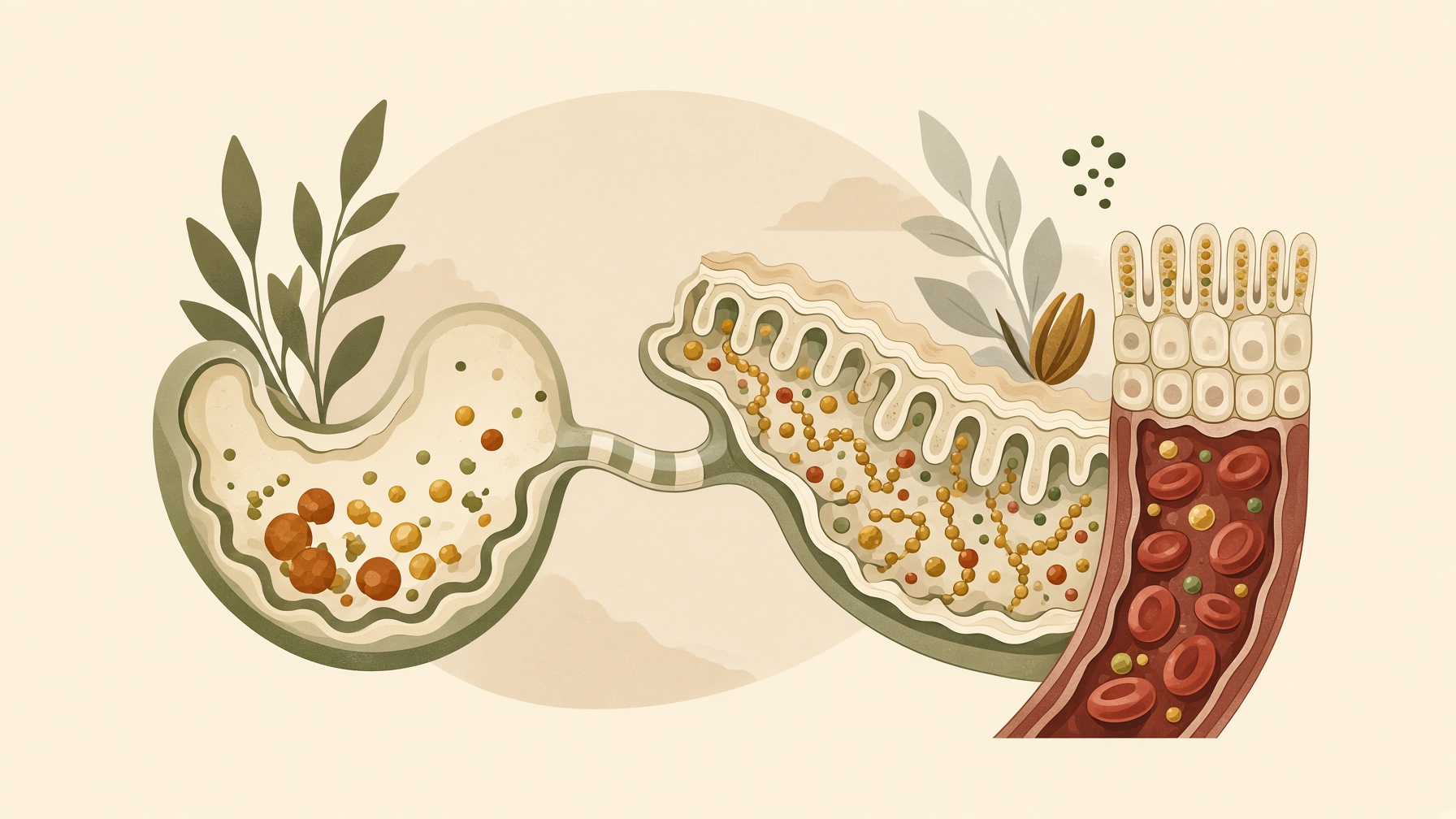
Protein digestion breaks food proteins into amino acids and small peptides that intestinal cells can absorb for the body’s ongoing protein turnover.
Wikis
The duodenum is the first and shortest section of the small intestine. It begins at the pylorus, where the stomach empties, and continues to the jejunum at the duodenojejunal junction. In adults, it is roughly 25 to 30 centimeters long and forms a C-shaped curve closely associated with the head of the pancreas .1
Its central role is to receive acidic chyme from the stomach and provide conditions for further chemical digestion. Bile and pancreatic secretions enter the duodenum through ducts opening into its descending portion. Pancreatic bicarbonate helps neutralize the acidic contents, while pancreatic enzymes digest carbohydrates, proteins, and fats. Bile helps facilitate the digestion and absorption of lipids .1,2
Like the rest of the small intestine, the duodenum has villi and microvilli that increase the surface area available for absorption. A distinguishing feature is the presence of Brunner glands in its submucosa. These glands produce mucus and bicarbonate-rich secretions that help protect the duodenal lining from acidic material arriving from the stomach .2
The duodenum differs from the jejunum and ileum mainly in its position and specialized role at the beginning of intestinal digestion. It is the first small-intestinal segment to encounter stomach contents and serves as an important mixing site where chyme combines with biliary, pancreatic, and intestinal secretions before passing into the jejunum .1,2
From this collection
Protein digestion breaks food proteins into amino acids and small peptides that intestinal cells can absorb for the body’s ongoing protein turnover.