
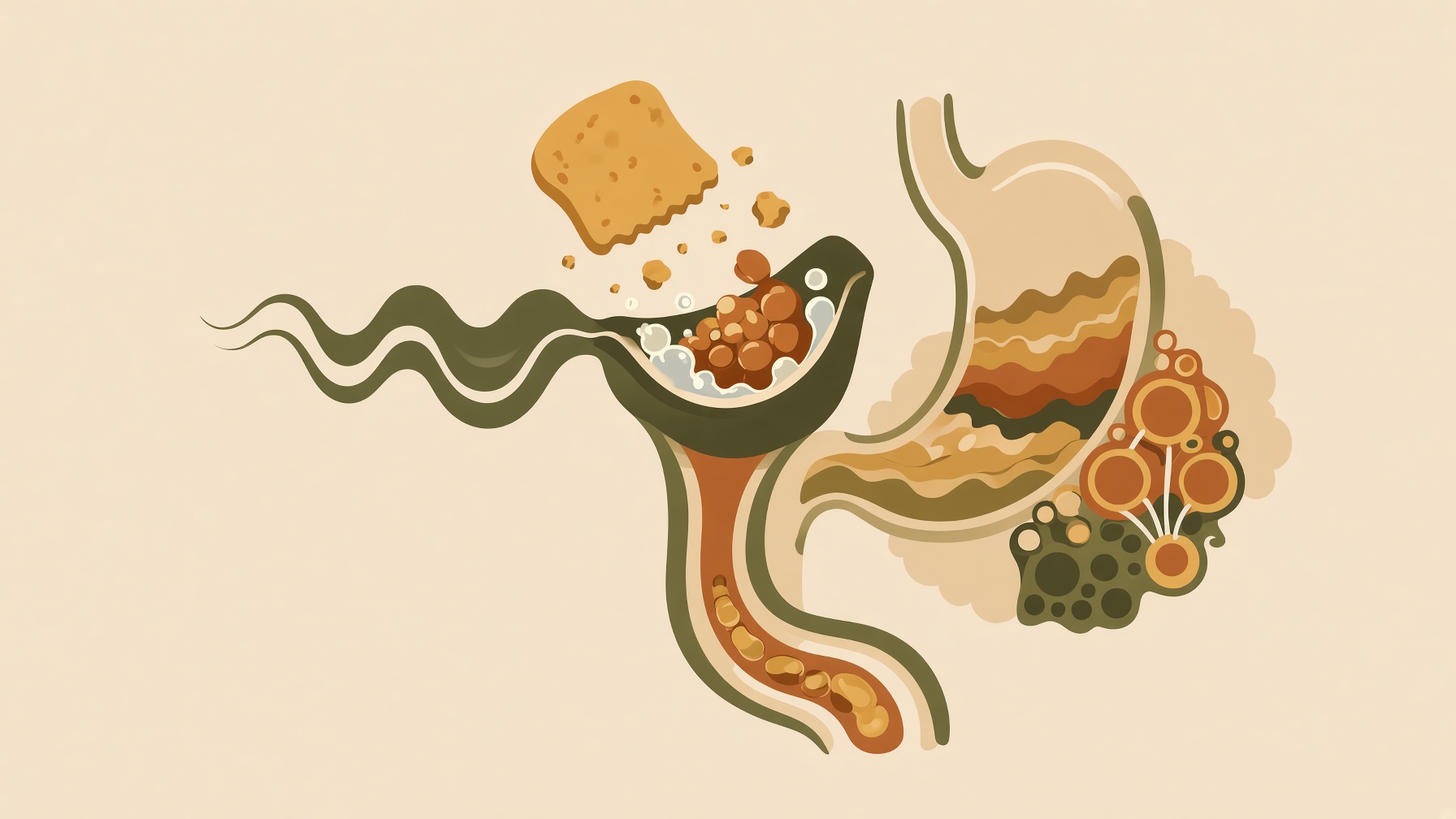
Once food leaves the stomach, it enters the part of the digestive tract where most nutrient digestion and absorption takes place. Getting nutrients into an absorbable form requires more than enzymes alone: the intestinal contents must also be mixed, moved, and brought into contact with a specialized absorptive surface. These processes work together as food is transformed into molecules the body can take up.
In the stomach, mixing and grinding help transform food into chyme. Chyme is a semiliquid mixture of partially digested food and gastric secretions. This gastric processing changes the food into the material that will pass onward into the small intestine, setting up the next phase of digestion .1
When acidic chyme enters the duodenum, bicarbonate in pancreatic juice helps neutralize its acidity. Pancreatic enzymes then continue the digestion of proteins, carbohydrates, and lipids. Bile salts contribute in a different way. Their amphipathic structure helps emulsify large fat droplets into smaller dispersed droplets, increasing the surface available to digestive enzymes. Bile salts also participate in forming micelles that carry products of lipid digestion through the intestinal contents toward the absorptive surface. This physical role is different from the enzymatic hydrolysis performed by pancreatic lipase .1
The small intestine also has to move and mix what is inside it. Intestinal motility both mixes and advances the contents. Peristaltic contractions contribute to forward propulsion, whereas segmentation is especially important for local mixing and repeated contact between chyme and the intestinal surface .1
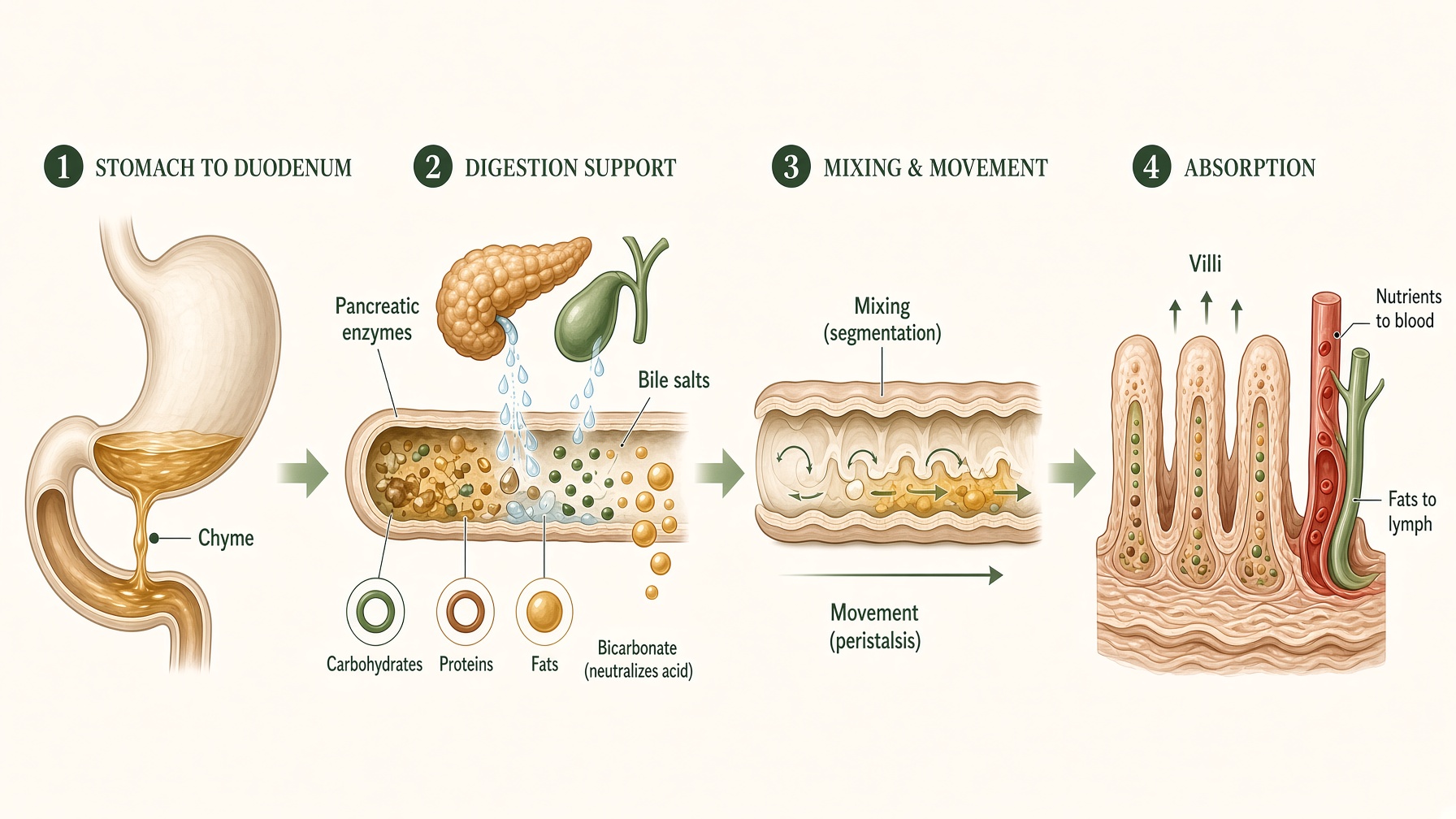
As digestion proceeds, the structure of the small intestine supports absorption. Its folds, villi, and microvilli increase the surface area available for nutrients to be absorbed. Once nutrients cross this absorptive surface, they do not all follow a single route. Absorbed nutrients do not all leave the intestine by the same route. Monosaccharides and amino acids generally enter intestinal blood capillaries and travel through the portal circulation, whereas most absorbed long-chain lipids are packaged into chylomicrons and enter lymphatic vessels called lacteals .1
The small intestine works less like a simple tube and more like a carefully organized processing surface. Chemical reactions occur while the contents are continually repositioned and brought close to cells capable of taking nutrients up. That coordination is what allows digestion to move beyond simply breaking food apart and toward making its components available to the rest of the body.
Join the discussion
No account or email is required. Your display name and comment will be public.