
What Makes Air Move In and Out of Your Lungs?
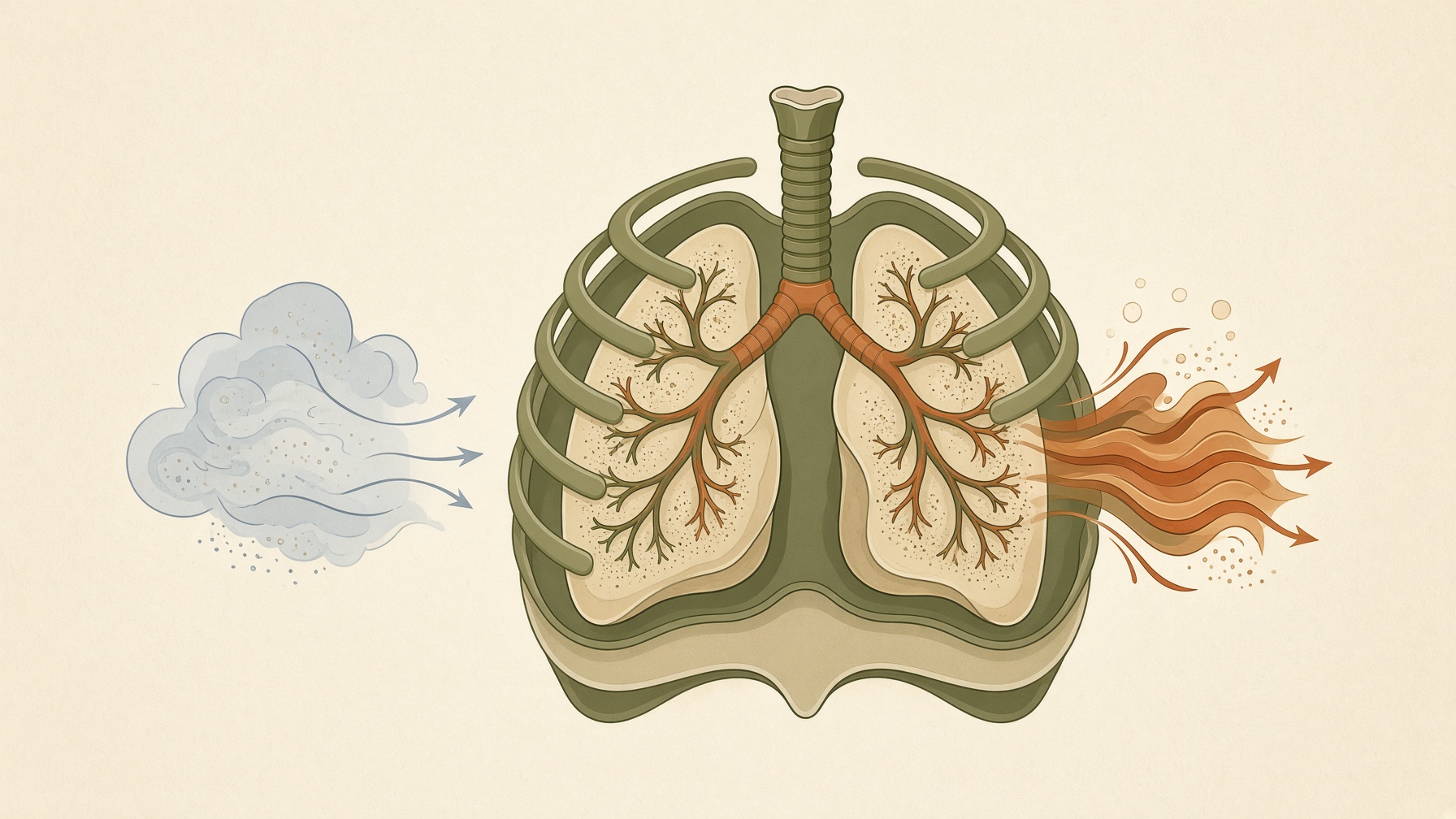
Breathing moves air through pressure differences created as the lungs expand and recoil, with airflow traveling from higher to lower pressure.
Wikis
Elastic recoil, in respiratory physiology, is the tendency of the lungs to return toward a smaller volume after they have been expanded during inspiration. As the lungs expand, mechanical energy is stored in lung tissues and at the air-liquid surfaces of the alveoli. When the inspiratory muscles relax, the resulting inward recoil helps the lungs decrease in volume .1,2
Lung elastic recoil arises mainly from the elastic properties of lung tissue and surface tension at the alveolar air-liquid interface. Structural components of the lung parenchyma contribute to tissue recoil, while surface tension tends to reduce alveolar surface area. Pulmonary surfactant lowers this surface tension, reducing the tendency of alveoli to collapse and making the lungs easier to expand .1
Elastic recoil is a major force behind passive expiration during quiet breathing. During inspiration, transpulmonary pressure expands the lungs against their inward recoil. When the inspiratory muscles relax, elastic recoil reduces lung volume and raises alveolar pressure sufficiently to drive air outward .2
Elastic recoil is closely related to, but distinct from, lung compliance. Compliance describes how much lung volume changes for a given change in distending pressure, whereas elastic recoil describes the tendency of an expanded lung to return toward a smaller volume. Elastance describes the tendency of the lung to resist expansion and recoil toward its resting state and is inversely related to compliance .1
From this collection
Breathing moves air through pressure differences created as the lungs expand and recoil, with airflow traveling from higher to lower pressure.