
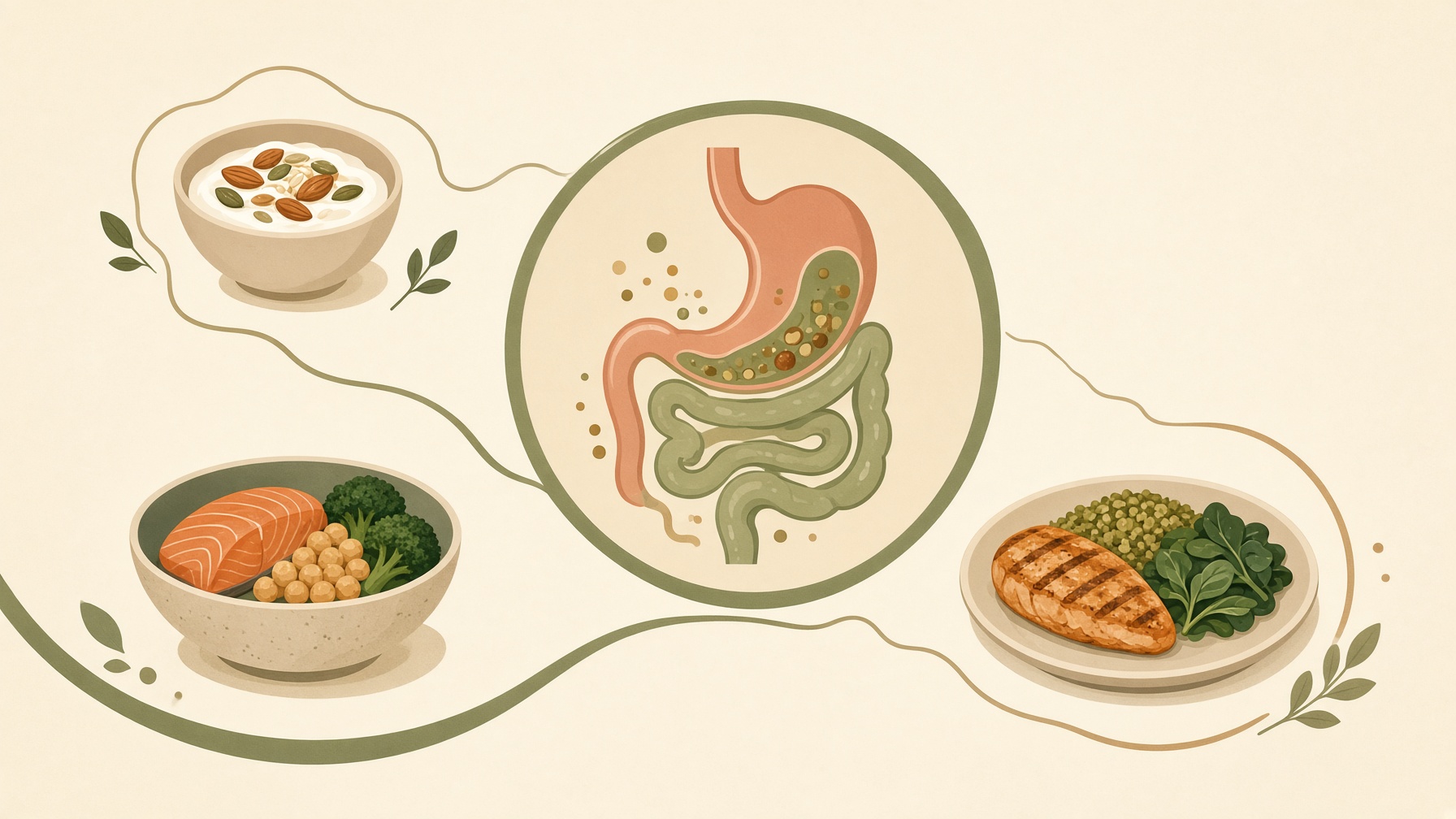
The Daily Protein Target: Why Hitting It Across Ordinary Meals Is Harder Than It Looks
Protein targets can fit familiar meals without perfectly equal portions, since total intake and meal distribution address different questions.
Wikis
Energy intake measures the energy consumed in foods and drinks, while equal calorie totals can still describe very different nutritional patterns.
Energy intake is the amount of chemical energy a person consumes in foods and beverages. In nutrition, it is usually expressed in kilocalories, commonly called Calories, or kilojoules. Most dietary energy comes from carbohydrate, fat, protein, and alcohol, although the amount available to the body depends on digestion, absorption, and metabolism rather than simply the gross heat released by burning food .1
Energy intake is one side of energy balance. When metabolizable energy intake equals total energy expenditure over time, body energy stores tend to remain relatively stable. Persistent differences between intake and expenditure can change those stores, although the body's responses make the relationship dynamic rather than perfectly mechanical from day to day .1
The term describes energy quantity, not overall diet quality. Two diets can provide similar energy intake while differing greatly in protein, fiber, vitamins, minerals, food structure, and other characteristics. Likewise, a food's energy content does not by itself indicate how filling, nutritious, or health-promoting it is. Energy intake is therefore a measurement of consumed energy, not a complete description of nutrition .1
From this collection
Protein targets can fit familiar meals without perfectly equal portions, since total intake and meal distribution address different questions.
Midlife metabolism does not follow one universal decline, and population averages cannot explain an individual's changing calorie needs or weight.