
How Your Body Digests and Absorbs Protein
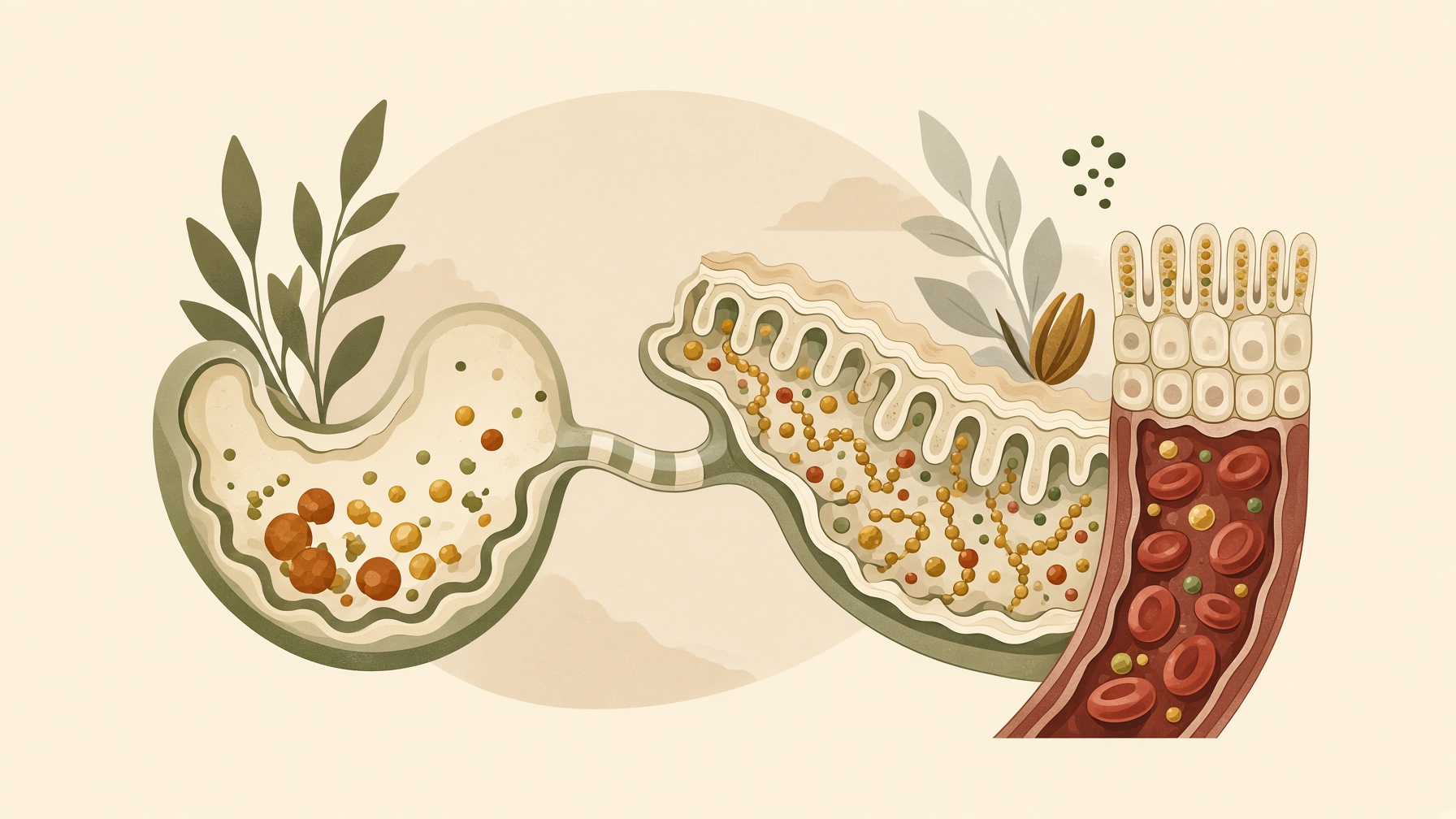
Protein digestion breaks food proteins into amino acids and small peptides that intestinal cells can absorb for the body’s ongoing protein turnover.
Wikis
Enteropeptidase is a digestive serine protease located mainly on the brush border of enterocytes in the duodenum and proximal jejunum. It is also historically called enterokinase. Its principal physiological function is to activate trypsinogen, the inactive precursor of the pancreatic protease trypsin, thereby initiating an important enzyme-activation step in intestinal protein digestion .1,2
Enteropeptidase recognizes a highly specific amino-acid sequence in the activation peptide of trypsinogen and cleaves the peptide bond following a lysine residue. This cleavage converts trypsinogen into catalytically active trypsin. Trypsin can then activate additional trypsinogen molecules as well as other pancreatic zymogens, including chymotrypsinogen, proelastase, and procarboxypeptidases. A relatively small initial activation event can therefore initiate a larger digestive protease cascade .1
Human enteropeptidase is itself produced as an inactive precursor called proenteropeptidase. The mature enzyme consists of a heavy chain and a catalytic light chain linked by a disulfide bond. The heavy chain contributes to membrane localization and substrate recognition, while the light chain contains the serine-protease catalytic machinery responsible for cleaving trypsinogen .1,2
Enteropeptidase is distinct from trypsin. Enteropeptidase primarily initiates the conversion of trypsinogen into trypsin, whereas trypsin directly digests proteins and activates several other pancreatic digestive zymogens. Enteropeptidase therefore acts near the beginning of the intestinal protease-activation cascade .1,2
From this collection
Protein digestion breaks food proteins into amino acids and small peptides that intestinal cells can absorb for the body’s ongoing protein turnover.