
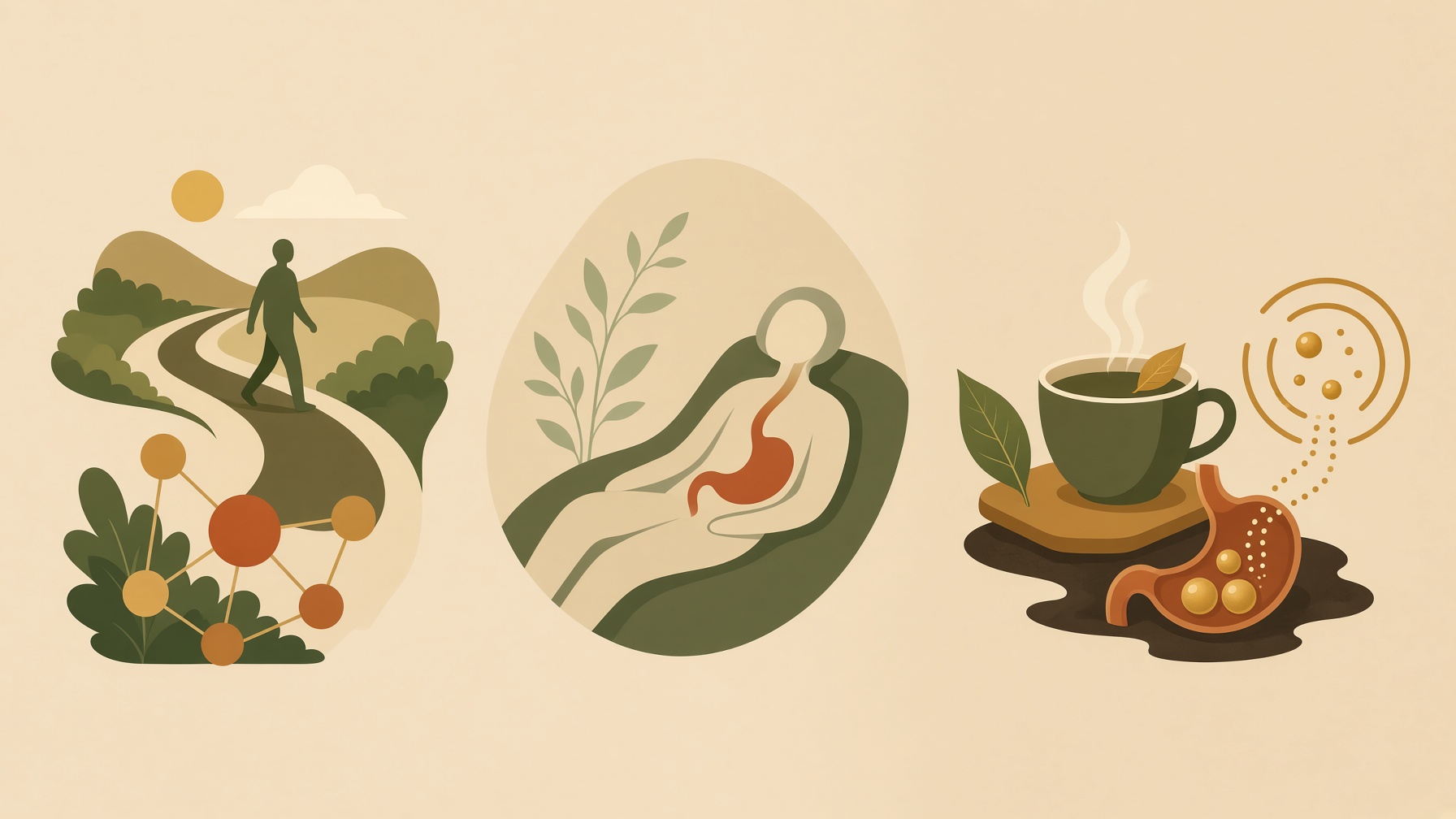
Walk, Drink Tea, or Lie Down after a Meal? Which Rule Could Be Right?
Post-meal walking, tea and lying down affect different outcomes, so evidence about glucose, iron absorption or reflux cannot support one universal rule.
Wikis
Gastroesophageal reflux moves stomach contents into the esophagus, while reflux disease involves troublesome symptoms or complications from that process.
Gastroesophageal reflux is the movement of stomach contents upward into the esophagus. Some reflux occurs normally, especially after meals, because the junction between the esophagus and stomach is not a permanently sealed valve. The lower esophageal sphincter and surrounding anatomy normally limit the frequency and extent of this backflow .1
Reflux can contain acid, pepsin, food, and other gastric contents. Episodes are promoted when the pressure barrier at the gastroesophageal junction is temporarily relaxed or mechanically overcome. The esophagus clears much of the refluxed material through swallowing and peristalsis, while saliva helps neutralize acid. Symptoms depend not only on how often reflux occurs but also on its composition, how high it travels, clearance, and tissue sensitivity .1
Gastroesophageal reflux should be distinguished from gastroesophageal reflux disease, or GERD. Reflux describes the physiological event itself, while GERD is diagnosed when reflux causes troublesome symptoms, complications, or both. Heartburn and regurgitation are common manifestations, but their presence does not reveal the exact mechanism in every person. Reflux can also occur without symptoms, which is why the event and the disease are related but not identical concepts .1
From this collection
Post-meal walking, tea and lying down affect different outcomes, so evidence about glucose, iron absorption or reflux cannot support one universal rule.