
Is the Mustard-on-Broccoli Trick Actually Doing Anything for Your Health?
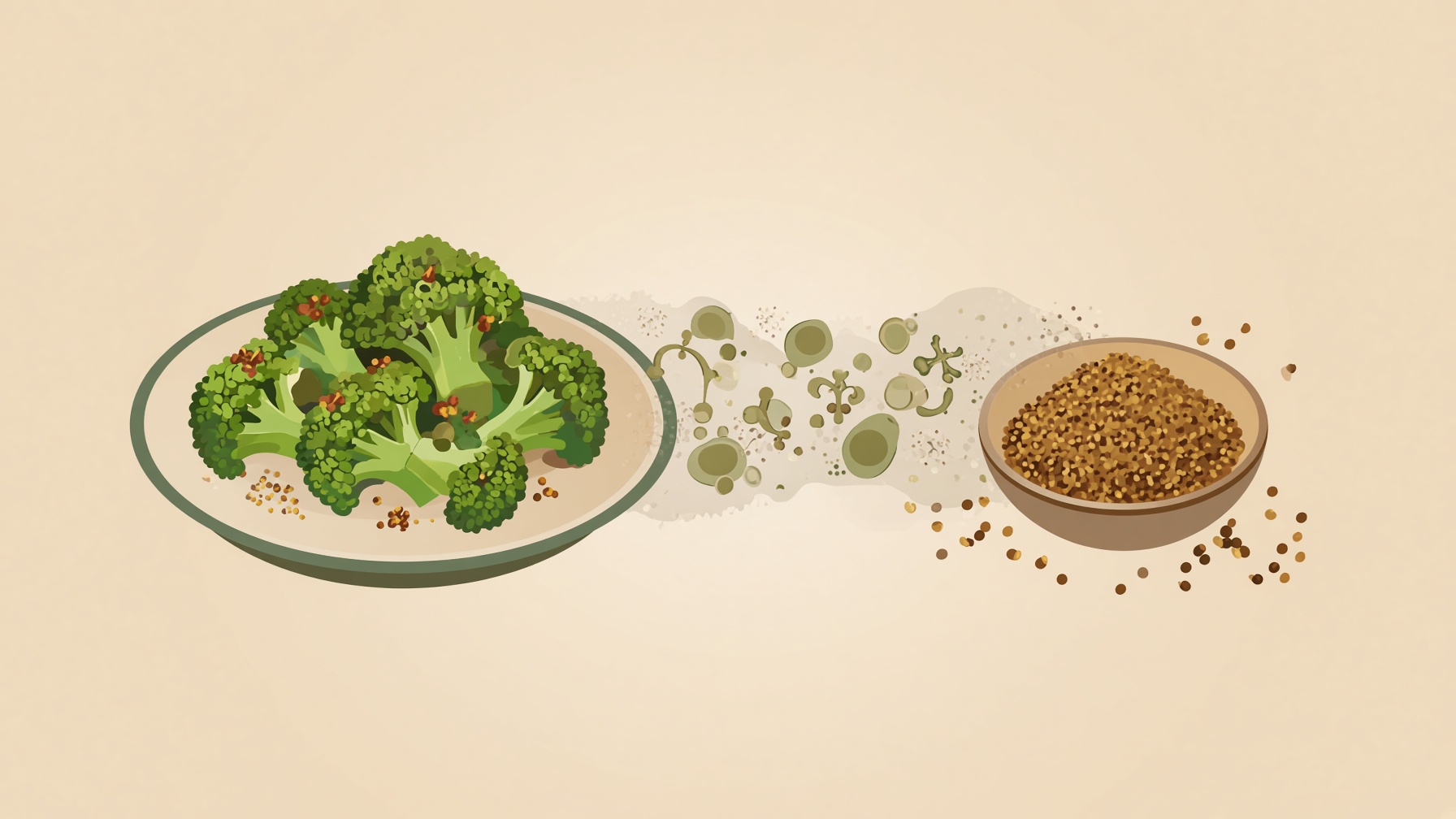
Ground brown mustard seed increased a sulforaphane-related urinary marker after cooked broccoli in a small trial, without proving a health benefit.
Wikis
Glucoraphanin can turn into sulforaphane, but the amount reaching the body depends partly on active myrosinase and varies without the plant enzyme.
Glucoraphanin is a plant compound in the glucosinolate family and a precursor of sulforaphane. It is present in broccoli, including its seeds and sprouts. Calling it a precursor means that it can undergo chemical conversion into sulforaphane; the two names do not describe the same substance .1
The conversion begins when myrosinase, an enzyme normally separated from its substrate in intact plant tissue, breaks down glucoraphanin. Tissue rupture can bring them together. Glucoraphanin is comparatively stable, whereas sulforaphane is more reactive .1
The amount of glucoraphanin consumed does not directly predict the amount of sulforaphane reaching the body. Conversion depends partly on whether active plant myrosinase is present. Gut microorganisms can also contribute, but conversion in preparations without active plant enzyme varies substantially between people. This distinction matters when interpreting studies: a glucoraphanin-containing preparation and one already containing sulforaphane are chemically and biologically different exposures .1
From this collection
Ground brown mustard seed increased a sulforaphane-related urinary marker after cooked broccoli in a small trial, without proving a health benefit.